SvelteKit Transitions to Unified Configuration and Explicit Environment Variables in Major Tooling Update

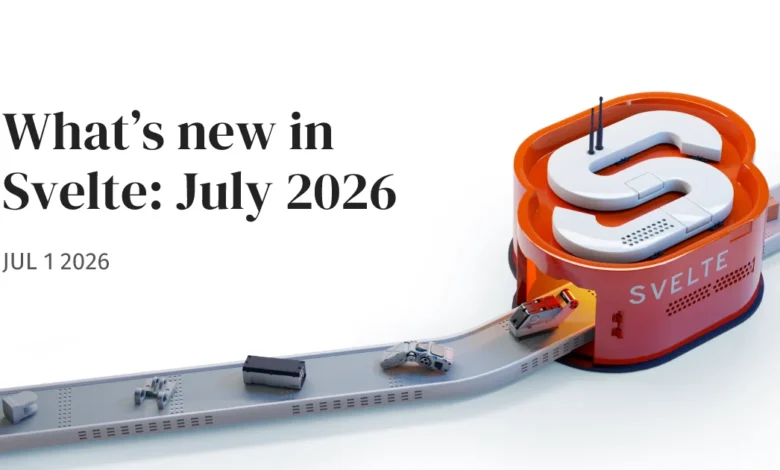
The Svelte ecosystem has initiated a significant architectural shift this month, streamlining the developer experience by consolidating project configuration and previewing a foundational change to how environment variables are handled. In a move that aligns SvelteKit more closely with the Vite ecosystem, developers can now bypass the traditional svelte.config.js file, opting instead to define SvelteKit configurations directly within the vite.config.js file. This structural refinement arrives alongside the first preview of explicit environment variables—a feature slated to replace the current $env module system in the upcoming SvelteKit 3—and a comprehensive synchronization of the Svelte toolchain to support the latest Svelte 5 syntax.
The Shift Toward Configuration Consolidation
Since its inception, SvelteKit has utilized a dual-configuration approach. The vite.config.js file managed the build pipeline, bundling, and plugin orchestration, while svelte.config.js handled framework-specific settings such as adapters, preprocessors, and routing logic. While this separation provided a clear boundary between the build tool and the framework, it often resulted in redundant boilerplate and occasional synchronization friction for developers managing complex build requirements.
The transition to a unified configuration model within vite.config.js represents a maturation of the framework’s integration with Vite. By allowing the SvelteKit plugin to consume configuration options directly, the development team has reduced the cognitive load on engineers. This change is not merely aesthetic; it simplifies the initialization of new projects and makes the underlying architecture more transparent. For large-scale enterprise applications where build pipelines are heavily customized, having a single source of truth for configuration reduces the likelihood of misconfiguration and streamlines the onboarding process for new contributors.
Industry analysts note that this move mirrors a broader trend in the JavaScript meta-framework landscape, where tools like Nuxt and SolidStart are increasingly leveraging the power of Vite’s plugin API to provide a more cohesive developer experience. By minimizing the "configuration surface area," SvelteKit is positioning itself as a more accessible and efficient option for full-stack web development.
Evolution of Environment Variable Management
One of the most anticipated technical revelations this month is the introduction of explicit environment variables. Currently, SvelteKit utilizes a sophisticated module-based system ($env/static/private, $env/dynamic/public, etc.) to handle environment data. This system was designed to provide type safety and prevent the accidental leakage of sensitive server-side secrets to the client-side browser.
However, as the framework prepares for the eventual release of SvelteKit 3, the core maintainers have signaled a shift toward "explicit" environment variables. While the current system is powerful, it relies on a level of abstraction that can occasionally obscure where data is coming from, particularly in complex monorepo setups or specialized hosting environments. The preview of explicit environment variables suggests a move toward a more standard, declarative approach. This change is expected to offer better compatibility with edge computing platforms and serverless environments, where environment variable injection often follows specific, non-standard protocols.
The transition to explicit variables is expected to be a cornerstone of the SvelteKit 3 roadmap. While SvelteKit 2 remains the stable current version, providing these previews early allows the community to test the new patterns and provide feedback before the breaking changes are finalized. This proactive approach to versioning has been a hallmark of the Svelte team’s philosophy, ensuring that major updates do not alienate the existing user base.
Tooling Synchronization and Svelte 5 Readiness
Beyond the core framework changes, the broader Svelte toolchain has reached a new milestone in synchronization. The language tools (which power IDE extensions like the Svelte VS Code extension) and the recently revamped sv CLI have been updated to support the const ... declaration tag.
The const ... tag is a vital feature introduced in Svelte 5, designed to allow developers to define local variables directly within the markup section of a component. Prior to this update, logic within the HTML-like template of a Svelte component was largely limited to expressions. By introducing const, Svelte allows for more readable and performant templates, particularly when dealing with complex loops or nested data structures where a derived value needs to be reused multiple times within a specific scope.
The fact that the CLI and language tools are now in full sync with this feature indicates that Svelte 5 is nearing a state of total ecosystem readiness. For developers, this means that the "red squiggles" and linting errors that often plague early adopters of new syntax are being eliminated, providing a professional-grade development environment even for the framework’s most cutting-edge features.
Historical Context and Framework Progression
To understand the significance of these updates, one must look at the trajectory of Svelte over the last three years. SvelteKit emerged from the ashes of Sapper (Svelte’s previous meta-framework) with the goal of being "Vite-first." This month’s configuration change is, in many ways, the fulfillment of that original vision.
Svelte 4, released in mid-2023, focused on performance and internal cleanup, but Svelte 5 represents a fundamental reimagining of the framework’s reactivity model through the introduction of "Runes." As Svelte 5 moves closer to its stable release, SvelteKit must evolve in tandem. The synchronization of the sv CLI is particularly noteworthy; the sv tool is intended to replace the aging create-svelte package, offering a more modular and extensible way to scaffold projects with integrated support for Tailwind CSS, TypeScript, and various testing frameworks.
Technical Analysis of Implications
The move to integrate SvelteKit settings into Vite configuration has several technical implications:
- Plugin Interoperability: By residing within
vite.config.js, SvelteKit’s configuration can more easily interact with other Vite plugins. This allows for more dynamic configurations where SvelteKit’s behavior can be modified based on the results of other build-step processes. - Simplified CI/CD: Continuous Integration and Deployment pipelines often need to inject or modify configuration values on the fly. Managing a single JavaScript file is inherently less error-prone than managing two, especially when dealing with environment-specific overrides.
- Type Safety: With the latest updates to the Svelte language tools, the unified configuration remains fully type-checked. Developers will still receive autocomplete suggestions and error warnings for SvelteKit-specific options even when they are nested within the Vite configuration object.
Regarding the environment variable shift, the move to "explicit" variables likely addresses a common pain point: the "magic" of SvelteKit’s $env modules. While the modules are convenient, they can be difficult for third-party tools (like Vitest or Playwright) to mock or intercept. A more explicit approach will likely make testing SvelteKit applications more straightforward and bring the framework closer to standard Node.js and Web API practices.
Community and Official Response
While official statements from the core team emphasize that these changes are designed to improve developer ergonomics, the community response has been largely focused on the upcoming Svelte 5 transition. On platforms like Discord and Reddit, contributors have praised the reduction in boilerplate.
"The consolidation of config files might seem like a small change, but for those of us managing dozens of micro-frontends, it’s a massive win for maintainability," noted one community contributor. Others have expressed caution regarding the environment variable changes, noting that the current $env system is one of SvelteKit’s standout features for security. The Svelte maintainers have reassured users that the transition to SvelteKit 3 will include comprehensive migration guides and that the security benefits of the current system will be preserved in the new explicit model.
Broader Impact on the Web Development Landscape
Svelte’s evolution reflects a broader shift in the industry toward "Invisible Frameworks"—tools that provide immense power with minimal surface-level complexity. By removing the need for framework-specific config files and moving toward standard-aligned environment handling, SvelteKit is lowering the barrier to entry for developers coming from other ecosystems.
As of late 2023, Svelte continues to hold a high position in developer satisfaction surveys, often ranking as one of the most "loved" frameworks. However, its market share has historically trailed behind React and Vue. These updates are a clear attempt to bridge that gap by focusing on "Developer Experience" (DX). In a competitive market where the speed of delivery is paramount, a framework that requires less setup and provides more intuitive tooling is highly attractive to both individual developers and enterprise CTOs.
The synchronization of the toolchain also signals that the Svelte 5 "Runes" era is almost here. Once Svelte 5 is officially released, the web development community will likely see a surge in new libraries and components built on the new reactivity model. This month’s updates ensure that when that surge happens, the infrastructure—the CLI, the compiler, and the configuration—will be ready to handle it.
Conclusion and Future Outlook
The updates to SvelteKit and its associated tooling this month represent a significant step toward a more unified and streamlined development environment. By consolidating configuration into Vite, preparing for explicit environment variables, and ensuring full support for Svelte 5 syntax across the CLI and language tools, the Svelte team is laying the groundwork for the next generation of web applications.
Developers are encouraged to review the latest changelogs for SvelteKit and the Svelte compiler to understand the full scope of the minor bugfixes and features that accompanied these major shifts. As the community looks toward the release of SvelteKit 3 and the stable launch of Svelte 5, the framework’s commitment to simplicity, performance, and developer joy remains its primary driving force. The roadmap is clear: less "magic" configuration, more explicit control, and a toolchain that works in perfect harmony.