React Native 0.83 Arrives with React 19.2 Integration, Breakthrough DevTools, and Zero User-Facing Breaking Changes

The React Native core team has officially announced the global release of React Native version 0.83, marking a significant milestone in the framework’s evolution. This latest iteration introduces deep integration with React 19.2, delivers a completely redesigned desktop development environment, and brings advanced performance tracing capabilities to mobile developers worldwide. Crucially, version 0.83 stands out as a historic release for the ecosystem: it is the first stable version in the project’s history to ship with absolute zero user-facing breaking changes, promising a seamless upgrade path for teams migrating from version 0.82.
The rollout of React Native 0.83 comes at a time of rapid acceleration for cross-platform mobile development. As enterprises increasingly demand native-level performance coupled with web-standard flexibility, the core maintainers have focused heavily on bridging the gap between web technologies and mobile execution. Developed through 594 distinct code commits contributed by 56 developers from across the global open-source community, this release represents months of collaborative engineering aimed at developer ergonomics, runtime optimization, and diagnostic transparency.
Core Integration of React 19.2 and the New Activity API
At the heart of React Native 0.83 is the adoption of React 19.2, bringing cutting-edge React paradigms directly to mobile applications. Among the most anticipated additions are the <Activity> component and the useEffectEvent hook, both designed to solve long-standing state management and rendering bottlenecks in complex application architectures.
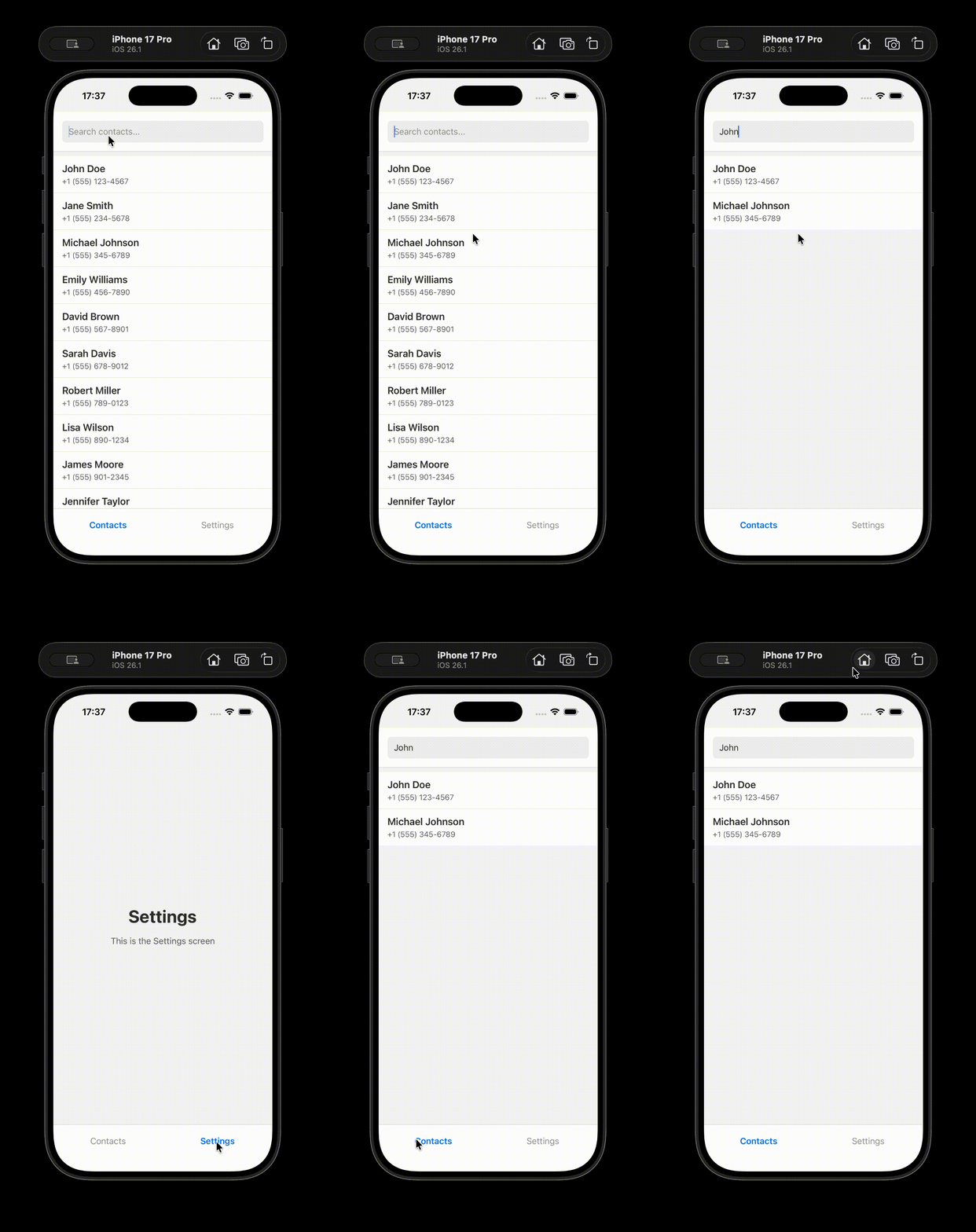
The <Activity> component introduces a sophisticated approach to rendering prioritization. Rather than relying on traditional conditional rendering—which destroys and recreates component subtrees—developers can now partition their applications into discrete "activities" operating in either a 'visible' or 'hidden' mode. When a UI tree is hidden using <Activity mode='hidden'>, the framework preserves its internal state entirely. For instance, user input fields, scroll positions, complex search states, and active list selections remain intact in the background. When the activity transitions back to a visible state, the user is greeted by the exact interface state they left behind, eliminating unnecessary re-fetching and state restoration logic.

Complementing this is useEffectEvent, a utility engineered to untangle complex side effects. Historically, developers managing external system subscriptions within a useEffect hook faced a dilemma: including external values in the dependency array caused excessive, unintended re-fires of the effect, while excluding them risked stale closures and subtle runtime bugs that standard linters flagged. useEffectEvent cleanly separates the event logic from the effect emitter, allowing developers to read the latest props and state without triggering unnecessary effect re-runs, thereby satisfying linters and improving application stability.
Addressing the React Server Components Security Context
In tandem with the React 19.2 integration, the release naturally intersects with recent discussions surrounding web ecosystem security. Following the disclosure of a critical security vulnerability affecting React Server Components in early December 2025, the React Native team issued an immediate clarification regarding mobile architectures.
Industry analysts and developers running monorepos scrutinized their dependency trees following the advisory. The React Native maintainers explicitly stressed that mobile applications built with React Native are entirely unaffected by the vulnerability, as the framework does not rely on the impacted server-side packages. Nevertheless, teams operating within shared monorepos containing both web and mobile workspaces have been advised to audit their environments and upgrade relevant packages. The core team has confirmed that all React dependencies will be bumped to version 19.2.1 in an upcoming patch release to provide absolute peace of mind for enterprise auditors.
Revolutionizing Mobile Diagnostics with React Native DevTools
One of the most praised aspects of the 0.83 release is the comprehensive overhaul of React Native DevTools. Historically, debugging mobile applications required launching browser instances inside Chrome or Edge, often introducing friction and context switching. React Native 0.83 replaces this paradigm with a dedicated, bundled desktop application that provides a streamlined, native debugging experience.
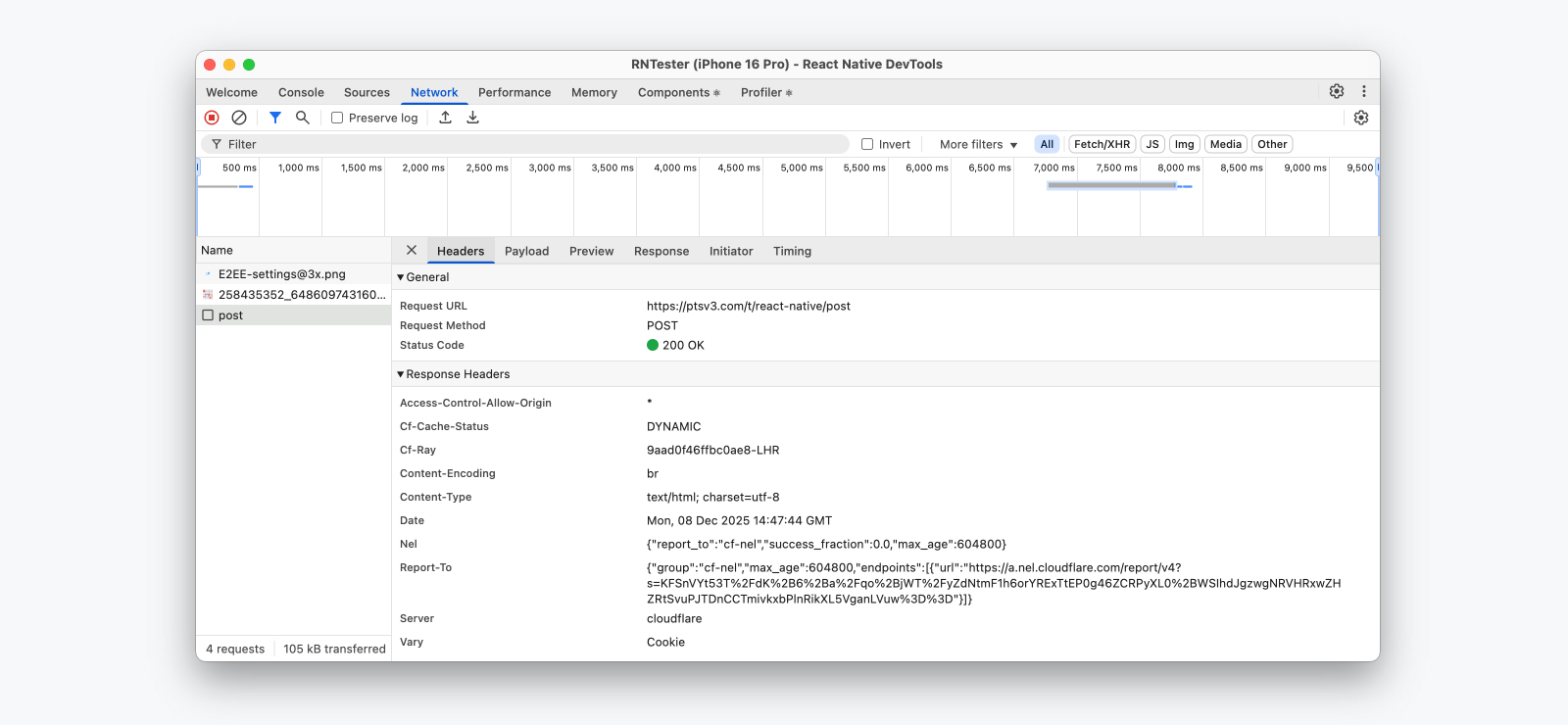
The new desktop utility features instant project connection, reduced memory overhead, and a unified interface housing two breakthrough diagnostic panels: Network Inspection and Performance Tracing.
The Network Inspection panel records all standard network transactions executed via fetch(), XMLHttpRequest, and native <Image> components. Developers can now inspect deep metadata, including precise request timings, payload headers, and response previews. Crucially, the introduction of an Initiator tab solves a historically difficult debugging challenge: engineers can now trace the exact line of application code that triggered a specific network request. While full custom networking library integration—such as Expo Fetch—is slated for subsequent updates, the current pipeline provides deep visibility into standard mobile data flows.
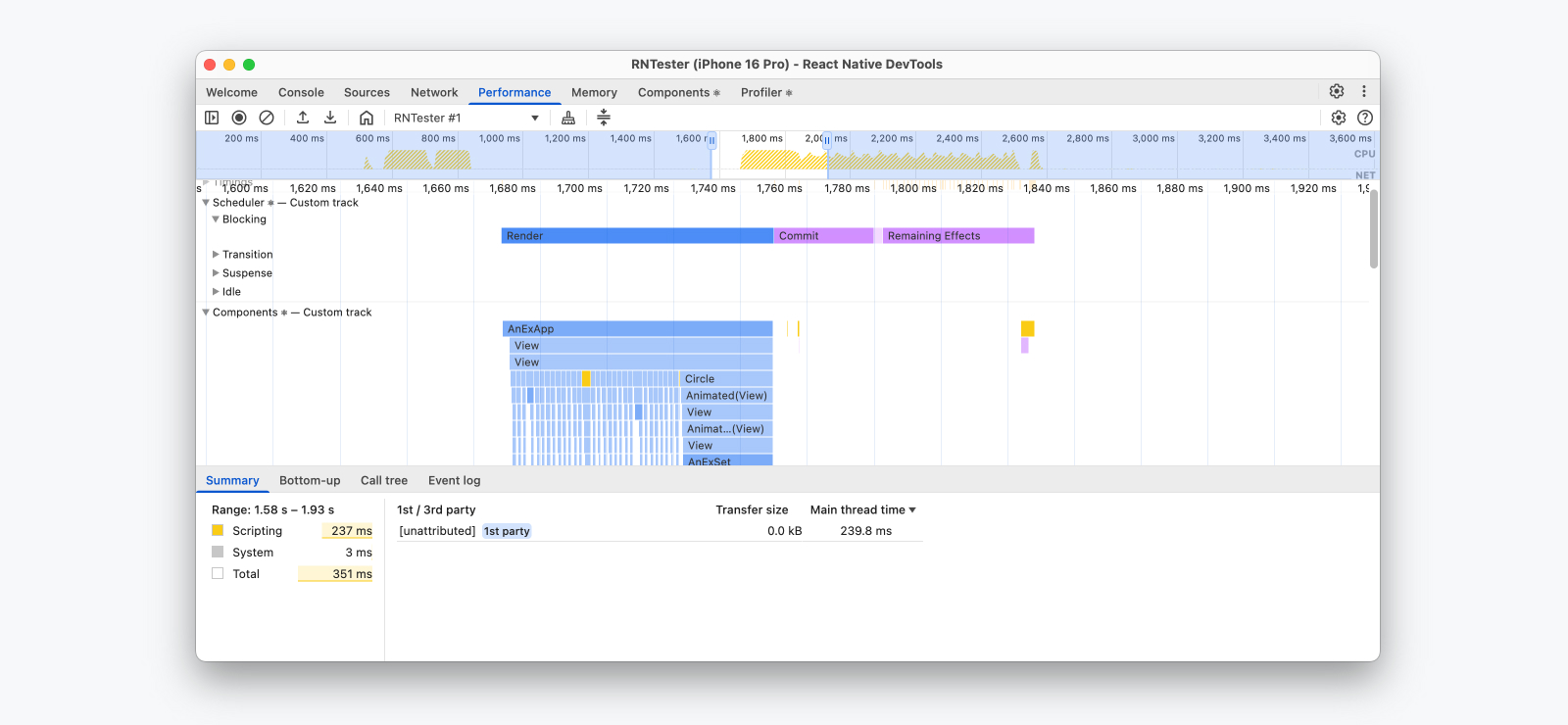
Simultaneously, the new Performance Tracing panel merges JavaScript execution tracking, React performance timelines, network events, and custom User Timing markers into a single, cohesive chronological view. By visualizing what operations consume processing cycles, development teams can systematically isolate frame drops, bridge bottlenecks, and rendering inefficiencies.
Web Standards Expansion: Performance APIs and Intersection Observers
React Native 0.83 continues a multi-release strategic initiative to harmonize mobile APIs with established W3C web standards, lowering the learning curve for web developers transitioning to mobile engineering.
Building upon the experimental foundations laid in version 0.82, the Web Performance APIs are now officially designated as stable. Developers can utilize tools like PerformanceObserver not only within the DevTools environment but also directly inside production builds. This capability empowers enterprises to capture granular, real-world performance metrics from end-user devices in the field, feeding telemetry data back to monitoring dashboards.
Furthermore, the release introduces support for the IntersectionObserver API within the canary release channel. Designed for asynchronous observation of layout intersections between a target element and its ancestors, IntersectionObserver simplifies common mobile UI patterns such as lazy-loading images, infinite scrolling lists, and visibility-based animations without relying on complex, CPU-intensive scroll-position calculations.
Under-the-Hood Optimizations: Hermes V1 and Build Architecture
Beyond developer-facing APIs, version 0.83 delivers profound architectural enhancements aimed at reducing application binary sizes and accelerating compilation times, particularly on the iOS platform.
The experimental Hermes V1 JavaScript engine—first introduced as an opt-in feature in version 0.82—receives further compiler and virtual machine optimizations in this release. Hermes V1 continues to push the boundaries of execution speed and memory efficiency, though developers wishing to test it must currently build React Native from source using targeted dependency resolutions.
Concurrently, iOS developers can now leverage a powerful new build flag, RCT_REMOVE_LEGACY_ARCH=1, when running CocoaPods. For applications that have fully migrated to the New Architecture (Fabric and TurboModules), this flag completely compiles out the legacy architecture codebase. Internal benchmarks conducted by the core team revealed substantial efficiency gains: on a baseline application without third-party dependencies, iOS build times dropped from 73.0 seconds to 58.2 seconds, while the resulting application package size shrank from 51.2 MB to 48.2 MB.
Additionally, release engineering for library maintainers has been dramatically improved via the RCT_SYMBOLICATE_PREBUILT_FRAMEWORKS flag. This tool allows developers shipping precompiled binaries to download and map dSYM symbol files directly within Xcode, enabling seamless debugging into native React Native core frameworks during simulator and physical device testing.

Deprecations and Ecosystem Support Lifecycle
In keeping with semantic versioning and the commitment to a predictable release cadence, React Native 0.83 introduces precisely two Android-specific deprecations as part of ongoing codebase cleanup. Full documentation and migration pathways for these changes are available via the official React Native Upgrade Helper and documentation portals.
With the arrival of version 0.83, the support lifecycle shifts forward. Version 0.83 now stands as the premier stable release of React Native, while version 0.80.x officially transitions into unsupported status in accordance with the project’s formal support policy. Meanwhile, the Expo ecosystem is actively preparing to incorporate React Native 0.83 into its upcoming SDK 55, scheduled for public release in January 2026.
Industry Implications and Future Outlook
The release of React Native 0.83 underscores a mature, enterprise-ready phase for the framework. By prioritizing zero user-facing breaking changes alongside profound tooling upgrades, the core maintainers have directly addressed historical criticisms regarding upgrade friction.
Analysts note that the convergence of web-standard APIs—such as Performance and Intersection Observer APIs—with native-level optimizations like Hermes V1 and legacy architecture pruning positions React Native as an increasingly formidable choice for high-performance mobile engineering. As development teams adopt the new desktop DevTools and leverage state preservation via the <Activity> component, applications built on version 0.83 are expected to deliver measurably smoother user experiences and significantly reduced maintenance overhead throughout 2026.
Related posts: