Google officially transitions Android Auto and Android Automotive OS games from beta to general availability

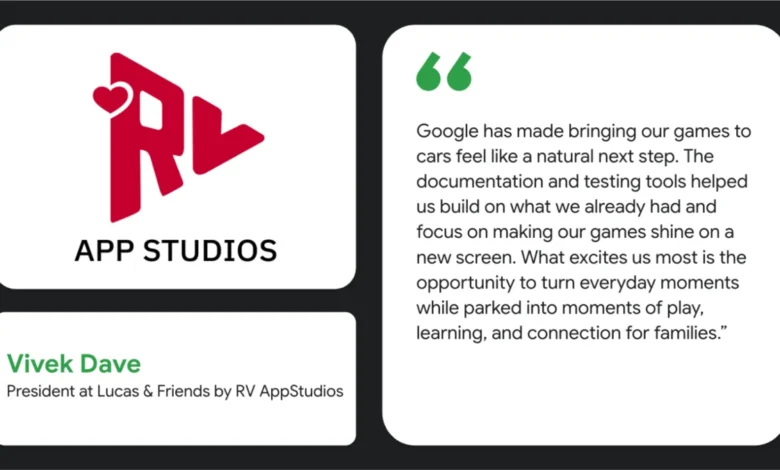
The digital ecosystem within the modern vehicle is undergoing a fundamental shift as Google officially transitions its gaming category for Android Auto and Android Automotive OS from a restricted beta program to full, general availability. This milestone, which effectively opens the Google Play Store to game developers targeting the automotive environment, marks a significant departure from the traditional role of in-car infotainment systems, which have historically been limited to navigation, communication, and media streaming. By allowing developers to publish interactive entertainment titles to open testing and production tracks, Google is positioning the vehicle as a legitimate third-party platform for high-engagement software, capitalizing on the "dead time" experienced by drivers and passengers during charging sessions, curbside pickups, or extended waits.
A Chronology of In-Car Gaming Integration
The evolution of in-car gaming has been a deliberate, multi-year process for the Android ecosystem. The journey began with the early recognition that as vehicles become increasingly software-defined, the demand for entertainment during stationary periods would grow. In the years leading up to this launch, Google engaged with a select group of early access partners to refine the user experience (UX) and safety protocols required for a "parked-only" environment.
Throughout the beta phase, these partners tested various titles, ranging from puzzle games to interactive narrative experiences, ensuring that the software could handle the transition between the vehicle’s driving state and its parked state without compromising system integrity. This testing period was critical for establishing the "car app quality guidelines" that now serve as the baseline for all submissions. By graduating from beta to general availability, Google is signaling that the infrastructure, safety frameworks, and developer tools have reached the maturity required for a global rollout.

Technical Foundations and Developer Requirements
For developers looking to enter this new market, the technical requirements are centered on integration with the Android framework and strict adherence to safety standards. The primary hurdle for any developer is ensuring that their application is designated as a game within the Android manifest. This is achieved by declaring android:appCategory="game", a seemingly simple line of code that unlocks access to the dedicated games category in the Google Play Store.
However, the technical complexity increases when addressing the unique hardware requirements of the automotive platform. Android Auto support, specifically for devices running Android 15 and higher, necessitates the inclusion of the android.intent.category.CAR_LAUNCHER in the activity’s intent filter. This allows the car’s head unit to recognize the application as a launchable entity within the car-specific interface. For Android Automotive OS—the platform where the operating system is embedded directly into the vehicle’s hardware—developers must utilize the android.hardware.type.automotive tag, with specific requirements regarding whether the application is intended for the mobile track or the dedicated automotive track.
Perhaps the most critical aspect of this development is the management of the "parked state." Because the software is prohibited from operating while the vehicle is in motion to prevent driver distraction, developers must ensure that their applications respond immediately to vehicle sensors. The software must be designed to stop audio playback, freeze gameplay, and effectively pause all activity the moment the vehicle begins to move. The prohibition of the distractionOptimized metadata element is a mandatory safeguard that ensures the application cannot bypass these safety restrictions, reinforcing the system’s commitment to road safety.
Market Context and Supporting Data
The shift toward in-vehicle entertainment is driven by the rise of electric vehicles (EVs) and the changing nature of the "commuter economy." With the average EV charging session lasting anywhere from 20 to 45 minutes, a new window of time has opened where users are physically present in the vehicle but have no active driving responsibilities. Industry data from various automotive intelligence firms suggests that the average consumer spends over 100 hours per year waiting in their vehicle, creating a captive audience for digital entertainment.

Market analysts note that the integration of gaming into the vehicle console is not merely a convenience feature but a competitive differentiator for automotive OEMs. As hardware specifications across vehicles begin to converge, the "software experience" becomes a primary factor in consumer purchasing decisions. By providing a standardized, high-quality gaming experience, Google is helping its automotive partners increase the "stickiness" of their infotainment systems, potentially increasing the time users spend interacting with the Google-powered dashboard.
Official Responses and Strategic Implications
While Google has not released a specific list of future partners, the company has emphasized that the open nature of this rollout is designed to invite developers of all sizes to contribute. In technical documentation provided to developers, the company stresses the importance of adaptive design. Car displays vary wildly in their aspect ratios and resolutions, ranging from ultra-wide panoramic screens to standard vertical tablet-style displays. Unlike mobile phones, where developers can target a specific range of screen dimensions, the automotive landscape requires a truly responsive approach to prevent the dreaded "letterboxing" effect, which can detract from the premium feel of a modern car interior.
The implications for the broader tech industry are substantial. By lowering the barrier to entry for developers, Google is effectively creating a new app store category that could mirror the growth of the mobile gaming market. There is also the matter of input methods; while touchscreens remain the primary interface, the support for external gamepads—declared via the android.hardware.gamepad feature—suggests that Google anticipates a demand for more complex, console-like gaming experiences within the cabin.
Challenges in Scaling the Automotive Experience
Despite the enthusiasm surrounding this launch, developers face unique challenges. The "car app quality guidelines" are significantly more stringent than those for mobile applications. Every game submitted for the automotive track is subject to rigorous review. This review process evaluates not only the gameplay itself but also the responsiveness of the application, its impact on the vehicle’s battery (a critical concern for EVs), and its ability to maintain state across power cycles.

Developers must also grapple with the reality of testing. Because developers cannot easily test their software in a moving vehicle, Google has provided the Desktop Head Unit (DHU) for Android Auto and the Android Automotive OS emulator. These tools allow developers to simulate various vehicle states, screen sizes, and hardware configurations. However, the simulation of real-world latency or the specific performance constraints of a vehicle’s embedded processor can be difficult to replicate, leading to potential hurdles in the optimization phase.
Future Outlook and Conclusion
The transition of the games category to general availability is a clear indicator that the automotive cockpit is being treated as a high-priority screen by major tech players. As connectivity becomes ubiquitous and autonomous driving features advance, the role of the vehicle will continue to pivot from a pure transport mechanism to a mobile "third space."
For the developer community, this represents a unique opportunity to build for a platform that, while currently limited by safety regulations, offers an unmatched, high-engagement environment. The ability to reach users while they are effectively "captured" in a static location is a rare commodity in the digital age. Whether this will lead to the emergence of a new genre of "short-session" automotive games remains to be seen, but the infrastructure is now in place for innovation.
As the industry moves forward, the success of this initiative will be measured by the quality and variety of the titles that appear in the dashboard menus. If the integration of games proves successful in enhancing the user experience without compromising safety, it is highly probable that we will see further expansion into other forms of interactive content, such as high-definition streaming or productivity suites, further cementing the role of the operating system in the modern vehicle. For now, the focus remains on the "parked-only" experience, providing a measured, safe, and highly structured entry into the next frontier of mobile computing. The "Games for Android Auto" and "Games for Android Automotive OS" collections on the Google Play Store are currently being populated, serving as the first true marketplace for this emerging digital frontier.