The landscape of open-source network-attached storage (NAS) has undergone a significant transformation following the decision by iXsystems to transition TrueNAS CORE into a "sustaining engineering phase" in 2024. This strategic pivot marked the end of active feature development for the FreeBSD-based platform, directing all innovation toward the Linux-based TrueNAS SCALE, which has since been rebranded as TrueNAS Community Edition. For administrators who relied on the unique architectural advantages of FreeBSD—specifically its robust jail implementation and the bhyve hypervisor—this shift left a void in the ecosystem. Enter FreeCORE, a community-driven project that has emerged to provide a modern, actively developed path for those who remain committed to the FreeBSD foundation.
The Evolution of the TrueNAS Ecosystem
To understand the necessity of FreeCORE, one must examine the trajectory of the TrueNAS project. For years, iXsystems maintained two distinct codebases: TrueNAS CORE (derived from the venerable FreeNAS project) and TrueNAS SCALE. The CORE branch was built upon the FreeBSD operating system, utilizing the OpenZFS file system, and was highly regarded for its stability, enterprise-grade storage management, and advanced virtualization capabilities through jails and bhyve.
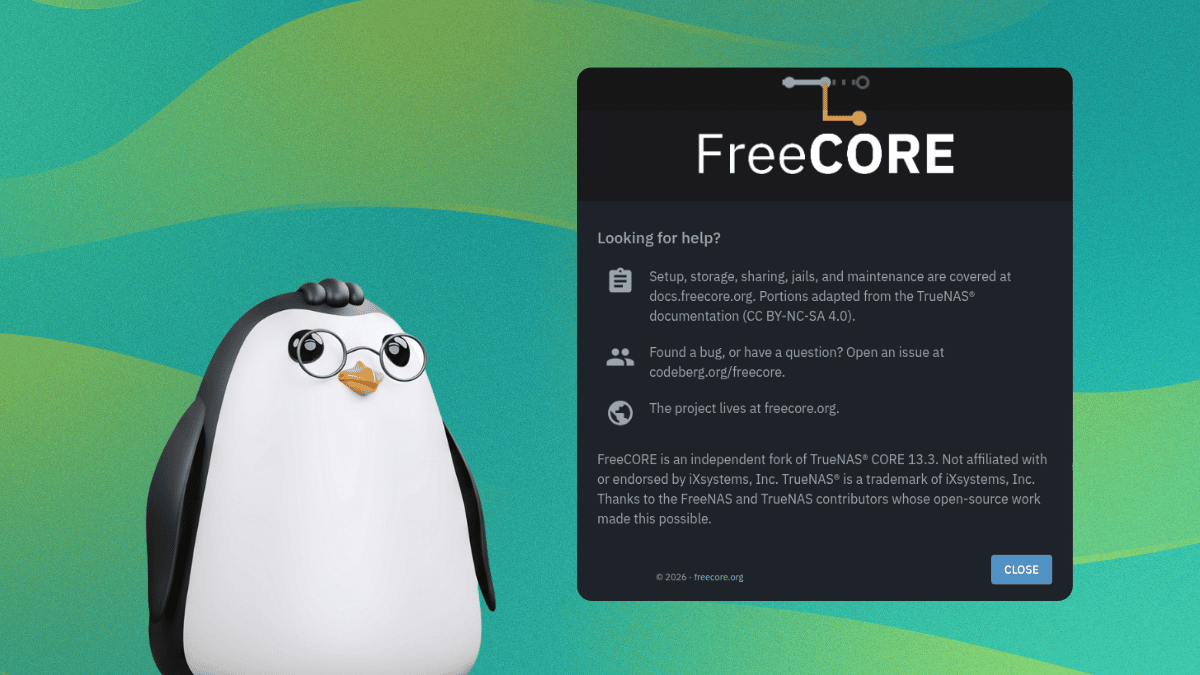
In 2024, iXsystems formalized the deprecation of CORE. The company announced that the platform would no longer receive new feature updates, shifting its development focus entirely to the Debian Linux-based SCALE. The final release, 13.3-U1.2, signaled the conclusion of the CORE train. While this transition simplified the company’s internal development cycles, it alienated a significant segment of the user base that favored FreeBSD’s security model and performance characteristics.
What is FreeCORE?
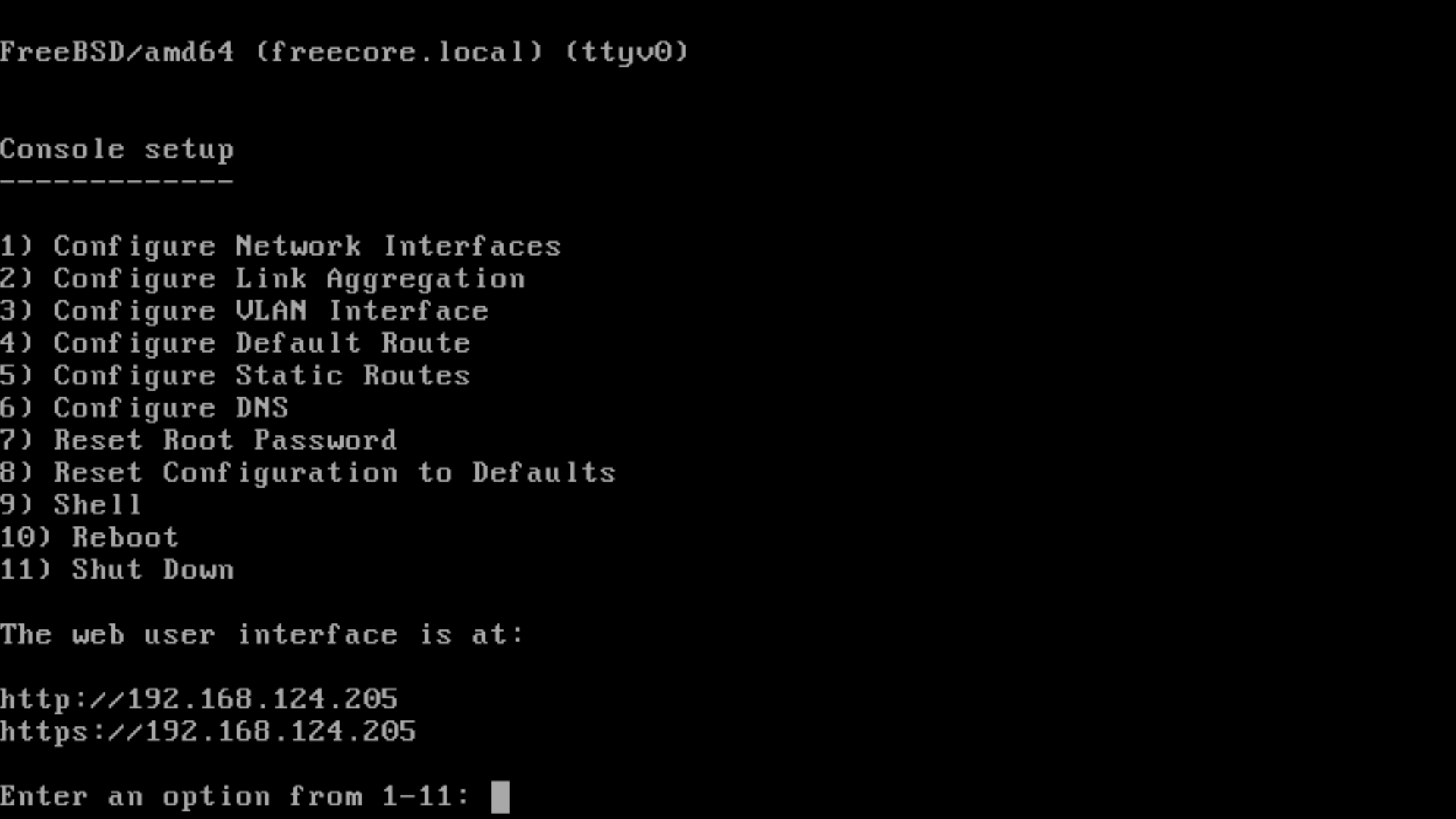
FreeCORE serves as a direct descendant of the original TrueNAS CORE codebase, effectively picking up where iXsystems left off. Built on the foundation of FreeBSD 15 and OpenZFS, the project is designed specifically for users who require the architectural integrity of FreeBSD. The project’s primary objective is to maintain feature parity with modern requirements while preserving the "BSD-first" philosophy.
The project is the result of a single-developer initiative, motivated by the creator’s own need to maintain a production-grade storage environment without migrating to a Linux-based kernel. By utilizing modern AI-assisted coding tools, the developer has successfully implemented a series of upgrades that significantly outpace the stagnant 13.3 release. The current stable iteration, version 15.0-U1.3, represents a substantial leap in capabilities, addressing technical debt that had accumulated over the final years of the official CORE project.

Technical Enhancements and Modernization
The jump to a FreeBSD 15 base brings with it a suite of practical improvements that elevate FreeCORE beyond a simple maintenance fork. Key technical upgrades include:
- File System and Core Upgrades: OpenZFS has been updated from version 2.1.14 to 2.4.2, providing better performance and expanded feature sets for data integrity. The system’s Python environment has been modernized from version 3.9 to 3.11, ensuring compatibility with current automation scripts and administrative tools.
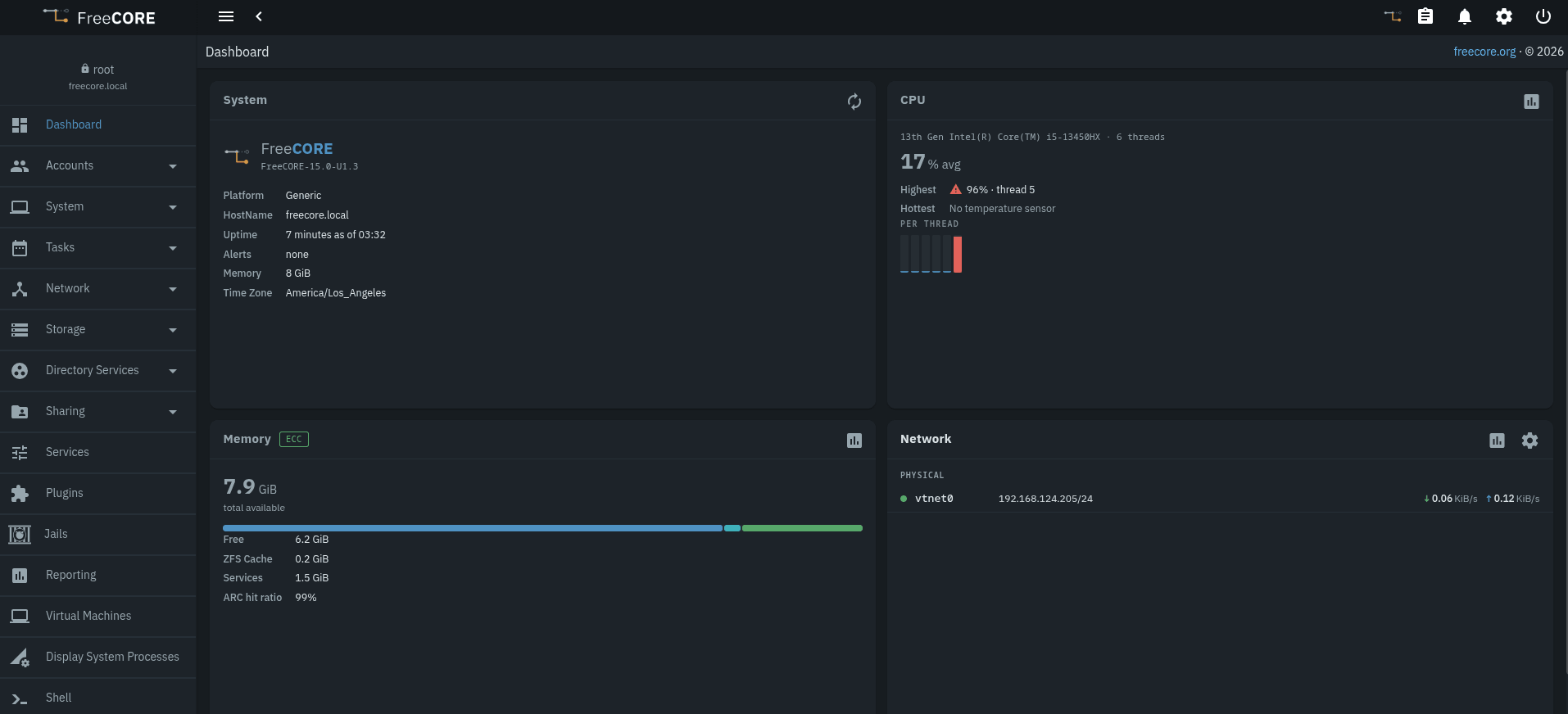
- Web Interface Overhaul: The web-based management console, a critical component for NAS administration, has been migrated to a significantly newer version of Angular. This improves the responsiveness and security of the interface, providing a cleaner dashboard for monitoring system health, CPU, memory, and network metrics.
- Enhanced Security: FreeCORE introduces WebAuthn support for multi-factor authentication, bringing the platform in line with contemporary security standards. Furthermore, it implements one-time password (OTP) verification for console logins, mitigating the risk of unauthorized physical or remote terminal access.
- Advanced Virtualization and Jails: One of the primary drivers for the project was the preservation of FreeBSD jails. FreeCORE introduces VNET, NAT, and DHCP support for jail networking, offering administrators granular control over isolated environments. Additionally, the inclusion of a new Direct Rendering Manager (DRM) driver allows for GPU pass-through to jails, a feature that was often cumbersome or unavailable in older iterations of CORE.
- Specialized Mounts: The platform now natively supports
rar2fsmounts, allowing for read-only access to compressed archives directly within the file system hierarchy.
Implementation and Deployment
The transition from TrueNAS CORE 13.3 to FreeCORE is engineered to be as seamless as possible, acknowledging the complexity of migrating storage pools and user configurations. The project provides an automated enrollment script that reconfigures the system’s update repositories and SSL certificates, allowing users to move from the iXsystems infrastructure to the FreeCORE ecosystem.
Users can initiate the migration by executing:
fetch https://freecore.org/freecore-enroll.sh && sh freecore-enroll.sh
Once the script has reoriented the update path, the system upgrade can be performed through the standard "System > Update" menu. During the initial boot, the system migrates the configuration database. While this process is highly automated, the developer notes that certain enterprise-specific features and third-party integrations, such as the legacy OpenVPN configurations, may require manual intervention or reconfiguration. For instance, the project has replaced OpenVPN support with WireGuard, necessitating a shift in VPN implementation for users who rely on remote access.
For new deployments, FreeCORE offers full installation images. These can be written to removable media, verified, and installed on bare-metal hardware, following a workflow familiar to anyone who has managed FreeNAS or TrueNAS deployments in the past.
Industry Implications and Community Response
The emergence of FreeCORE is emblematic of a broader trend in open-source software: the "community fork" as a mechanism for project survival. When commercial entities shift focus, the underlying open-source code remains available, but the burden of maintenance often falls on the user base.
The reliance on AI-assisted coding for this project is also a significant case study. By leveraging machine learning models to accelerate the development process, the lead developer has been able to implement changes that would typically require a larger team. This approach demonstrates a new frontier in software maintenance, where a solo contributor can effectively modernize a complex legacy platform by acting as a director and validator for AI-generated code blocks.
However, the project faces the inherent risks of a single-maintainer effort. The long-term viability of FreeCORE depends on the community’s willingness to contribute, report bugs, and assist with documentation. The presence of source code on the Codeberg platform—a community-focused alternative to proprietary hosting services—signals a commitment to transparency and decentralized development.
Broader Context: The NAS Operating System Landscape
The storage industry is currently seeing a divergence. On one hand, commercial NAS vendors are increasingly standardizing on Linux due to its massive driver support, vast ecosystem of containerized applications (Docker/Kubernetes), and a larger pool of developers. On the other hand, the FreeBSD community remains steadfast in its dedication to the ZFS file system and the Jails/bhyve virtualization stack, which many storage professionals still consider superior for high-uptime, high-integrity data environments.

The decision by iXsystems to move to Linux for their primary product was a business decision aimed at enterprise scalability and market trends. Yet, the existence of FreeCORE proves that for home lab enthusiasts, researchers, and small-to-medium businesses, the "TrueNAS CORE" way of doing things—characterized by simplicity, stability, and the Unix-like philosophy—remains highly relevant.
Future Outlook
Looking ahead, FreeCORE must navigate the challenge of keeping pace with the rapid development cycle of the FreeBSD kernel. As new releases of FreeBSD emerge, the project will need to ensure that its custom web interface and administrative tools remain compatible. The documentation provided by the project is currently in a state of active expansion, covering installation, jail management, and storage pool optimization.
For the average user, the choice between migrating to TrueNAS Community Edition or shifting to FreeCORE depends entirely on their dependency on FreeBSD-specific features. For those currently using TrueNAS CORE, the transition to FreeCORE is the most logical path for extending the life of their existing hardware while gaining access to modern software improvements.

In conclusion, FreeCORE represents a vital effort to preserve a piece of open-source history while simultaneously pushing it into the future. By removing vendor-specific telemetry, tightening security, and updating core components, it offers a compelling, privacy-focused alternative for users who prioritize control over their storage infrastructure. While the project remains in its relative infancy, its rapid development cycle and clear focus on the needs of its user base suggest that it will remain a critical resource for the storage community for the foreseeable future. Administrators are encouraged to review the official project documentation on the FreeCORE website and verify their storage pool compatibility before initiating any migration process.