Comprehensive Cloud Infrastructure Ecosystem Expansion Redefines Enterprise AI Deployment and Scalability Standards


The modern enterprise technology landscape is undergoing a monumental shift, driven by the explosive demand for artificial intelligence integration, scalable computing power, and robust cloud infrastructure. In response to this unprecedented digital transformation, leading cloud service providers are systematically overhauling their product ecosystems to offer comprehensive, end-to-end solutions that cater to developers, data scientists, and large-scale enterprises alike. This strategic evolution encompasses a holistic suite of cloud services, ranging from high-performance computing resources and secure container management to fully managed database engines, advanced networking, and multilayered cybersecurity protocols. As organizations worldwide race to operationalize machine learning models and deploy generative AI applications, the availability of cohesive, reliable, and secure cloud infrastructure has transitioned from a competitive advantage to an operational necessity.
Background Context of the Cloud and AI Infrastructure Boom
To understand the current trajectory of cloud computing, one must examine the rapid convergence of cloud architecture and artificial intelligence over the past decade. The early phases of cloud adoption were primarily characterized by cost-saving migrations from on-premises data centers to elastic virtual machines and simple object storage. However, the advent of deep learning, large language models (LLMs), and complex data pipelines completely redefined industry requirements. Enterprises no longer sought mere storage and basic compute instances; they demanded specialized processing units, high-throughput networking, and automated deployment pipelines capable of handling massive, unstructured datasets in real time.
Industry analysts note that global spending on cloud infrastructure services has grown exponentially, surpassing hundreds of billions of dollars annually. This financial influx has fueled intense competition among cloud hyperscalers and independent providers. To capture market share, providers have moved beyond commoditized infrastructure-as-a-service (IaaS) offerings toward sophisticated platform-as-a-service (PaaS) and software-as-a-service (SaaS) environments. The introduction of featured AI products integrated directly into core compute, storage, and database layers represents the latest maturation phase of this market, allowing organizations to seamlessly bridge the gap between raw data storage and advanced algorithmic inference.
Chronology of Infrastructure Evolution
The journey toward modern, AI-ready cloud ecosystems did not happen overnight; it is the result of a multi-year architectural evolution within the technology sector.
During the formative years of cloud computing from 2006 to 2012, providers focused heavily on foundational elements: elastic compute capacity and scalable object storage. These early tools allowed developers to provision virtual servers within minutes rather than weeks, dramatically accelerating software development cycles.
Between 2013 and 2018, the industry experienced a containerization revolution. The rise of Docker and Kubernetes transformed how applications were packaged, deployed, and scaled. Cloud providers responded by introducing managed container services and image registries, enabling developers to build microservices architectures that could operate reliably across diverse environments. Concurrently, managed database engines emerged to relieve engineering teams from the operational burdens of database administration, patching, and scaling.
From 2019 to 2023, the focus shifted toward security, complex hybrid networking, and developer tooling. As cyber threats grew in sophistication and regulatory frameworks such as GDPR and CCPA took effect, cloud platforms integrated advanced security features, Identity and Access Management (IAM) controls, and automated compliance monitoring directly into their foundational layers.
Entering the 2024-2026 era, the landscape has been entirely dominated by artificial intelligence and machine learning workloads. Today’s comprehensive cloud ecosystems are specifically engineered to support high-density AI training and inference. This includes the deployment of specialized accelerators, ultra-low-latency networking fabrics, and intelligent management tools that use machine learning to optimize cloud resource allocation automatically.
Deconstructing the Core Components of Modern Cloud Ecosystems
Modern cloud architectures are built upon several interconnected pillars, each designed to address specific technical requirements of contemporary software engineering and artificial intelligence deployment.
Compute Resources and High-Performance Scaling
At the heart of any cloud platform lies its compute infrastructure. Modern compute offerings go far beyond traditional CPU-based virtual machines, incorporating graphics processing units (GPUs), tensor processing units (TPUs), and specialized custom silicon designed to accelerate AI workloads. These resources allow developers to build, deploy, and scale cloud compute environments dynamically. Whether an organization is running batch processing jobs for financial modeling or real-time inference for a conversational AI chatbot, elastic compute ensures that processing power scales automatically based on incoming traffic and computational demand, optimizing both performance and expenditure.
Containers, Images, and Microservices Architecture
Containerization has become the standard for modern application delivery. Cloud ecosystems now feature robust container registries and orchestration engines that allow teams to safely store, manage, and deploy container images alongside automated backup systems. This ensures that application environments remain consistent from development to production. Furthermore, integrated image scanning tools automatically check containers for known vulnerabilities before deployment, reinforcing the software supply chain against potential cyber threats.
Managed Databases and Data Persistence
Data is the lifeblood of artificial intelligence. Without clean, accessible, and structured data, machine learning models cannot function effectively. Fully managed database engines—spanning relational, non-relational, time-series, and vector databases—provide organizations with resilient data persistence layers. These managed services handle automated backups, replication, failover protection, and performance tuning, allowing data engineers to focus on schema design and query optimization rather than routine maintenance tasks. Vector databases, in particular, have seen a surge in demand as foundational components for Retrieval-Augmented Generation (RAG) architectures in generative AI applications.
Networking, Traffic Control, and Security
As applications become more distributed, securing data in transit and at rest is paramount. Advanced cloud networking tools provide granular control over inbound and outbound traffic through virtual private clouds (VPCs), load balancers, content delivery networks (CDNs), and secure web gateways. Concurrently, comprehensive security features—such as multi-factor authentication, encryption key management, intrusion detection systems, and zero-trust access controls—help protect user accounts and cloud resources from unauthorized access and sophisticated cyberattacks.
Management, Development Tools, and Observability
Controlling complex, multi-cloud or large-scale single-cloud infrastructure requires sophisticated management and development tools. Modern cloud suites incorporate centralized dashboards, infrastructure-as-code (IaC) integrations, continuous integration and continuous deployment (CI/CD) pipelines, and advanced observability platforms. These tools gather deep telemetry insights, providing system administrators and DevOps engineers with real-time analytics regarding resource utilization, latency bottlenecks, and cost anomalies.
Supporting Data and Market Metrics
Recent industry data underscores the urgency with which enterprises are adopting comprehensive cloud and AI infrastructure. According to market research reports from leading analyst firms, worldwide public cloud end-user spending is projected to scale significantly, maintaining a compound annual growth rate (CAGR) in the high teens. Within this broader market, spending dedicated specifically to AI infrastructure—including specialized cloud compute and managed data services—is experiencing explosive growth, outpacing traditional IT spending categories by a factor of three.
Surveys conducted among enterprise Chief Technology Officers (CTOs) and Chief Information Security Officers (CISOs) reveal that over 80% of organizations consider integrated cloud AI products to be a primary strategic priority. However, these same studies highlight ongoing challenges: approximately 45% of IT leaders cite cloud cost management and resource optimization as their top operational hurdle, while 38% express concerns regarding cloud security and data privacy when deploying third-party machine learning models. These statistical insights explain why cloud providers are placing heavy emphasis on automated management tools, granular cost-monitoring dashboards, and enterprise-grade security protocols within their updated product portfolios.
Industry Statements and Expert Analysis
As cloud providers continue to expand their product portfolios, industry leaders and technology analysts have offered valuable perspectives on the implications of these developments.
“We are witnessing a fundamental redesign of the modern data center,” stated a prominent cloud architecture analyst at a major technology advisory firm. “The distinction between infrastructure providers and AI platform providers has effectively vanished. Enterprises no longer want to stitch together disparate services from multiple vendors. They demand an integrated ecosystem where compute, storage, databases, and AI tooling work in seamless harmony from day one.”
Enterprise software architects have similarly emphasized the importance of unified management tools. In a recent technology symposium panel discussion, a lead infrastructure engineer from a Fortune 500 financial institution noted, “When you are managing thousands of microservices and petabytes of training data, operational complexity is your greatest enemy. Having native security, automated container backups, and managed database scaling bundled within a cohesive cloud environment significantly reduces our time-to-market for new AI capabilities while maintaining strict compliance standards.”
Conversely, cybersecurity experts have issued cautions regarding the rapid deployment of complex cloud environments. While integrated security features provide robust baseline protection, misconfigurations remain a leading cause of cloud data breaches. Industry bodies continually urge organizations to adopt a posture of shared responsibility, ensuring that internal teams are adequately trained in cloud security best practices, identity management, and network segmentation regardless of how advanced the platform’s native security tools may be.
Broader Impact and Future Implications
The widespread availability of feature-rich cloud ecosystems carries profound implications for the global technology economy, software development paradigms, and the competitive positioning of enterprises across all sectors.
Democratization of Artificial Intelligence
Historically, the computational power required to train and deploy advanced machine learning models was restricted to a handful of technology titans and well-funded research institutions. Today, scalable cloud compute and pre-integrated AI products democratize access to these powerful capabilities. Small and medium-sized enterprises (SMEs) and agile startups can now leverage the same enterprise-grade infrastructure as multinational corporations, drastically lowering the barrier to entry for innovation. This leveling of the playing field is expected to accelerate the development of niche AI applications across healthcare, finance, logistics, and education.
Evolution of DevOps and Engineering Roles
The integration of advanced management tools, automated backups, and managed database engines is also transforming the daily responsibilities of software engineers and system administrators. Routine tasks such as manual server provisioning, database patching, and basic security configuration are increasingly automated through artificial intelligence and machine learning operations (MLOps) frameworks. Consequently, IT professionals are shifting away from mechanical infrastructure maintenance toward higher-value activities, such as system architecture design, data governance, algorithmic optimization, and strategic digital transformation planning.
Economic Efficiency and Cost Governance
As cloud estates grow larger and more complex, managing expenditure becomes critical. The incorporation of advanced monitoring and analytics tools within modern cloud platforms allows organizations to implement fine-grained cost governance policies. By gaining real-time visibility into compute utilization, storage costs, and network data transfer fees, enterprises can eliminate idle resources, right-instance workloads, and avoid unexpected financial overruns. This heightened focus on financial operations (FinOps) ensures that the economic benefits of cloud adoption are fully realized without sacrificing performance or scalability.
Security and Regulatory Compliance
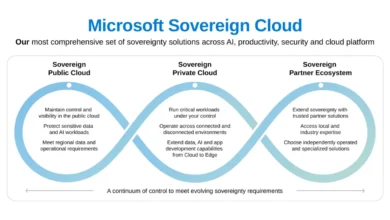
Finally, the maturation of cloud security and networking tools addresses growing regulatory scrutiny surrounding data privacy and sovereignty. With governments worldwide enacting stringent data protection laws, enterprises must ensure that their cloud deployments comply with regional mandates regarding data residency and encryption. Modern cloud ecosystems equipped with localized data centers, robust identity management, and automated compliance auditing provide the necessary framework for organizations to innovate rapidly while remaining fully compliant with evolving legal standards.
Conclusion
The continuous enhancement and expansion of cloud infrastructure ecosystems mark a pivotal chapter in the history of enterprise technology. By providing a unified, secure, and high-performance foundation encompassing compute, containers, managed databases, networking, and advanced AI tooling, cloud providers are empowering organizations to navigate the complexities of the digital age with confidence. As these ecosystems continue to evolve, driven by ongoing advancements in artificial intelligence and automation, they will remain the indispensable engine powering the next generation of global technological innovation and enterprise success.