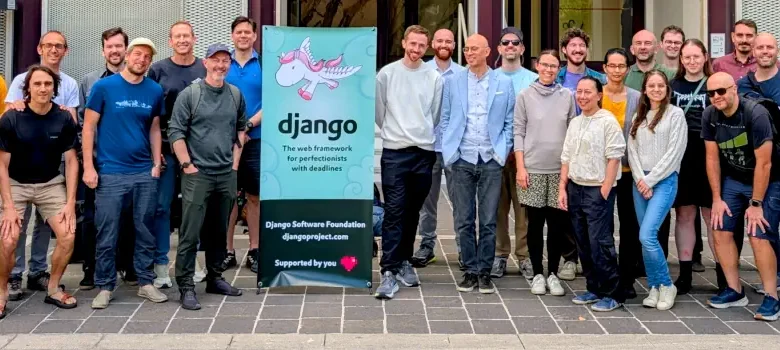
From 23 to 25 September 2026, the city of Pescara, Italy, served as the epicenter for the second edition of Django on the Med, an innovative collaborative sprint event designed to advance the development of the Django web framework. The gathering brought together 25 key contributors and community members, marking a shift in how open-source projects manage technical sprints by integrating them with regional cultural immersion. The event, hosted by Paolo Melchiorre, followed the inaugural 2025 edition held in Palafrugell, Spain, and signaled a growing trend toward decentralized, highly focused international gatherings for core software development.

Chronology of the Event
The three-day intensive sprint was meticulously structured to balance high-level technical output with community cohesion. On 22 September, participants converged on Pescara, beginning with a welcome dinner at Lido Aurora. This informal start allowed for the integration of the local Python Pescara community with international Django developers, fostering a cross-pollination of regional and global expertise.

The core sprints commenced on the morning of 23 September at the Hotel Plaza, situated in the heart of Pescara’s Piazza Sacro Cuore. Following a brainstorming session led by Carlton Gibson to identify technical priorities, the group broke into specialized workstreams. These sessions focused on critical framework areas, including ORM (Object-Relational Mapping) stability, documentation improvements, and the integration of asynchronous support.

Afternoons were reserved for structured excursions that served as both a reprieve and a catalyst for continued technical discussion. On the first day, participants engaged in a cycling tour along the Costa dei Trabocchi, an Adriatic coastal route famous for its historic wooden fishing structures. The second day featured a tour of the Abruzzo hinterland, including a winery visit at La Tenuta del Priore in Collecorvino and a guided tour of the medieval town of Penne. The evening concluded with a traditional meal in Villa Celiera, located within the Gran Sasso and Monti della Laga National Park, where the group observed local culinary techniques—an experience that highlighted the event’s emphasis on shared human connection as a foundation for professional collaboration.

Technical Focus and Collaboration
The technical agenda for Django on the Med 2026 was defined by complex, long-term maintenance issues that require sustained, in-person coordination. Among the primary technical outcomes were advancements in the Django ORM’s handling of NULL values, a project spearheaded by Annabelle and Simon Charette. This collaboration, facilitated by the direct, face-to-face working environment, allowed for a deeper analysis of the ORM’s architecture than is typically possible via remote pull request reviews.

Furthermore, the event provided a platform for evaluating the intersection of documentation and artificial intelligence. Discussions between Paolo Melchiorre and Daniele Procida explored how emerging AI-driven tools might augment existing technical documentation, potentially lowering the barrier to entry for new developers. Another significant development was the conceptualization of an ORM compatibility matrix, which aims to provide automated tracking of database feature flags. This initiative, developed through discussions between Melchiorre and Charette, represents a move toward more robust infrastructure management within the framework’s core.

The Logistics of a Volunteer-Led Initiative
The event’s success relied on a sophisticated logistical framework. Funding was primarily sourced through the Django Software Foundation (DSF), which covered venue costs for the three-day sprint. This financial support allowed for a zero-cost registration model for participants, removing economic barriers to attendance. Additional support from industry entities, such as Cuttlesoft and JetBrains, provided for essential amenities like continuous coffee service and private transportation for regional excursions.

From a planning perspective, the selection of Pescara was strategic. By situating the event in a city center with proximity to rail and bus infrastructure, the organizers maximized time efficiency for attendees. This logistical precision, contrasted with the more decentralized experience of the 2025 Palafrugell edition, provided a case study in how to optimize small-scale, high-impact technical events.

Participant Profiles and Community Impact
The demographics of the 25 attendees reflected the global reach of the Django project, with contributors arriving from diverse international locations to converge in Italy. For many, this was a rare opportunity to engage with primary maintainers of the framework. Feedback from participants underscored the "recharging" effect of the sprints, with several noting that the intensity of the three-day period provides sufficient technical and social inspiration to sustain their remote work for months afterward.

The integration of the local Python Pescara community provided a unique layer to the event. Local developers had the opportunity to interact with global core contributors, fostering a pipeline of new talent and strengthening the regional Python ecosystem. This symbiosis between local communities and the international Django project is a hallmark of the "Django on the Med" philosophy, which seeks to transform the traditional, often isolating conference model into one of regional partnership.

Broader Implications for Open Source
The model established by Django on the Med 2026 suggests a viable future for open-source project maintenance. In a professional landscape increasingly dominated by remote work, the value of in-person, small-group sprints is experiencing a resurgence. These events offer a "high-bandwidth" communication environment that is difficult to replicate through digital channels.

The success of these sprints in addressing complex technical debt—such as the ORM compatibility issues—demonstrates that focused, collaborative time can significantly accelerate the development lifecycle of a major framework. Furthermore, the deliberate inclusion of social and cultural activities serves to mitigate the burnout often associated with high-stakes software development. By treating participants as whole individuals within a cultural context, the event encourages longer-term commitment to the open-source community.

Future Outlook and Strategic Continuity
The conclusion of the 2026 edition was marked by the formal announcement of the third iteration. To ensure continuity and the sharing of organizational knowledge, the organizers have selected Gozo, Malta, as the site for the October 2027 event. Joseph Zammit has been designated as the local point person, following the pattern of leveraging local expertise to manage logistical complexities.

This iterative approach to event organization—where lessons learned in one year are applied to the next—provides a blueprint for other open-source projects considering similar endeavors. The decision to document the process, including the successes and the challenges of coordinating travel, catering, and venue management, serves as a valuable resource for future organizers.

As the Django project continues to evolve, the "on the Med" series serves as a critical mechanism for maintaining the human-centric nature of its development. By bridging the gap between technical rigor and regional hospitality, these sprints have established themselves as an essential component of the framework’s ongoing stability and growth. The 2026 edition in Pescara did more than just advance code; it reinforced the social infrastructure that keeps one of the world’s most widely used web frameworks resilient, innovative, and deeply connected to the people who build it.