Build for an expanding lineup of Android XR devices with production-ready tools from Android Developer Summit | Android Developers’ Blog

The Evolution of the Android XR Ecosystem
For years, the development of augmented and virtual reality applications was hampered by fragmentation, requiring developers to choose between proprietary, siloed platforms. Google’s strategic shift involves leveraging the existing Android infrastructure to ensure that standard mobile applications can function within a spatial environment on day one. By utilizing a shared Android foundation, developers are no longer forced to rebuild their entire logic layer to accommodate a new form factor.
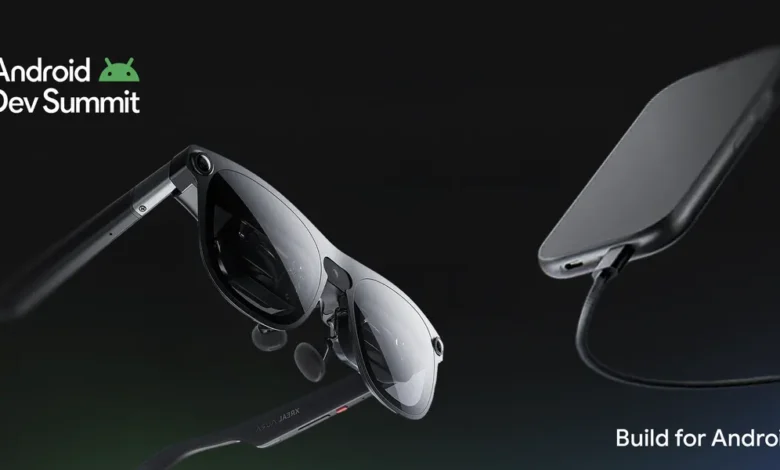
This strategy reached its current peak during the Android Developer Summit, where the company showcased how the "glanceable" experience—the ability to access information quickly without being fully immersed—is being prioritized for mobile XR glasses. The XREAL AURA, weighing less than 95 grams, exemplifies this design philosophy. By offloading heavy computation to a portable puck, the headset avoids the bulk and thermal constraints typical of standalone VR units, making it suitable for extended wear in real-world scenarios.
Chronology of Platform Maturation
The path to this stable release has been a multi-year effort in architectural alignment.
- Early 2023: Google began socialising the concept of "Android XR" as a unified platform, focusing on bridging the gap between mobile applications and 3D space.
- Late 2023 to Early 2024: The introduction of alpha and beta versions of the Jetpack XR SDK allowed developers to begin experimenting with the scene graph and spatial UI components.
- Mid-2024: The integration of the Android XR Engine Hub into popular development environments like Unity, Godot, and Unreal Engine signaled a move toward professional-grade workflows.
- November 2024: The formal graduation of Jetpack XR libraries to "stable" status at the Android Developer Summit, coinciding with the launch of the XREAL AURA, marks the transition from developer testing to consumer-ready application development.
Technical Foundations: The Jetpack XR SDK
The core of the recent announcement lies in the stabilization of three critical libraries that form the backbone of the Android XR developer experience:
- Jetpack SceneCore: This library allows developers to manipulate 3D content within the Android XR scene graph. It enables the rendering of complex assets, including glTF models and procedural 3D meshes, using Kotlin and Compose.
- ARCore for Jetpack XR: This provides the essential environment perception necessary for spatial computing. By enabling real-world anchoring and high-precision tracking, it allows digital content to "stick" to physical locations, ensuring that virtual objects remain stationary relative to the room.
- XR Runtime: This layer manages session lifecycles, ensuring that apps can be launched, suspended, and resumed in a way that respects the user’s spatial context.
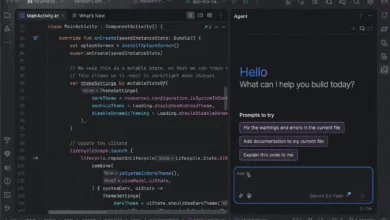
Furthermore, the stabilization of the Android XR emulator within Android Studio is a significant productivity gain. Previously, developers were often required to possess physical hardware to test even basic interface changes. The current emulator allows for the validation of layouts and interactions on a virtualized headset, significantly lowering the barrier to entry for smaller development teams.
Bridging Physical and Digital Realities
The Geospatial APIs in ARCore have emerged as a cornerstone of the platform’s utility. By combining visual positioning services—which analyze the user’s surroundings to determine precise location—with local device perception, developers can create applications that respond to the specific geography of a room or a city.
In a recent technical demonstration, experts highlighted how these tools enable "glanceable" optical see-through UIs. Using Jetpack Compose Glimmer, developers can create interfaces that provide information—such as navigation prompts, notifications, or productivity data—that overlay the user’s view of the real world. This capability is expected to be a primary driver for the adoption of XR glasses in professional enterprise environments, where hands-free data access is a critical requirement.
Supporting Multi-Engine Workflows
Google’s decision to standardize workflows across Unity, Godot, and Unreal Engine acknowledges the reality of the 3D development industry. Many developers have already invested years in mastering these engines, and the Android XR Engine Hub aims to reduce the friction of porting those assets to the new platform.
The Engine Hub provides pre-configured OpenXR extensions and validated project settings. By streamlining the "scaffolding" process, developers can focus on application logic rather than low-level configuration. Furthermore, the inclusion of native profiling tools within the engine interface allows developers to monitor thermal limits and frame budgets in real-time. This is essential for hardware like the XREAL AURA, where maintaining a smooth frame rate is required not just for visual fidelity, but for user comfort to prevent motion sickness.
Industry Implications and Market Impact
The introduction of a stable Android XR platform has broad implications for the hardware market. By decoupling the software stack from the hardware manufacturer, Google is attempting to create an "Android moment" for spatial computing. Much like the mobile smartphone market, this move encourages a wider variety of hardware manufacturers to build glasses that are compatible with a massive, pre-existing library of applications.
From an economic perspective, the ability for existing mobile developers to expand into XR without hiring specialized teams of 3D engineers represents a significant reduction in total cost of ownership (TCO) for new digital products. Companies like Contract XR have already demonstrated this viability by porting their existing Unity-based game, Jigsaw Night, to the XREAL AURA. The transition allowed for a multi-user, collaborative experience that feels native to the hardware, proving that legacy 3D assets can be successfully repurposed for spatial environments.
The Role of Multimodal Interaction
Beyond visual interfaces, Google is placing a heavy emphasis on audio-first interactions. With the introduction of the ML Kit Gen AI Text to Speech API, developers can integrate natural-sounding, on-device AI voices. When combined with the Gemini Nano model, these tools enable a conversational interface that does not require the user to look at a screen at all.
This shift toward "ambient" computing—where the interface is a helpful voice or a subtle audio cue rather than a persistent visual display—is a departure from the "screen-centric" model of traditional computing. It aligns with the company’s new design guidance on "earcons" and sound design, which aims to provide users with non-intrusive feedback in augmented environments.
Looking Toward the Future
As the Android XR ecosystem continues to stabilize, the focus will likely shift from infrastructure development to content optimization. With the core SDKs and emulators now in a production-ready state, the responsibility falls to the developer community to populate the platform with high-quality, spatially aware applications.
For developers seeking to integrate these tools, the path forward is clearly defined. The current suite of documentation, technical sessions from the Android Developer Summit, and the availability of the XREAL AURA provide a complete end-to-end environment for building the next generation of spatial apps. Whether focusing on productivity, entertainment, or enterprise-grade industrial utility, the Android XR platform is now positioned as a primary, stable contender in the global race to define the future of personal computing. As hardware continues to shrink in size and improve in capability, the foundation laid today will likely serve as the bedrock for the next decade of digital interaction.