AutoGPT and the Rise of Autonomous AI Agents: A Comprehensive Guide to the Future of Task Automation


The landscape of generative artificial intelligence has shifted rapidly since the introduction of ChatGPT, moving from conversational interfaces to autonomous agents capable of executing complex workflows. At the forefront of this evolution is AutoGPT, an experimental open-source project that has garnered significant attention for its ability to bridge the gap between static text generation and proactive task execution. Unlike traditional large language models (LLMs) that require constant human prompting for every step, AutoGPT utilizes GPT-4 to autonomously break down high-level objectives into sequential, actionable tasks, effectively functioning as an automated research or project assistant.

The Emergence of Autonomous AI
The development of AutoGPT, spearheaded by Toran Bruce Richards under the repository name "Significant Gravitas," represents a significant milestone in AI development. Following the viral success of OpenAI’s ChatGPT, which focused on single-turn or multi-turn conversational responses, the AI community sought a mechanism to facilitate "agentic" behavior—the ability for a system to define its own sub-tasks, execute them, and learn from the output.
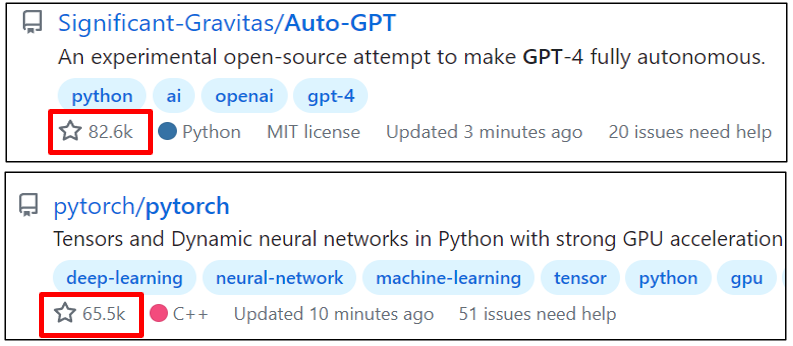
The project gained unprecedented traction on GitHub, accumulating thousands of stars in its initial weeks, a metric that outpaced established industry staples like PyTorch. This surge in popularity underscores a broader cultural shift: users are no longer satisfied with simply asking AI to write text; they are demanding systems that can browse the internet, manage files, and interact with software environments to achieve defined end-states.
How AutoGPT Operates: From Goals to Execution
At its core, AutoGPT acts as a wrapper around the GPT-4 API, integrating a suite of tools that provide the model with "eyes" and "hands." While ChatGPT remains within the confines of its training data and prompt window, AutoGPT functions through a continuous loop. When a user assigns an objective—such as "perform market research on top-tier headphones"—the system initiates a recursive process:
- Task Decomposition: The agent analyzes the objective and creates a plan of action.
- Execution: It uses internet search capabilities to gather real-time data.
- Evaluation: It reviews the data collected against the original goals.
- Correction: If the initial data is insufficient, it adjusts its strategy, conducts new searches, or refines its internal memory.
The system relies heavily on long-term memory management, often utilizing vector databases like Pinecone. This allows the agent to store and retrieve information across its session, ensuring that it does not lose context or repeat errors as it works toward a final deliverable.

The Technical Requirements for Deployment
Deploying AutoGPT is a process that requires a fundamental understanding of local software environments. Unlike cloud-based SaaS products, AutoGPT is designed to run on the user’s local machine, providing a layer of security and control. The technical prerequisites include:
- Python Environment: A stable installation of Python is mandatory, as the agent’s logic is executed through Python scripts.
- OpenAI API Access: A valid API key for GPT-4 is the engine of the project. While GPT-3.5 can be utilized for lower-cost testing, the reasoning capabilities of GPT-4 are generally required for the agent to maintain high-quality, complex task flows.
- Vector Database Integration: Users must configure an account with a service like Pinecone to enable the agent’s long-term memory, allowing it to maintain context over long, multi-step operations.
- Environmental Configuration: The
.envfile serves as the command center, where API keys and operational parameters—such as the "temperature" of the AI’s creative output—are defined.
Analyzing the Hype: Capability vs. Reality
Despite the social media narrative that AutoGPT signals the end of various white-collar professions, a technical analysis suggests a more nuanced reality. AutoGPT is currently an "intern-level" tool. It excels at structured, repetitive tasks—such as scraping website data, creating lists, or summarizing documents—but it lacks the nuanced judgment of a senior professional.
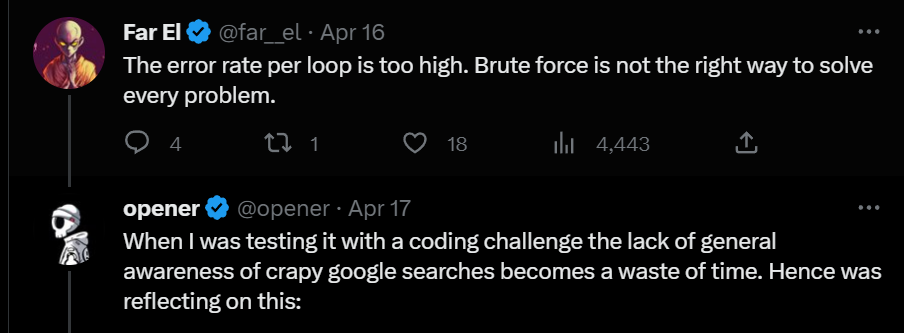
The "brute force" nature of the agent means that it can consume API credits rapidly. Because it operates through iterative loops, an poorly defined goal can result in the agent spinning in circles, consuming tokens without reaching a meaningful conclusion. Consequently, while the efficiency gains are undeniable for tasks like SEO research or lead generation, the system currently requires human oversight to ensure that the output remains aligned with business requirements.
Broader Implications for Industry
The rise of AutoGPT reflects a maturing market for AI. Corporations are transitioning from experimenting with "chatbots" to building "agents." The implications are significant:

- Operational Efficiency: For small teams and startups, autonomous agents can perform the work of multiple researchers, drastically reducing the time spent on data collection.
- Economic Shifts: As GPT-4 API costs continue to fluctuate, the cost of running an AI agent compared to a human salary remains a point of intense economic study. However, the requirement for human supervision remains the primary barrier to total automation.
- Security and Ethics: Operating an autonomous agent that has access to the internet and local file systems presents new security challenges. Users must be cautious about the permissions granted to these agents, as they can inadvertently execute commands that impact local directories.
A Timeline of Development
The trajectory of AutoGPT has been lightning-fast. In early 2023, the project was released as an experimental repository. Within months, it had evolved from a simple text-based interface into a sophisticated framework capable of executing complex logical trees. This velocity is symptomatic of the current "Gold Rush" in the AI space, where open-source contributors are iterating on top of foundation models at a pace that often leaves traditional software development cycles behind.
Future Outlook: Toward Production-Ready Agents
Looking ahead, the evolution of AutoGPT will likely move toward greater stability and reduced token consumption. As more contributors join the project, the focus is shifting toward "guardrails"—systems that prevent the agent from entering infinite loops or executing harmful commands.

The transition from "experimental" to "production-ready" will depend on the integration of more robust error handling and the development of specialized plugins. Currently, AutoGPT is best viewed as a powerful, albeit temperamental, tool for power users. It offers a glimpse into a future where software no longer waits for user input but anticipates the requirements of the user, executing projects in the background while the user focuses on high-level decision-making.
In conclusion, while AutoGPT has captured the imagination of the public, its current utility is defined by its ability to augment human productivity rather than replace it. It is a tool for the curious and the technically inclined, providing a scalable way to leverage the immense power of LLMs for real-world tasks. As the technology matures, the definition of what constitutes "work" in the digital age will continue to be rewritten, with autonomous agents playing a central role in the architecture of the future workforce. By understanding its limitations and mastering its configuration, professionals can harness this technology to significantly enhance their operational throughput, marking the beginning of a new chapter in human-AI collaboration.
Related posts: