React Native 0.80 Officially Released With React 19 Support and Deprecation of the Legacy Architecture

The open-source mobile development community has reached a significant milestone with the official launch of React Native 0.80. Announced by the core development team, this major version update delivers deep integration with React 19.1.0, introduces strict TypeScript APIs, transitions the legacy runtime architecture into a frozen state, and implements substantial performance enhancements across both Android and iOS platforms. Representing the collaborative effort of 127 contributors who authored over 1,167 commits, version 0.80 underscores the framework’s ongoing maturation into a streamlined, high-performance ecosystem for cross-platform application development.
Main Facts and Core Upgrades
At the heart of the React Native 0.80 release is the synchronization of the framework’s internal React version with the latest stable release, React 19.1.0. This integration allows developers to leverage cutting-edge React features, including enhanced developer tooling and owner stacks designed to trace component errors more efficiently during the debugging process. However, the core team noted a minor compatibility caveat: owner stacks currently encounter rendering anomalies when utilized alongside the @babel/plugin-transform-function-name plugin, which remains enabled by default within the standard React Native Babel preset. A corrective patch for this behavior is slated for an upcoming minor release.
Concurrently, version 0.80 addresses long-standing developer pain points concerning public application programming interface (API) stability. Historically, React Native has permitted deep imports—allowing developers to reference internal modules via specific subpaths rather than the root package. Version 0.80 formally deprecates this practice, introducing explicit warnings via ESLint and the JavaScript console whenever deep imports are detected within project source code. Developers are now encouraged to shift entirely to root imports, such as importing Alert directly from react-native instead of accessing internal library paths.

To facilitate a smooth transition toward a rigidly scoped public interface, the release debuts an opt-in Strict TypeScript API. Configurable via the project’s tsconfig.json file, this feature previews the framework’s future JavaScript API specifications by offering stricter, safer type definitions. While existing type definitions remain available to prevent breaking legacy projects, newly initiated applications and early adopters are strongly advised to adopt the strict typing framework in preparation for the eventual removal of deep imports in a subsequent major release.
Architectural Evolution and the Freezing of the Legacy System
The release of version 0.80 also marks a pivotal phase in the transition away from React Native’s legacy architecture. Since the introduction of the New Architecture as the default standard in version 0.76, adoption rates have climbed steadily across enterprise deployments, with major platforms reporting dramatic rendering performance gains, improved thread synchronization, and reduced memory overhead.
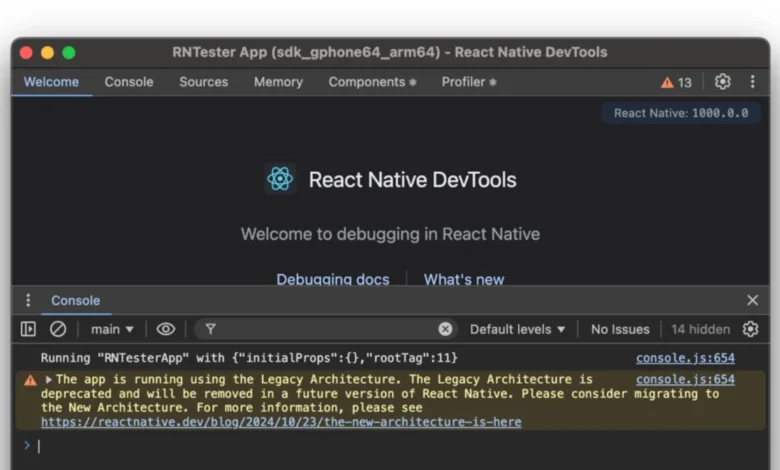
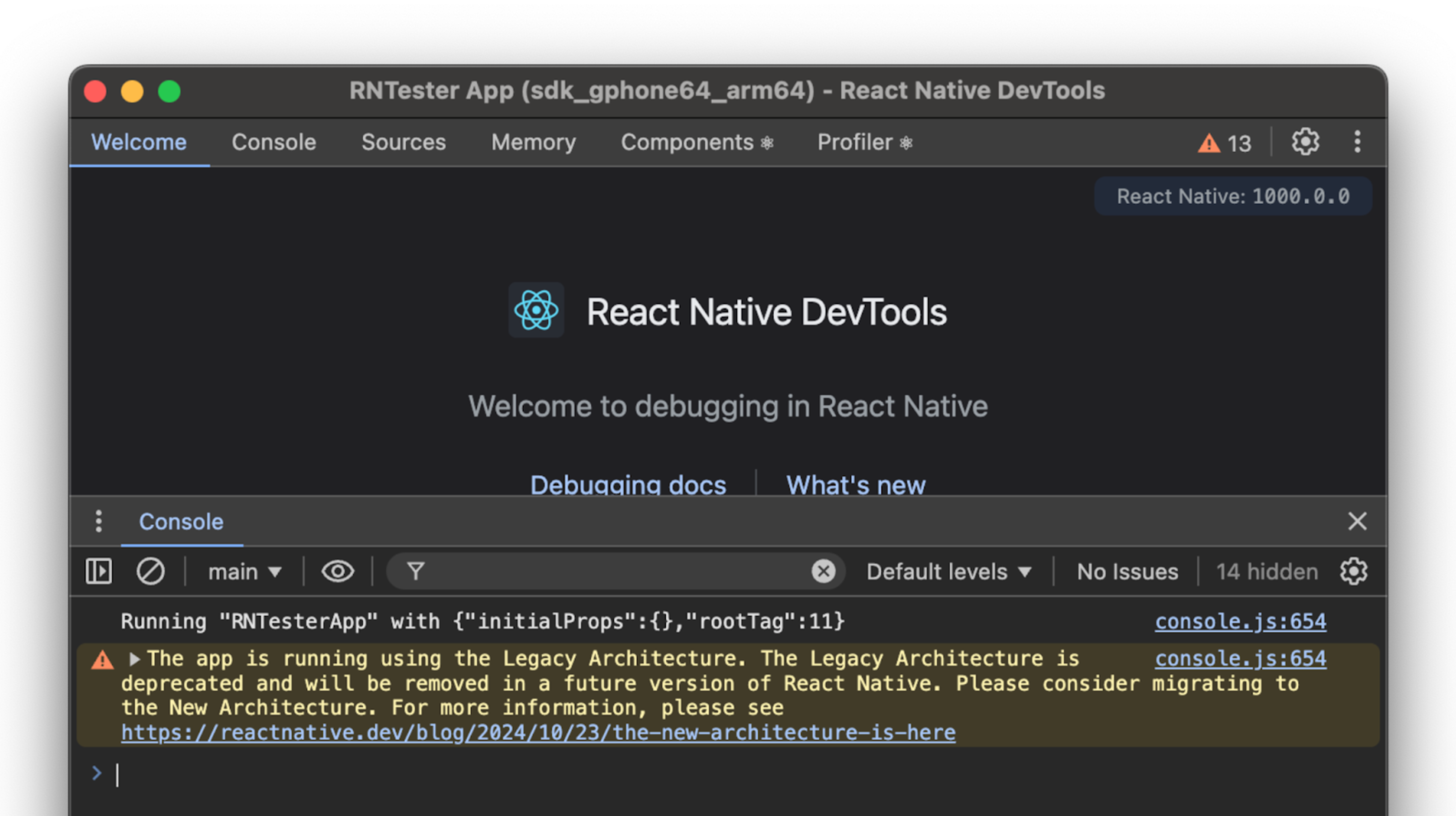
Building upon this momentum, the core engineering team officially declared the Legacy Architecture frozen. Under this new designation, maintainers will no longer allocate resources toward developing new features or implementing bug fixes for the legacy runtime, nor will the legacy codebase undergo comprehensive testing during future release cycles. To assist engineering teams still in the process of refactoring, version 0.80 temporarily preserves the ability to opt out of the New Architecture. Nevertheless, the framework has introduced proactive DevTools warnings that alert developers whenever their applications rely on legacy APIs destined for obsolescence.
Industry analysts and core contributors point out that maintaining two parallel architectures has historically imposed a heavy maintenance tax on the framework, inflating app binary sizes and complicating runtime performance optimizations. By effectively sounding the alarm on legacy dependencies, the React Native team aims to galvanize the broader ecosystem into completing their migrations before the legacy infrastructure is fully decommissioned in a future version.
Platform-Specific Enhancements: Android Optimization and Experimental iOS Prebuilts
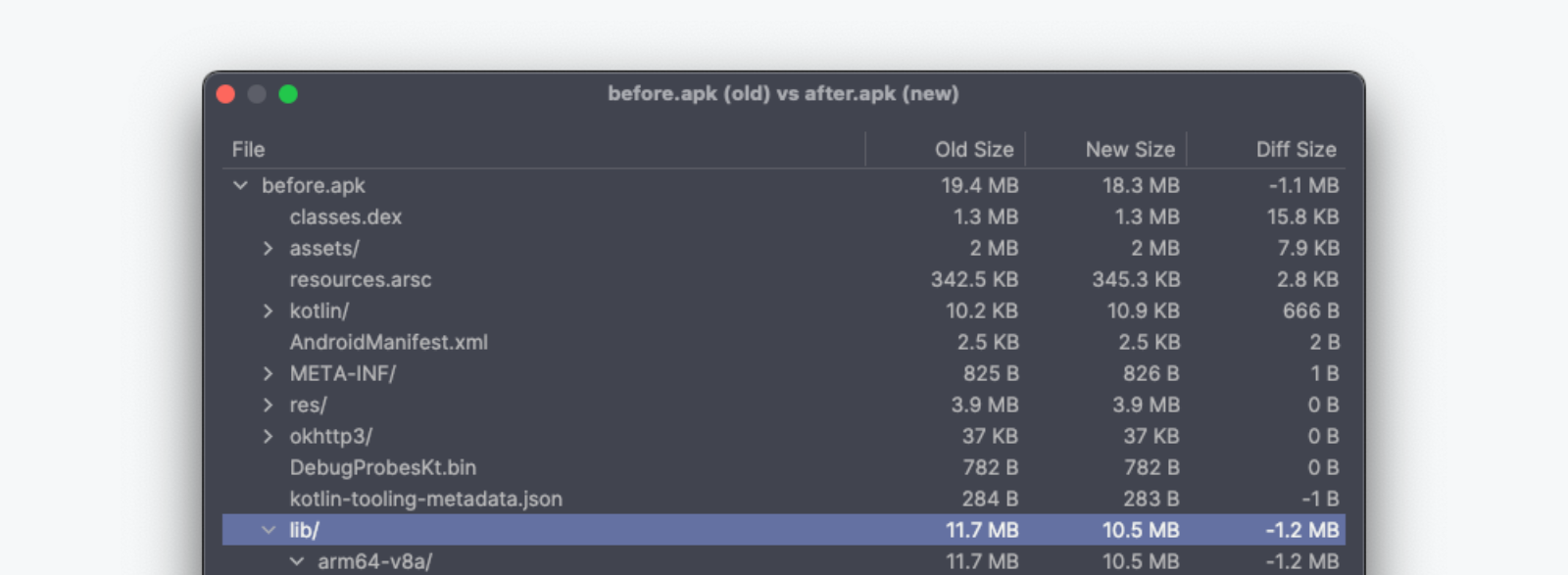
Mobile engineers utilizing Android will immediately benefit from a notable reduction in application binary footprints. Version 0.80 introduces Interprocedural Optimization (IPO) across both the React Native core and the Hermes JavaScript engine builds. This compiler-level optimization strips away dead code paths and optimizes function calls across translation units, yielding an automatic reduction of approximately one megabyte in final APK file sizes without requiring any manual configuration changes from developers.
Meanwhile, iOS developers receive a major experimental upgrade aimed at mitigating notoriously lengthy initial build times. Compiling the complete React Native source code alongside its numerous native dependencies has historically presented a significant bottleneck, particularly on older development hardware. To alleviate this, version 0.80 introduces prebuilt iOS dependencies via an XCFramework entitled ReactNativeDependencies.xcframework.
By prebuilding third-party libraries that fall outside Meta’s direct control—such as Folly and GLog—the framework shifts compilation overhead away from the developer’s local machine. Internal benchmarking conducted on Apple M4 hardware demonstrates that iOS builds execute roughly 12 percent faster when utilizing the prebuilt dependency mechanism. Furthermore, prebuilding these external packages is expected to eliminate a wide array of common build failure issues that frequently populate the framework’s GitHub issue tracker. Because the feature remains experimental, it is not enabled by default; developers can activate it by supplying the RCT_USE_RN_DEP=1 environment variable during CocoaPods installation or by modifying their project’s Podfile.
Supporting Data, Breaking Changes, and Ecosystem Shifts
As React Native continues to refine its ecosystem, version 0.80 brings several notable breaking changes and administrative updates:
- Package Exports Field: The introduction of an
"exports"field in the mainpackage.jsonmanifest strictly defines module entry points, laying the structural groundwork for a stabilized public API while maintaining temporary backward compatibility for subpath resolution. - JavaScriptCore (JSC) Deprecation: Version 0.80 marks the final release to feature first-party support for the JavaScriptCore engine. Moving forward, JSC will be sustained exclusively through the community-maintained
@react-native-community/javascriptcorepackage, aligning with strategic plans to unify runtime performance around Hermes. - New App Screen Redesign: For developers utilizing the React Native Community CLI and Template rather than Expo, the default landing screen has been extracted into an independent npm package (
@react-native/new-app-screen). The refreshed design minimizes initial boilerplate code while offering improved scaling and visual presentation across larger tablet and desktop viewport sizes. - Support Lifecycle Updates: With the official deployment of version 0.80, the 0.77.x release line officially transitions to an unsupported status. Projects operating on older versions are urged to consult the community-driven React Native Upgrade Helper to map out systematic migration paths.
Industry Implications and Future Outlook
The launch of React Native 0.80 arrives at a critical juncture for cross-platform application development, where engineering teams increasingly demand the performance parity of native applications paired with the rapid iteration cycles of web technologies. By firmly establishing React 19 as the baseline, freezing outdated architectural paradigms, and aggressively trimming binary and build overhead, the React Native maintainers are signaling a zero-tolerance policy for technical debt.
Reactions from early enterprise adopters and library maintainers have been largely optimistic, particularly regarding the performance gains afforded by Android’s IPO implementation and the promise of faster iOS compilation cycles. However, migration specialists emphasize that engineering organizations must proactively audit their codebases for deep imports and legacy architectural bindings to avoid sudden disruptions when future deprecation phases take effect.
As the ecosystem rallies around the New Architecture and the forthcoming stable JavaScript API, React Native 0.80 serves as both a bridge to modern React standards and a decisive turning point away from legacy constraints. Developers looking to adopt the new release can access comprehensive upgrade documentation and migration guides through the official React Native portal and associated community repositories.