AWS Weekly Roundup: Lambda Expands to 30-Minute Timeouts and GPUs Alongside Major Infrastructure and AI Agent Updates

Some structural limitations shape enterprise architecture far more profoundly than individual software features ever could. When Amazon Web Services originally launched AWS Lambda back in 2014, the serverless computing pioneer imposed a strict 60-second maximum execution timeout on functions. That ceiling was raised to 5 minutes in 2015 and subsequently bumped to 15 minutes in 2018, where it remained stubbornly fixed for nearly eight entire years. Last week, however, that longstanding boundary was officially doubled, marking a monumental shift in what serverless infrastructure can achieve. In that same extraordinary period, Lambda gained native support for graphics processing units (GPUs) and introduced dedicated runtimes for platform engineering teams. This convergence of capabilities represents one of the most feature-dense rollout weeks in the history of the serverless platform.
Alongside these compute milestones, Amazon advanced its global infrastructure footprint and refined its security posture to accommodate the explosive growth of autonomous artificial intelligence systems. A newly established AWS Local Zone in Bogotá, Colombia, successfully brought high-performance cloud infrastructure directly to local enterprises requiring ultra-low latencies. Concurrently, critical security and identity components across the AWS Security Token Service (AWS STS), Amazon Cognito, and Amazon CloudFront received targeted updates designed to govern autonomous software agents—specifically addressing how these entities authenticate, verify identity, and enforce the principle of least privilege during cross-system communications.
Main Facts and Infrastructure Expansion
The geographic expansion into South America stands as a cornerstone of the week’s announcements. The newly minted AWS Local Zone in Bogotá, Colombia, bridges a critical connectivity gap for developers, financial institutions, media companies, and real-time gaming platforms operating in the region. By placing compute, storage, and database networking infrastructure directly within a major metropolitan center, the Local Zone enables applications to achieve single-digit millisecond latencies for local end-users.
Technically, the Bogotá Local Zone delivers robust integration with core AWS services. It supports high-performance Amazon EC2 instance families—specifically the C7i, M7i, and R7i configurations—alongside flexible Amazon EBS storage volumes (including gp3, gp2, and io1 types equipped with local snapshot capabilities). Furthermore, workloads can leverage Amazon S3 One Zone-Infrequent Access storage, container orchestration platforms like Amazon ECS and Amazon EKS, AWS Direct Connect for dedicated networking, and Application Load Balancers. To leverage this new facility, cloud architects can immediately enable the us-east-1-bog-1a availability zone extension through their AWS Global View dashboard.
Beyond physical infrastructure, the database tier also experienced major cross-continental scaling. Amazon Aurora DSQL introduced native multi-Region peering capabilities across disparate continents. Enterprises can now construct unified, highly available Aurora DSQL database clusters spanning locations such as US East (N. Virginia) and Europe (Ireland), allowing applications to read from and write to a single strongly consistent relational database simultaneously across oceans. This announcement coincided with the rollout of PL/pgSQL function and procedure support, alongside significant storage engine upgrades that deliver up to a 50 percent increase in write throughput without any corresponding rise in infrastructure costs.
Chronology and Evolution of Serverless Limitations
To fully appreciate the significance of Lambda’s recent updates, one must examine the chronological progression of serverless constraints over the past decade. When developer feedback consistently highlighted the friction of orchestrating long-running data processing tasks, batch jobs, and file conversions within rigid 15-minute windows, AWS engineers began systematically dismantling those historical walls.
| Year | Milestone / Timeout Limit | Architectural Significance |
|---|---|---|
| 2014 | 60-second timeout | Initial launch of AWS Lambda for rapid, short-lived microservices. |
| 2015 | 5-minute timeout | Expanded capability to support basic ETL tasks and heavier computations. |
| 2018 | 15-minute timeout | Enabled complex data processing, report generation, and longer workflows. |
| 2023 | 90-minute timeout (Asynchronous) | Introduction of extended processing windows for specific asynchronous event mappings. |
| 2026 | 30-minute timeout (On-Demand) | Doubling of standard on-demand limits for synchronous, asynchronous, and mapping invocations. |
Building upon the asynchronous extensions introduced in previous years, last week’s update officially expands the timeout configuration to a maximum of 30 minutes (1,800 seconds) for on-demand Event Functions. This change applies across synchronous, asynchronous, and event source mapping invocation models in all commercial AWS Regions under standard Lambda pricing structures.
However, cloud architects must navigate nuanced operational considerations when utilizing these extended execution windows. When a service invokes a Lambda function synchronously, that calling service often enforces its own independent timeout rules. Consequently, engineers must deliberately extend client-side read and socket timeouts to prevent premature connection drops. Furthermore, because standard infrastructure features like AWS NAT gateways drop idle TCP connections after 350 seconds, long-running Lambda functions must be explicitly programmed to transmit regular network keep-alive packets. For exceedingly long processes that span hours or days, AWS continues to recommend durable functions, which can execute for up to a year and now natively emit OpenTelemetry traces for deep observability.
GPU Integration and Customer-Managed Runtimes
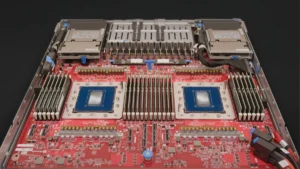
Perhaps the most technologically transformative announcement for machine learning engineers is the introduction of GPU-accelerated instances for Event Functions on Lambda Managed Instances. Historically, deploying deep learning inference or scientific computing workloads required provisioning dedicated Amazon EC2 clusters, manually configuring CUDA drivers, reconciling container image versions, and managing continuous server utilization.
With this new capability, developers can package GPU-accelerated inference, media processing, rendering, and complex mathematical calculations directly into OCI-compliant container images and execute them serverless-style. In reference benchmarking walkthroughs, multiple concurrent requests successfully shared a single underlying model loaded onto one GPU, matching the execution velocity of dedicated single-request setups. Optimized specifically for inference workloads using custom models across G-series instance types (ranging from G4dn to G6e), pricing comprises the standard underlying EC2 instance fee (fully compatible with Savings Plans and Reserved Instances), a modest 9.75 percent management fee for GPU orchestration, and a flat rate of $0.20 per million requests.
Concurrently, platform engineering teams received long-awaited control over their execution environments via customer-managed runtimes. Rather than tying software updates directly to individual function deployments, platform teams can now package approved language SDKs, digital certificates, security agents, and monitoring tools as standardized OCI images stored in Amazon ECR. As Lambda periodically recycles execution environments, functions automatically inherit these runtime updates without requiring redeployment across hundreds of microservices. Updates can be systematically staged, monitored via real-time health metrics, and instantly rolled back if anomalies arise, all at no additional service cost.
Security, Identity, and Agentic Governance
As enterprises increasingly deploy autonomous software agents and Model Context Protocol (MCP) clients to execute complex, multi-step business logic, security architectures must adapt to prevent privilege escalation. Last week saw the release of a coordinated suite of identity and access management tools designed specifically to constrain autonomous digital entities.
AWS STS introduced GetScopedCredentials, a powerful API that enables existing workloads to take their current temporary security credentials and dynamically derive narrower, highly restricted permissions or shorter session durations. Because permissions can only ever be scoped down—never expanded—a sub-agent spawned by a primary application can mathematically never possess greater system access than its creator. Every invocation is strictly governed by custom IAM policies and fully audited within AWS CloudTrail across all commercial, GovCloud, and international regions.
Complementing this, Amazon Cognito added native support for dynamic client registration (adhering to RFC 7591). This allows MCP clients and AI agents to register themselves at runtime rather than requiring pre-configured application client profiles. Administrators can enforce rigorous access token requirements or open registration conditionally, with dynamically generated clients carrying distinct identifier prefixes to simplify enterprise management and filtering.
At the network edge, Amazon CloudFront Functions fundamentally expanded its computational utility by introducing native support for outbound network calls via cf.fetch(). Functions can now query proprietary APIs, execute authorization checks, or perform real-time fraud analysis directly at the Content Delivery Network edge before requests ever touch origin servers or backend API gateways. AWS highlights this capability as an ideal mechanism for evaluating an AI agent’s permissions and operational budget at wire-speed. Network calls are priced at $0.10 per million requests beyond standard invocation fees and are fully included in higher-tier Pro flat-rate subscription plans, alongside cf.beacon() support for advanced background analytics.
Voice Cloning, Enterprise Case Studies, and Industry Implications
Expanding into generative media applications, Amazon Polly introduced enterprise-grade voice cloning capabilities. Operating on Polly’s advanced generative engine, developers can synthesize bespoke, natural-sounding custom voices utilizing only a few minutes of audio recordings provided by a consenting human speaker. Launching initially across seven languages—including English, Spanish, and Portuguese—each cloned voice speaks exclusively in the language of its training corpus. To maintain strict privacy and data governance, Amazon explicitly confirms that source audio recordings are neither retained nor utilized for foundational model training. Voice creation is offered free of charge, with customers billed strictly based on the volume of synthesized speech generated. Access is currently managed via a gated release model through direct AWS account teams, targeting brand-voice applications within enterprise contact centers and automated voice agents.
Real-world enterprise adoption metrics released last week underscored how massive organizations are managing these accelerating technological shifts. The BMW Group detailed its strategy for governing hundreds of autonomous software agents distributed across more than 12,500 research and development developers. By treating governance as deterministic code enforced strictly within CI/CD pipelines rather than relying on the agent’s internal reasoning loop, BMW ensures that neither developers nor autonomous agents can bypass organizational security policies.
Similarly, automation platform Cognition shared architectural insights regarding its deployment of Devin, an AI coding agent operating on Amazon EC2 Mac hosts across six global regions. By decoupling execution sessions from underlying hardware hosts and leveraging rapid virtual machine snapshot restoration, Cognition successfully recycles approximately 90 percent of idle Mac VMs within seconds, optimizing compute expenditure at scale. Meanwhile, data infrastructure provider Klaviyo successfully migrated its event-processing pipelines to Amazon MSK Express brokers just ahead of Black Friday peak traffic, absorbing roughly seven times normal event volumes while simultaneously reducing operational infrastructure expenditures by approximately 30 percent.
These sweeping developments arrive precisely as the global cloud computing community converges on Las Vegas for the annual AWS re:Invent conference. As builders evaluate the intersection of expanded serverless timeouts, GPU-accelerated event functions, and granular agentic security controls, the fundamental boundaries of cloud architecture have undeniably shifted toward a faster, more autonomous, and deeply integrated digital future.