Comprehensive Cloud Ecosystem Expansion Positions Modern Infrastructure Providers for Enterprise AI Dominance


The landscape of enterprise technology is undergoing a fundamental structural transformation, driven by the explosive demand for artificial intelligence, advanced machine learning workloads, and globally distributed applications. Cloud service providers across the globe are rapidly overhauling their infrastructure catalogs to deliver integrated, highly scalable ecosystems that cater to modern computational demands. Recent strategic updates to cloud product suites highlight a concerted industry-wide effort to unify core infrastructure primitives—spanning compute, storage, networking, containers, databases, management tools, and security—into cohesive, developer-friendly platforms. This evolution reflects a broader macroeconomic shift where enterprise buyers increasingly demand turnkey reliability, deterministic performance, and streamlined deployment pipelines to accelerate their digital transformation initiatives.
Background and Evolution of Modern Cloud Infrastructure
To understand the current state of cloud computing, one must examine the historical trajectory of IT architecture over the past two decades. The cloud computing paradigm initially emerged as a cost-effective alternative to on-premises data centers, primarily offering elastic compute instances and rudimentary object storage. Organizations migrated legacy monolithic applications to virtual machines to reduce capital expenditure and achieve operational flexibility. However, as software engineering practices evolved toward microservices, containerization, and continuous integration and continuous deployment (CI/CD), legacy cloud configurations proved increasingly inadequate for complex, high-velocity development cycles.
The proliferation of big data analytics and, more recently, generative artificial intelligence has compressed decades of technological iteration into a few short years. Modern artificial intelligence models—ranging from large language models to complex computer vision systems—require unprecedented computational density, ultra-low latency networking, and massive parallel processing capabilities. Consequently, cloud providers have been compelled to redesign their underlying hardware and software stacks. Compute resources are no longer treated as isolated virtual machines; instead, they are engineered as specialized clusters capable of handling intensive parallel workloads with minimal overhead.
Chronology of Infrastructure Scaling and Modular Integration
The journey toward comprehensive, modular cloud ecosystems has been marked by several distinct phases of technological maturation. In the early 2010s, the primary competitive advantage among cloud vendors centered on raw compute availability and geographic footprint expansion. Providers raced to build massive data center hubs across North America, Europe, and Asia-Pacific to reduce latency and satisfy regional data residency regulations.
By the mid-2010s, the focus shifted toward architectural modularity with the mainstream adoption of containerization technologies, most notably Docker and Kubernetes. Cloud providers recognized that developers required standardized environments to package applications alongside their dependencies, ensuring consistent behavior across development, testing, and production stages. This realization spurred the development of managed container registries, automated orchestration platforms, and secure backup solutions tailored specifically to immutable infrastructure paradigms.
Following the stabilization of container ecosystems, the late 2010s and early 2020s witnessed the widespread commoditization of managed databases and advanced networking controls. Recognizing that database administration consumed a disproportionate share of engineering hours, providers introduced fully managed database-as-a-service (DBaaS) engines supporting relational, NoSQL, and vector-based paradigms. Concurrently, software-defined networking (SDN) capabilities matured, allowing enterprises to establish sophisticated virtual private clouds, implement zero-trust perimeter defenses, and route global traffic with microscopic latency.
In the contemporary era—defined by the ubiquity of artificial intelligence—cloud providers are consolidating these disparate technological pillars into unified suites. Featured AI products, specialized compute accelerators, and intelligent management tooling are now tightly coupled with underlying storage and security frameworks, creating an integrated continuum from raw silicon to end-user application deployment.
Core Components of the Modern Cloud Suite
An analysis of contemporary cloud architecture reveals eight foundational pillars that collectively empower organizations to build, deploy, and scale complex software systems.
Compute Resources and AI Acceleration
At the heart of any modern cloud infrastructure lies the compute layer. Enterprises require the ability to provision scalable cloud compute resources dynamically, scaling from lightweight micro-instances to massive GPU-accelerated clusters designed for deep learning training and inference. Modern compute offerings leverage advanced virtualization technologies to minimize performance degradation, offering bare-metal performance characteristics alongside the agility of cloud-native elasticity. Furthermore, specialized AI compute instances integrate high-bandwidth memory and custom neural processing units, enabling data science teams to iterate rapidly on complex predictive and generative models without the capital burden of procuring specialized hardware.
Containers, Images, and Immutable Infrastructure
Containerization has fundamentally altered how software is packaged and delivered. Modern cloud environments feature robust repositories for safely storing and managing container images, accompanied by automated lifecycle policies and vulnerability scanning tools. By decoupling applications from the underlying operating system, containers enable seamless portability across hybrid and multi-cloud topologies. Complementing these registries are sophisticated backup and snapshot management systems that guarantee data integrity and support rapid disaster recovery scenarios in the event of infrastructure failure.
Managed Databases and Data Persistence
Data remains the lifeblood of modern enterprise applications. Fully managed resources running popular database engines—including open-source relational databases, distributed SQL systems, in-memory caches, and specialized vector databases designed for semantic search—relieve engineering teams from the operational burdens of provisioning, patching, scaling, and backing up database clusters. These managed engines incorporate automated failover, point-in-time recovery, and elastic scaling capabilities, ensuring high availability and transactional consistency under variable load profiles.
Management, Development Tools, and Observability
As cloud architectures grow in complexity, the tools used to govern them become critical to operational success. Management and development tools provide centralized control infrastructure, enabling administrators to define access policies, automate resource provisioning through Infrastructure as a Code (IaC) frameworks, and gather real-time operational insights. Advanced observability suites aggregate logs, metrics, and distributed traces, utilizing machine learning algorithms to detect anomalies, predict capacity bottlenecks, and streamline root-cause analysis before user experience is impacted.
Networking and Traffic Optimization
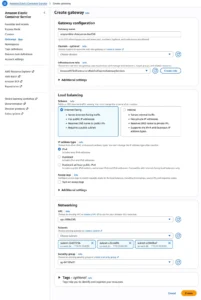
Securing and controlling traffic to and from modern applications requires sophisticated networking primitives. Virtual private clouds, content delivery networks (CDNs), load balancers, and web application firewalls (WAFs) work in tandem to optimize packet routing and defend against sophisticated cyber threats. By implementing intelligent edge routing and encrypted tunnels, organizations can ensure low-latency global access while maintaining strict isolation between internal microservices and public-facing endpoints.
Security and Governance Frameworks
In an era characterized by escalating cyber threats and stringent regulatory frameworks, security cannot be treated as an afterthought. Comprehensive cloud suites integrate native security features designed to protect accounts, resources, and sensitive data payloads. Identity and access management (IAM) policies, role-based access control (RBAC), hardware-backed key management services, and continuous compliance monitoring tools empower security operations teams to enforce least-privilege principles and neutralize unauthorized access attempts proactively.
Scalable Storage and Data Resilience
Whether dealing with unstructured object data, high-performance block storage for database volumes, or shared file systems for legacy applications, modern cloud storage architectures provide virtually limitless capacity with high durability guarantees. Utilizing erasure coding, multi-region replication, and tiered storage policies, organizations can optimize their cost structures while ensuring that petabytes—or even exabytes—of critical enterprise data remain accessible and secure against catastrophic hardware failures.
Supporting Data and Industry Metrics
To contextualize the rapid evolution of cloud infrastructure ecosystems, industry analysts point to significant shifts in enterprise spending and infrastructure adoption patterns. According to recent market intelligence reports from leading research firms such as Gartner and IDC, worldwide public cloud end-user spending is projected to surpass $675 billion, representing a year-over-year growth rate exceeding 20 percent.
Within this broader market expansion, infrastructure-as-a-service (IaaS) and platform-as-a-service (PaaS) segments are experiencing the most accelerated demand, driven largely by artificial intelligence initiatives. Enterprise surveys indicate that over 75 percent of global organizations have integrated or are actively planning to integrate machine learning workloads into their cloud environments within the fiscal year. This demand has triggered a corresponding surge in specialized compute and managed database utilization, with cloud-native database revenues accounting for nearly half of all database management system market growth.
Furthermore, operational efficiency metrics underscore the value proposition of integrated cloud ecosystems. Organizations that transition from fragmented, self-hosted infrastructure to fully managed, unified cloud suites report an average reduction of 35 percent in deployment cycle times and a 40 percent decrease in unbudgeted downtime incidents. These quantitative improvements directly translate to enhanced competitive positioning and accelerated time-to-market for digital products and services.
Industry Reactions and Expert Analysis
Technology executives, systems architects, and independent industry analysts have offered widespread commentary regarding the strategic implications of comprehensive cloud ecosystem expansion. Major cloud service providers have emphasized that the modern enterprise no longer wants to act as a systems integrator, piecing together disparate point solutions from multiple vendors. Instead, customer demand strongly favors integrated, interoperable platforms where compute, storage, networking, and artificial intelligence capabilities function as a unified fabric.
Dr. Aris Thorne, a senior enterprise architecture analyst at the Global Technology Research Institute, noted during a recent industry symposium that modular integration has become the definitive battleground for cloud supremacy. "The era of selling isolated virtual servers or raw object buckets has passed," Dr. Thorne observed. "Enterprise buyers are evaluating cloud vendors based on the friction coefficient of their development pipelines. If a provider can seamlessly bridge the gap between raw compute infrastructure, managed data persistence, and state-of-the-art artificial intelligence tooling without forcing developers to navigate complex integration hurdles, that provider captures market share."
Concurrently, cybersecurity experts have underscored the importance of native security tooling within these expanded ecosystems. As cyber attack vectors evolve to target application programming interfaces (APIs) and containerized microservices, fragmented security architectures often introduce blind spots. By embedding identity management, encryption, and threat detection natively into the cloud control plane, providers enable organizations to maintain a robust security posture across distributed development teams.
Broader Impact and Strategic Implications
The maturation and widespread adoption of comprehensive cloud infrastructure ecosystems carry profound implications for the global economy, software engineering practices, and the future trajectory of artificial intelligence.
First, the democratization of enterprise-grade compute and artificial intelligence capabilities levels the playing field for emerging startups and mid-market enterprises. Historically, training advanced machine learning models or deploying globally resilient software architectures required substantial upfront capital investment in physical hardware and specialized engineering personnel. Today, cloud-native modular ecosystems allow a startup with a modest engineering team to provision enterprise-scale compute clusters, deploy containerized microservices, and leverage managed database engines within minutes, paying strictly for resources consumed.
Second, the operational paradigm of software engineering continues to shift toward abstraction and developer productivity. As routine infrastructure management tasks—such as database scaling, security patching, and network routing—become fully automated and managed by cloud primitives, software engineers can redirect their cognitive bandwidth toward business logic, domain-driven design, and algorithmic innovation. This shift accelerates the velocity of software delivery and fosters rapid experimentation in emerging technological domains.
Finally, the continuous expansion of cloud ecosystems reinforces the trend toward multi-cloud and hybrid architectures. While individual cloud providers strive to offer comprehensive, all-in-one product suites, enterprises frequently adopt multi-cloud strategies to avoid vendor lock-in, optimize cost structures, and leverage best-of-breed specialized services across different vendors. Consequently, interoperability standards, open-source container orchestration tools, and API consistency have emerged as critical design principles for modern software development.
Conclusion
The ongoing evolution of cloud infrastructure represents a defining chapter in the history of enterprise information technology. By synthesizing disparate computational pillars—compute, containers, managed databases, networking, security, storage, and advanced artificial intelligence tooling—into cohesive, high-performance ecosystems, cloud providers are laying the indispensable foundation for the next generation of digital innovation. As organizations worldwide continue to migrate mission-critical workloads and embrace generative artificial intelligence, the ability to build, deploy, and scale with absolute reliability and speed will remain the primary differentiator in the global digital economy.
Related posts: