LimeWire Launches Developer API to Bring Dynamic AI Image Generation and Upscaling to Third-Party Applications

The landscape of digital media creation has undergone a profound transformation over the past several years, shifting from manual graphic design and tedious stock photo searches toward sophisticated artificial intelligence generation. In a significant move to bridge the gap between advanced neural networks and everyday software development, LimeWire has officially announced the launch of its new Developer API. This newly released interface allows engineers, content creators, and platform developers to integrate real-time, dynamic AI art generation and image upscaling directly into their own applications, workflows, and publishing systems.
The introduction of the API marks the latest chapter in LimeWire’s ongoing corporate evolution. Once globally recognized as a pioneer of peer-to-peer file sharing during the early 2000s, the brand has successfully reinvented itself in recent years as an accessible, consumer-friendly hub for AI-generated art, music, and digital media. By packaging powerful underlying generative models into an intuitive user interface, LimeWire initially empowered everyday users to become digital artists without requiring specialized technical knowledge. With the deployment of the Developer API, the company is now scaling that accessibility outward, providing developers with the programmatic infrastructure needed to automate and customize visual content creation at scale.
Understanding the Mechanics of the LimeWire Developer API
At its core, the LimeWire Developer API is designed for simplicity, speed, and seamless integration. Utilizing standard RESTful architecture, developers can execute HTTP POST requests to interact with the platform’s generative engines. Authentication is handled securely via Bearer tokens using unique API keys, ensuring that automated requests are properly authorized.
The primary endpoint for generation allows developers to submit a text prompt alongside structural parameters, such as aspect ratios, to produce bespoke imagery on the fly. For instance, a basic implementation via a command-line interface utilizing curl demonstrates the straightforward nature of the request:
curl -i -X POST
  https://api.limewire.com/api/image/generation
  -H 'Authorization: Bearer MY_API_KEY'
  -H 'Content-Type: application/json'
  -H 'Accept: application/json'
  -H 'X-Api-Version: v1'
  -d '
    "prompt": "A beautiful princess in front of her kingdom",
    "aspect_ratio": "1:1"
  '
In addition to generation from scratch, the API provides robust post-processing capabilities, most notably high-resolution upscaling. Developers can supply an existing image asset identifier alongside a desired scale factor—such as a 4x magnification—to enhance visual clarity and detail. The corresponding endpoint handles the computational heavy lifting of pixel refinement, ensuring that programmatically generated or user-uploaded graphics meet professional quality standards.
curl -i -X POST
  https://api.limewire.com/api/image/upscaling
  -H 'Authorization: Bearer MY_API_KEY'
  -H 'Content-Type: application/json'
  -H 'Accept: application/json'
  -H 'X-Api-Version: v1'
  -d '
    "image_asset_id": "116a972f-666a-44a1-a3df-c9c28a1f56c0",
    "upscale_factor": 4
  '
The Evolution of LimeWire: From Peer-to-Peer Pioneer to AI Powerhouse
To fully contextualize LimeWire’s current trajectory, it is necessary to examine the historical trajectory of the brand. Founded in 2000, LimeWire LLC operated one of the most popular peer-to-peer file-sharing clients on the internet, capturing a massive share of the digital music distribution market during the era of dial-up and early broadband connections. However, the platform became embroiled in extensive copyright infringement litigation brought by the Recording Industry Association of America (RIAA). In May 2010, a federal judge ordered the service to disable its searching, downloading, uploading, and file-sharing functionality, leading to a permanent shutdown of the original software.

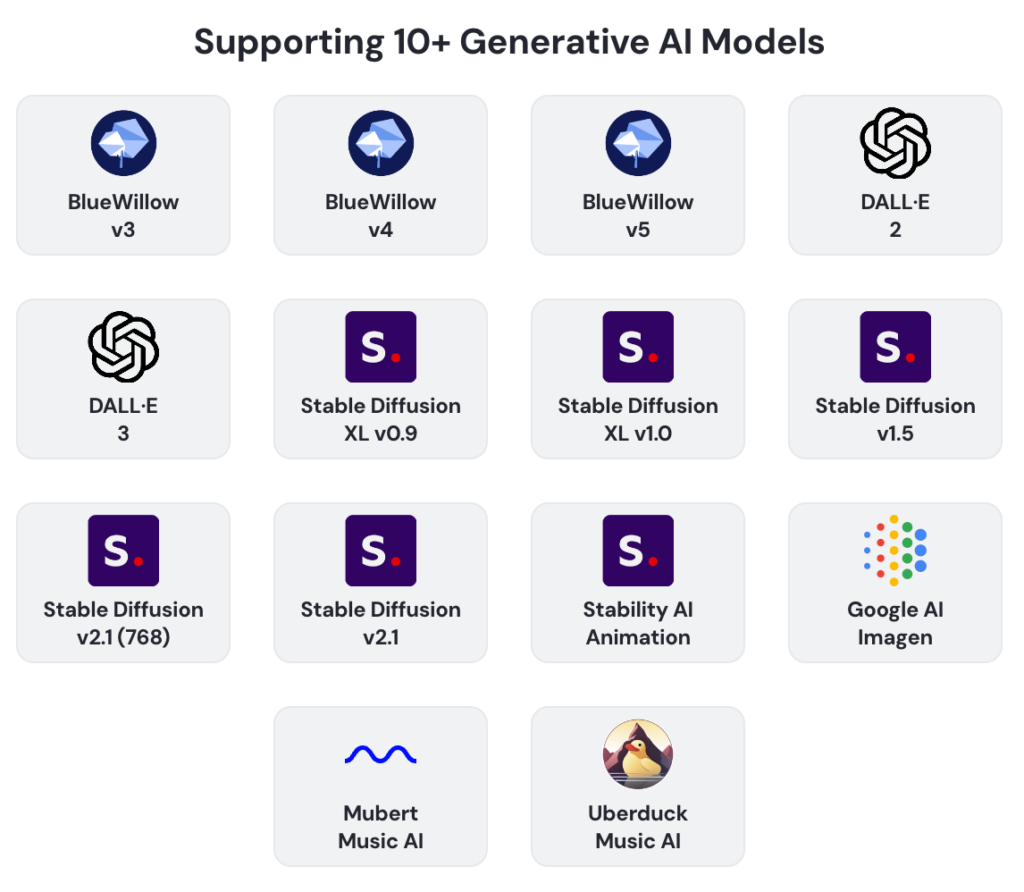
A decade later, in 2022, a group of new owners acquired the intellectual property rights with a radically different vision. Rather than returning to file sharing, the leadership team repositioned LimeWire as a mainstream digital collectibles marketplace before pivoting sharply toward generative artificial intelligence. Recognizing the explosive market demand for accessible AI tools—exemplified by the rapid growth of platforms like Midjourney, OpenAI’s DALL-E, and Stable Diffusion—LimeWire built an ecosystem designed to democratize creative technology.
By launching a consumer-facing web platform that allowed users to generate images, audio, and video prompts without complex configuration, the company rapidly rebuilt its user base. The introduction of the Developer API represents the logical next phase of this strategy: expanding outward from a standalone consumer website into an enterprise-friendly infrastructure provider.
Practical Implications for Content Creators, Bloggers, and Publishers
The ability to generate and manipulate images dynamically through an API carries profound operational implications for digital publishers, independent authors, and content management systems. Historically, maintaining a blog, news portal, or literary website required a significant allocation of time dedicated to asset sourcing. Content creators routinely spent hours searching through traditional stock photography libraries, navigating licensing restrictions, or attempting to manually craft custom graphics to accompany written text.
With programmatic AI integration, this workflow can be fundamentally automated. For example, a blogging platform could analyze the keywords, thematic elements, or summary text of a newly drafted article and automatically dispatch a payload to the LimeWire API. Within seconds, a contextually relevant, unique visual asset can be generated and embedded directly into the post without human intervention. This eliminates copyright compliance concerns associated with third-party stock images, as every generated asset is original and created specifically for that instance.
Similarly, independent authors and digital self-publishers can feed narrative descriptions, character outlines, or entire chapter summaries into systems powered by the API to automatically generate story illustrations and book cover concepts. Beyond individual publishing workflows, software-as-a-service (SaaS) companies and community platforms can embed the API directly into their user interfaces. This enables end-users—such as forum members, e-commerce vendors, or social media managers—to create and enhance images natively within the host application, enriching user engagement and expanding platform utility.
Industry Context and the Broader Generative AI Landscape
LimeWire’s entry into the developer ecosystem occurs within a fiercely competitive global market. The generative artificial intelligence sector has attracted tens of billions of dollars in venture capital and corporate investment, with major technology conglomerates and specialized startups alike racing to capture market share. Competitors such as OpenAI, Stability AI, and Replicate have long provided robust APIs that allow developers to integrate text-to-image and text-to-video models into enterprise software.
However, industry analysts note that market differentiation increasingly hinges on user experience, pricing transparency, and ease of integration. While foundational models offered by major research laboratories often require extensive technical configuration, prompt engineering expertise, and custom wrapper development, consumer-focused brands like LimeWire emphasize turnkey simplicity. By offering pre-packaged tools for both generation and upscaling under a unified developer portal, LimeWire aims to capture developers who prioritize rapid deployment over complex model fine-tuning.
Furthermore, the demand for high-resolution upscaling APIs has surged as web applications increasingly rely on low-latency, lightweight image generation followed by post-processing refinement. Generating images at lower resolutions and subsequently upscaling them via dedicated algorithms significantly reduces computational overhead and API response times, providing a smoother experience for end-users interacting with real-time software applications.
Security, Compliance, and Responsible AI Deployment
As generative AI tools become more deeply embedded in commercial software pipelines, questions surrounding copyright, content moderation, and data security remain at the forefront of industry discussions. Developers utilizing third-party APIs must navigate an evolving regulatory environment concerning synthetic media, deepfakes, and intellectual property ownership.
While LimeWire’s developer documentation emphasizes flexibility and power, the platform operates within established compliance frameworks designed to filter out prohibited content, hate speech, and explicit material during the generation phase. Ensuring robust guardrails is essential for maintaining enterprise trust, as businesses integrating third-party AI APIs into their customer-facing products must be confident that the underlying models will not produce legally actionable or brand-damaging outputs.
Looking Ahead: The Future of Programmatic Creativity
The release of the LimeWire Developer API signals a broader cultural and technological shift: the transition of AI from a novel consumer toy into fundamental software infrastructure. As application programming interfaces become the primary conduit through which creative intelligence is accessed, the boundaries between writing code and creating art continue to blur.
For software engineers, tools like the LimeWire API transform static applications into dynamic, reactive environments capable of visualizing concepts on demand. For publishers and content creators, automated asset generation promises to streamline production pipelines and reduce administrative friction. Whether applied to automated blog illustrations, dynamic e-commerce product imagery, or immersive storytelling platforms, programmatic generative AI is rapidly becoming a standard pillar of modern software architecture.
As engineers begin testing and deploying the new endpoints, the broader industry will be watching to see how LimeWire scales its developer ecosystem, refines its pricing and rate-limiting structures, and introduces additional media modalities. For now, the message to the developer community is clear: the infrastructure for dynamic, user-centric AI creation is open for business, inviting creators to build the next generation of intelligent applications.