Security researchers have identified a significant cybersecurity vulnerability originating from within the White House’s internal network, where numerous employee devices have been discovered operating as residential proxy nodes. These nodes, which essentially transform computers and mobile devices into traffic-routing points for third parties, have effectively opened a "backdoor" into one of the most sensitive digital environments in the United States. The situation is further complicated by the fact that some of this traffic is routing through services linked to individuals previously implicated in Russian state-sponsored cyber-espionage operations.
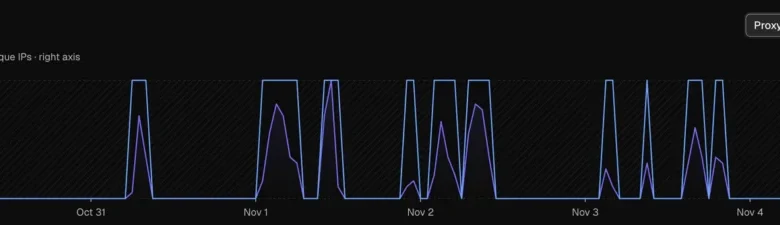
The discovery was brought to light by Layer3 Intel, a cybersecurity firm specializing in network telemetry, which detected persistent beaconing activity emerging from the internet address space reserved for the Executive Office of the President, specifically the Autonomous System (AS) 2650. Between October 5 and November 3, investigators recorded 236 instances of outgoing traffic exiting the White House network via these proxy channels. This activity was not merely an isolated incident; rather, it represents a systemic exposure that poses grave risks to the integrity of internal government communications and data security.
Anatomy of the Proxy Exposure
Residential proxy services function by allowing users—often located in different countries—to route their internet traffic through the IP addresses of unsuspecting residential or corporate users. While these services are marketed for legitimate purposes like market research or geo-unblocking, they are frequently embedded into "free" desktop and mobile applications via software development kits (SDKs). When an unsuspecting employee installs an application containing such an SDK, their device effectively joins a global botnet, allowing the proxy provider to rent out that device’s network connection to the highest bidder.
The investigation identified that several Windows 11 installations within the Executive Office of the President were running a service known as Infatica. This specific provider has drawn intense scrutiny due to its founder, Vladimir Fomenko. Fomenko is a Russian national whose former hosting business, King Servers, was identified by intelligence agencies and private security firms as the infrastructure provider for eight IP addresses used during the 2016 interference in U.S. election systems, specifically targeting databases in Arizona and Illinois.
The presence of Infatica is merely the tip of the iceberg. Layer3 Intel’s analysis revealed that as many as 28 separate residential proxy services were found to be using the White House network as an exit node. This indicates that multiple employees have likely installed various applications that contain proxy-enabling SDKs, each creating a unique tunnel through which external, anonymous users can interact with the internet while appearing to originate from the White House itself.
Chronology and Patterns of Activity
According to telemetry data provided by Layer3 Intel, the proxy activity followed a distinct, recurring pattern. The researchers observed that proxy exit nodes were active on 26 of the 30 days monitored during their October-November study period. Notably, the majority of this traffic occurred during off-hours, specifically between 5:00 p.m. and midnight. This pattern is consistent with the behavior of personal devices or corporate-issued machines being used after standard business hours, potentially when monitoring systems are less vigilant or when security personnel are off-duty.
The data suggests that this is not a targeted intrusion by a foreign state, but rather a result of lax "shadow IT" practices. "This is public access," the Layer3 Intel team noted in their technical disclosure. "Anybody can obtain it by signing up to a public residential proxy service, paying a few dollars and sending requests through it. We did not selectively target this network… We caught this by chance, simply by requesting global rotating access through these services."
The Broader Security Implications
The risks associated with residential proxies are multifaceted. Beyond the obvious issue of unauthorized traffic originating from a sensitive network, these services have been weaponized to facilitate a wide range of cybercrime. In late 2025, researchers identified that threat actors were actively exploiting a vulnerability in these proxy networks to scan the local area networks (LANs) of proxy nodes.
This technique, often referred to as "proxy pivoting," allows an attacker to bypass firewalls and gain direct access to internal devices that would otherwise be shielded from the public internet. If a White House staffer’s computer is compromised in this manner, an attacker could potentially gain a foothold in the internal network, facilitating lateral movement, data exfiltration, or the deployment of ransomware.
Ben Brundage, founder of the proxy-tracking firm Synthient, has been a vocal critic of the lack of "Know Your Customer" (KYC) processes in the residential proxy industry. "Some of these resellers sell bandwidth for as low as 60 cents a gigabyte," Brundage stated. "That means for less than a dollar, you can gain access into some of the most confidential and trusted networks. The reseller ecosystem further enables this with any criminal able to buy access while skipping KYC processes."
A Pervasive Industry Problem
The White House is not an outlier in this regard; it is a high-profile example of a much larger, systemic failure in corporate and government cybersecurity. Data from the security firm Spur, presented in a January 2026 webinar, indicated that residential proxy nodes were detected in nearly 300 government-operated networks, alongside hundreds of utility companies, hospitals, and financial institutions.
Infoblox, another leading security firm, reported earlier this year that 65% of its enterprise customer base was observed querying domains associated with residential proxy services. This suggests that the "bring your own device" (BYOD) culture, combined with the proliferation of ad-supported, telemetry-heavy software, has created a massive, unintended attack surface across almost every sector of critical infrastructure.
Official Response and Remediation
As of the time of this report, the White House has not issued an official comment regarding the findings. However, the discovery poses an immediate challenge for the Chief Information Officer (CIO) and the cybersecurity teams tasked with protecting Executive Office infrastructure.
Addressing this vulnerability requires more than simple blacklisting of known proxy providers. Because these services use "rotating" IP addresses and legitimate-looking traffic, they are difficult to block with traditional perimeter defenses. Effective remediation will likely require a combination of:
- Stricter Device Management: Implementing mobile device management (MDM) solutions that prohibit the installation of unauthorized software or applications with known proxy SDKs.
- Network Egress Filtering: Implementing more granular controls on outbound traffic to block communication with known residential proxy infrastructure.
- Endpoint Detection and Response (EDR): Deploying advanced EDR agents that can identify and kill background processes that attempt to beacon out to proxy network control servers.
- Security Awareness Training: Educating staff on the risks of installing third-party applications on machines that have access to sensitive networks.
The revelation that the White House network—a central hub of American governance—is being used as a residential proxy exit node highlights the dangers of modern, hyper-connected software ecosystems. In an era where "free" software often comes at the cost of one’s network integrity, the incident serves as a stark reminder that the most sophisticated firewalls in the world can be rendered ineffective by a single, poorly vetted application installed on an employee’s machine. The incident is currently being monitored by the cybersecurity community, which expects further scrutiny into how government agencies intend to sanitize their networks of these pervasive and potentially dangerous connections.