The Evolution of Digital Sovereignty in the Era of Distributed AI and Silicon Innovation

As organizations transition from experimental AI pilot programs to deploying mission-critical, data-intensive workloads, the physical architecture of the internet is undergoing a fundamental transformation. The traditional model of centralized cloud processing is increasingly insufficient for the demands of modern industry, forcing AI processing to move closer to the "edge"—the precise locations where data is generated, decisions are finalized, and physical operations occur. This shift is not merely a technical adjustment; it represents a strategic realignment in the conversation surrounding digital sovereignty.
Historically, digital sovereignty was narrowly defined by data residency—the geographical location where information was stored. Today, the concept has expanded into a multi-dimensional framework. It now encompasses the entire lifecycle of a workload: where data is processed, which entities have administrative access, how systems are secured, and whether organizations can verify the integrity of their operational environments in real-time. To address these complex requirements, Microsoft and Intel have deepened their long-standing partnership, aiming to bridge the gap between silicon-level hardware security and cloud-based AI deployment.
The Chronology of Sovereign Infrastructure
The current push toward distributed sovereignty is the culmination of a decade-long evolution in cloud architecture. In the early 2010s, the "cloud-first" mandate encouraged organizations to migrate massive data lakes to public cloud providers to leverage economies of scale. By 2018, however, the rise of stringent global regulations—most notably the European Union’s General Data Protection Regulation (GDPR)—began to force a rethink of data governance.
By 2022, as generative AI began to reshape enterprise priorities, the challenge shifted from simple data storage to "sovereign AI." Organizations realized they could not rely on public cloud models to train or run proprietary models on sensitive data without robust, verifiable, and localized controls. This led to the 2024-2025 period of infrastructure hardening, where hardware manufacturers like Intel and software giants like Microsoft began to integrate security features directly into the silicon-to-cloud stack. The current phase, beginning in late 2026, marks the maturity of these efforts, characterized by "Local" service offerings that allow cloud-like agility within on-premises or customer-controlled environments.
The Convergence of Silicon and Software
The collaboration between Microsoft and Intel centers on the principle that trust must be built into the hardware layer to be effective at the software layer. For sensitive workloads, software-defined security is no longer sufficient; organizations now demand hardware-backed proof of security.
Intel’s contribution to this ecosystem revolves around its Xeon 6 processors and the integration of Trust Domain Extensions (Intel TDX). These technologies enable "Confidential Computing," a paradigm that isolates specific workloads in hardware-protected "trust domains" during processing. Even in a shared cloud environment, the data remains encrypted and shielded from the host operating system, the hypervisor, and even the cloud provider’s administrators.
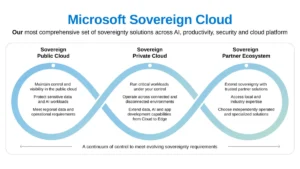
Microsoft, meanwhile, has operationalized these silicon capabilities through Azure Local and Microsoft Foundry. These platforms allow enterprises to maintain a consistent management interface across their entire footprint, whether the compute occurs in a massive public data center or a small, regulated facility in a remote industrial plant. By using Intel’s Advanced Matrix Extensions (AMX), these environments can accelerate AI inference directly on the CPU, removing the need for specialized hardware that might complicate governance and operational boundaries.
Supporting Data and Market Implications
According to recent industry analysis, the market for sovereign cloud services is expected to grow at a compound annual growth rate (CAGR) of over 20% through 2030. This growth is driven by three primary sectors:
- Government and Public Sector: Requirements for data isolation in defense and national security.
- Industrial and Manufacturing: The need for low-latency AI processing to manage real-time factory operations without relying on external internet connectivity.
- Healthcare and Finance: Sectors where regulatory mandates require strict adherence to data sovereignty and the ability to audit system access logs.
A critical component of this trend is the demand for "verifiable evidence." It is no longer enough for a provider to state that data is secure; regulators increasingly require technical attestation—cryptographic proof that the environment has not been tampered with and that the security policies currently in force are the ones that were audited.
Official Perspectives on the Sovereign Stack
The partnership between the two technology titans highlights a shared belief that the most effective sovereignty strategy is one that offers the most flexibility. Anand Pashupathy, Vice President and General Manager of Intel Product Assurance and Security, emphasized the necessity of a "shared foundation." He noted that "digital sovereignty requires trust across the technology stack," adding that the combination of hardware-based security with cloud and AI infrastructure is essential for organizations to maintain control while continuing to innovate.
Bernardo Caldas, Corporate Vice President of Azure Edge Product Management at Microsoft, echoed this sentiment. He highlighted that the current challenge for enterprise leaders is managing the trade-off between control and agility. "Digital sovereignty depends on cloud, infrastructure, security, AI, and silicon working together," Caldas stated. "Our collaboration with Intel gives customers a more consistent foundation across these layers, so they can apply stronger controls where needed while retaining the flexibility to innovate."
Analyzing the Future of Workload Placement
The strategic implication of this shift is the end of the "one-size-fits-all" cloud strategy. Organizations are moving toward a tiered model of workload placement. High-sensitivity, mission-critical AI workloads are increasingly being shifted to "local" environments—private clouds or localized Azure clusters—where governance is absolute. Less sensitive tasks, such as public-facing marketing analytics or non-proprietary research, remain in the public cloud to take advantage of global scale and reduced operational overhead.
This necessitates a "unified management plane." Organizations must be able to move a workload from the cloud to an on-premises server as regulatory requirements change without having to rewrite their code or reconfigure their security protocols. This is where the alignment of the silicon-to-cloud stack becomes a competitive advantage. If the underlying security primitives—encryption, identity management, and hardware isolation—are consistent across all environments, the "cost" of moving a workload drops significantly.
Three Pillars for Strategic Planning
For technology leaders navigating this transition, experts suggest evaluating their sovereignty posture against three core questions:
- The Control Question: Does the organization have the capability to dictate the administrative access, data residency, and physical connectivity of the workload?
- The Verification Question: Is there technical evidence (attestation) available to prove that the environment is operating within the specified security parameters, or is the organization relying solely on contractual promises?
- The Adaptability Question: Does the current architectural choice limit the organization’s future options? A robust sovereign architecture should allow for the adoption of new AI models and changes in regulation without requiring a full-scale infrastructure rebuild.
Conclusion: Preservation of Choice
As AI continues to integrate into every facet of the economy, the definition of digital sovereignty will continue to broaden. The most resilient organizations will be those that view sovereignty not as a constraint to be managed, but as a strategic capability. By fostering deep, integrated partnerships across the technology ecosystem—connecting the physical silicon, the infrastructure layer, and the AI software—Microsoft and Intel are attempting to provide a path forward that balances the rigid requirements of security and regulation with the fluid needs of the modern AI-driven enterprise.
The ultimate goal is to provide a "sovereign architecture" that does not create rigidity. By ensuring that security and governance remain consistent regardless of where the compute happens, these initiatives aim to ensure that businesses remain agile enough to compete in a rapidly changing global market while remaining compliant with the increasingly complex demands of data and privacy regulation. The era of the "locked-in" cloud is fading, replaced by an era of modular, verifiable, and distributed intelligence.
Related posts: