Android Dev Summit Unveils New Agentic Tools and Adaptive Development Frameworks to Revolutionize App Ecosystems

The Android Dev Summit, held this week, has emerged as a pivotal moment for the mobile development community, marking a significant shift toward agentic AI integration and cross-platform scalability. Google announced a sweeping suite of updates designed to alleviate development friction, streamline the implementation of artificial intelligence agents, and standardize app performance across an increasingly fragmented hardware landscape that now spans smartphones, foldables, laptops, and Extended Reality (XR) hardware.
The Evolution of the Android Development Landscape
For over a decade, Android development was defined primarily by the challenges of screen fragmentation and hardware diversity. However, the current paradigm has shifted toward "agentic experiences"—applications that utilize autonomous AI to perform complex tasks on behalf of the user. During the keynote presentations at the summit, leadership emphasized that the modern developer’s toolkit must evolve to support these new capabilities without imposing undue complexity.
The event served as a progress report on the "Android for All" initiative, which seeks to unify the development experience across traditional mobile devices and newer form factors. By introducing advanced APIs, the company is attempting to lower the barrier to entry for developers who wish to integrate their services into broader ecosystems, such as Gemini and Google Search.
Chronology of Recent Tooling Advancements
The announcements follow a series of strategic pivots throughout the last eighteen months. In early 2024, Google began the integration of AI-assisted coding features into the Android Studio environment. By mid-year, the focus shifted to "Connected Apps," a initiative aimed at allowing third-party services to function natively within Google’s core service offerings.
The current summit represents the "graduation" of these projects into stable release cycles. The timeline of these updates is as follows:
- Q1 2024: Initial prototyping of Gemini-integrated developer environments.
- Q2 2024: Introduction of the Android MCP (Model Context Protocol) frameworks.
- Q3 2024: Beta testing of the "Bring Your Own Agent" (BYOA) functionality in Android Studio.
- Current Summit: Broad availability of stable tooling for AI agent integration and the launch of the XREAL AURA partnership.
Bring Your Own Agent: A Modular Approach to AI
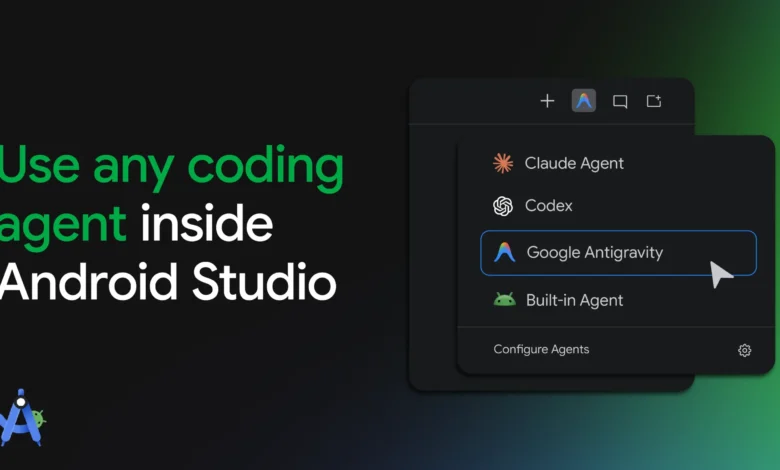
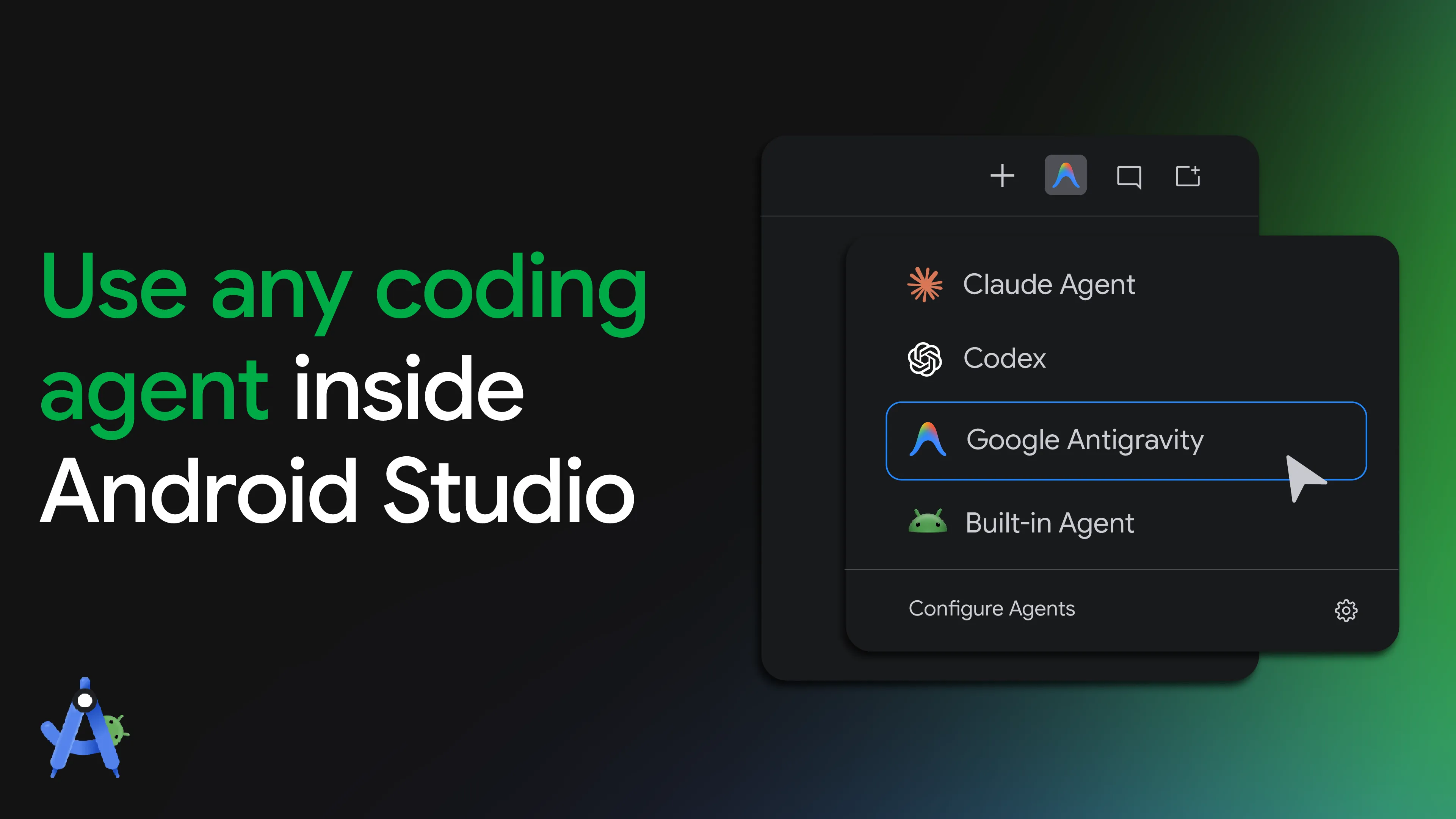
Perhaps the most significant announcement regarding developer productivity is the stable release of Android Studio Rabbit 2. This update enables developers to select their preferred coding agent—including Claude, Codex, or any of over 40 ACP-compliant agents—directly within the integrated development environment (IDE).
This move represents a departure from proprietary, closed-loop AI tools. By allowing developers to choose the model that best fits their specific workflow, Google is effectively commoditizing the AI-coding layer. Analysts suggest this strategy is designed to prevent vendor lock-in, encouraging developers to remain within the Android Studio ecosystem even if they prefer external LLMs (Large Language Models) to assist in their codebase generation.

Expanding the Connected Apps Platform
To bridge the gap between application services and high-intent user traffic, Google introduced the Connected Apps Platform. This infrastructure allows developers to build natively using Android MCP or remote MCP protocols. The objective is to make an app’s functions accessible directly through AI interfaces, such as Gemini, without requiring the user to manually open the application.
Data suggests that user engagement is significantly higher when services are surfaced in context. By enabling "Gemini dev mode" for prototyping, developers can test how their app functions respond to natural language queries before deploying to the Google Connected Console. This creates a feedback loop that, according to early developer testimonials, reduces the time-to-market for AI-enabled features by approximately 30%.
Technical Adaptation for Premium Form Factors
A persistent challenge for the Android ecosystem is the wide variety of screen sizes and input methods. The introduction of the "Compose adaptive skill" is a direct response to the growth of foldable devices and the introduction of "Googlebook" hardware.
The updated adaptive skill provides automated auditing of Compose UI, enabling developers to implement keyboard shortcuts, custom cursors, and hover states with minimal manual configuration. For developers, this means a mobile application can be transformed into a desktop-class experience with significantly less refactoring. The tool now handles complex UI requirements such as Grid and FlexBox migrations and, crucially, manages end-to-end state transitions across different device postures—such as moving from a folded state to a tabletop mode.
Google has signaled that these adaptations will soon become a baseline requirement. By next year, the Google Play Store is expected to implement stricter quality guidelines for foldable support, potentially prioritizing apps that demonstrate high-fidelity scaling across these premium form factors.
Android XR and the XREAL Partnership
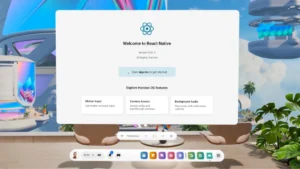
The summit also highlighted the company’s commitment to the XR (Extended Reality) space through a new collaboration with XREAL. The launch of XREAL AURA, the world’s first wired XR glasses powered by the Android XR platform, marks a milestone in spatial computing.
By graduating several core XR libraries to stable, Google is inviting developers to transition from experimental AR/VR builds to production-grade applications. The implications for the enterprise and gaming sectors are substantial. As the hardware becomes more portable—moving away from bulky headsets toward glasses-based form factors—the demand for apps that can render 3D interfaces atop physical environments is expected to surge.
Broader Economic and Industrial Implications
The shift toward agentic and adaptive tooling is not merely a technical upgrade; it is a strategic repositioning of the Android platform in the face of competitive threats from proprietary AI stacks. By standardizing the way agents interact with Android applications, Google is creating an "agent-first" operating system.
Economic analysts observe that this move provides a significant advantage to small-to-medium-sized developers. By automating the "plumbing" of app development—such as layout adaptation and boilerplate code generation—Google is effectively lowering the cost of innovation. The ability to deploy a single codebase across phones, tablets, foldables, and XR glasses significantly improves the ROI (Return on Investment) for software firms that previously had to maintain separate teams for different platforms.
Industry Reaction and Expert Analysis
Industry observers have generally responded positively to the summit’s focus on "friction reduction." By moving the conversation away from hardware specifications and toward developer experience (DX), Google is addressing the primary concern of the modern engineering workforce: complexity fatigue.
"The move to standardize how agents interact with Android is a necessary evolution," says one software architect familiar with the updates. "Developers are tired of building bridges between proprietary AI models and their local environments. By standardizing these connections, Google is making the Android ecosystem the default choice for the next generation of AI-native applications."
However, challenges remain. The requirement for developers to adopt the Compose adaptive skill to maintain search visibility in the Play Store could be viewed as a mandatory tax on development resources. While the long-term benefits of a unified ecosystem are clear, smaller studios may struggle to meet these elevated quality standards within the projected timelines.
Conclusion: The Road Ahead
The Android Dev Summit has provided a clear roadmap for the next phase of mobile innovation. By prioritizing agentic capabilities, seamless UI adaptation, and expanded hardware support, Google is attempting to ensure that Android remains the dominant platform for both traditional mobile apps and the emerging class of AI-powered spatial experiences.
As these tools move into broad availability, the success of the platform will depend on the adoption rate among the developer community. With the introduction of these robust APIs and the ongoing integration of AI-assisted development tools, the barrier to building high-quality, cross-platform, and intelligent applications has never been lower. The industry will now look to the Google Play Store’s policy updates in the coming months as the final indicator of how these technologies will redefine the standard for the entire mobile landscape.
Related posts: