Android Developers Can Now Leverage Enhanced Command-Line Tools and AI-Driven Skills for Streamlined App Creation.


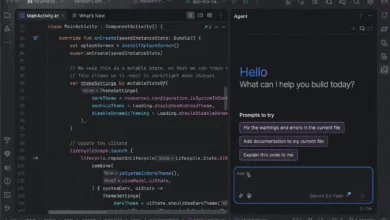
The landscape of Android application development is undergoing a significant transformation as Google introduces a series of sophisticated updates to its Android Command-Line Interface (CLI) tooling. These enhancements are specifically designed to integrate more seamlessly with modern artificial intelligence agents and Large Language Models (LLMs), allowing developers to automate complex tasks, bridge the gap between architectural standards and implementation, and access physical testing environments remotely. By providing agents with "skills"—structured, validated instructional sets—the development process is becoming increasingly iterative and less reliant on the limitations of training data cutoffs.
The Evolution of the Android CLI Ecosystem
For years, the Android CLI has served as the backbone of terminal-based development, enabling developers to build, test, and manage projects without the overhead of a graphical user interface. However, the recent shift toward AI-assisted coding necessitated a change in how these tools interact with automation agents. The updated Android CLI acts as a bridge, enabling AI agents to execute terminal-based commands that handle everything from environment configuration to emulator management and automated test suites.
A critical addition to this update is the integration of Android Device Streaming directly into the CLI. Historically, developers have struggled with the "fragmentation problem"—the need to test applications across a wide array of hardware specifications and OS versions. Accessing physical hardware has traditionally been a logistical hurdle, often requiring expensive device labs or manual maintenance of local hardware. With the new integration, developers can now instruct their AI agents to provision real physical devices via a secure ADB (Android Debug Bridge) over SSL connection. This allows for headless deployment, log collection, and screenshot capture, significantly reducing the time spent on manual quality assurance (QA) cycles.
Chronology of Recent Tooling Advancements
The release of these tools marks a pivotal moment in a broader, year-long strategy by the Android developer relations team to modernize the developer experience. Following the initial launch of the Android skills repository, the team has focused on a iterative feedback loop involving early adopters in the enterprise sector.
- Early 2024: Introduction of the Android skills repository, providing basic instructional sets for common coding tasks.
- Mid-2024: Expansion of the library to include over 20 distinct skills, focusing on specialized areas like accessibility and security.
- Late 2024 (Current): Rollout of full CLI integration for Device Streaming and the specialized "Wear Compose Material 3" skill.
This progression reflects a move toward "grounded" AI development. Unlike general-purpose LLMs, which may hallucinate outdated APIs or deprecated design patterns, these Android skills act as a source of truth. They are stored as structured SKILL.md files that an agent can query, ensuring that any code generated adheres strictly to the latest official documentation found on developer.android.com.
Grounding AI Through Official Skills
The concept of "skills" in the Android ecosystem is designed to solve the primary deficiency in current AI coding assistants: the disconnect between generic knowledge and platform-specific architectural requirements. By providing agents with these modules, developers can ensure that the AI understands the nuance of Jetpack Compose, Material Design 3, or specific hardware API constraints.
The methodology behind these skills is rooted in rigorous evaluation. Each skill is subjected to testing protocols to ensure that the code suggested by an agent is not only functional but also performant and maintainable. This initiative addresses the "deprecation problem," where models might suggest older, less efficient methods because they appear more frequently in historical training data. By enforcing these skills, Google is effectively filtering the output of LLMs through a layer of verified technical constraints.
Deep Dive: The Wear OS Material 3 Implementation
One of the most notable examples of this technology in action is the new Wear Compose Material 3 skill. Developing for wearable technology presents unique challenges: the need for power efficiency, the management of circular UI components, and the handling of specialized input mechanisms like rotary dials.
The engineering team at FotMob, a popular sports application, recently served as a primary test case for this technology. When migrating their Wear OS interface, the team faced the daunting task of replacing legacy wrappers and manual boilerplate code with the modern Material 3 standard. By utilizing the new skill, the team was able to:
- Automatically migrate multiple legacy lists to the
TransformingLazyColumnformat. - Implement
ScreenScaffoldcontent padding to ensure consistent spacing across different watch face dimensions. - Eliminate manual rotary and focus boilerplate code that had previously been a source of bugs.
Roy Solberg, the Android Tech Lead at FotMob, reported that the process, which might have taken days of manual refactoring, was completed in a single afternoon. Crucially, the skill identified errors that the underlying LLM had missed, such as the failure to correctly forward padding values to the list containers—a testament to the effectiveness of the "grounding" approach.
Fact-Based Analysis: Implications for the Industry
The shift toward agentic workflows in Android development carries several significant implications for the industry. First, the barrier to entry for complex platform-specific tasks is being lowered. Developers who are less familiar with the intricacies of Wear OS or specific hardware-level optimizations can now rely on these skills to guide their agents toward "best-practice" code.
Second, the move toward remote, cloud-based physical device testing is likely to reshape the cost structure of app development. Small and mid-sized development firms no longer need to maintain extensive local device farms to ensure high-quality, bug-free releases. By shifting to an on-demand, terminal-controlled model, teams can scale their testing capacity based on current needs rather than capital expenditure.
Third, the "environment-agnostic" nature of these skills suggests a future where the choice of IDE or AI agent is secondary to the quality of the instructional metadata. Whether a developer prefers to use Android Studio, VS Code, or a third-party agent like Claude or Codex, the underlying "Android skills" will remain consistent. This creates a unified standard for Android development that persists regardless of the tools used to write the code.
The Path Forward: Integration and Adoption
For organizations looking to adopt these new tools, the onboarding process is designed to be minimal. The Android CLI can be initialized in an existing project directory with a single command (android init), after which developers can browse the available skills catalog. The ability to install and update these skills through android skills add creates a modular architecture that can grow alongside the project.

Looking ahead, the expansion of the skills library is expected to continue into areas such as Jetpack DataStore, advanced security implementations, and accessibility compliance—the latter being a critical priority for mobile developers under modern regulatory environments.
The integration of these capabilities represents a maturation of the AI-assisted development trend. By moving beyond simple code generation and toward a framework of structured, verified, and platform-aware assistance, the Android ecosystem is setting a high bar for how mobile development will be conducted in the coming decade. As these tools become more prevalent, the role of the developer will likely evolve from writing boilerplate code toward acting as an architect and editor, orchestrating agents that handle the heavy lifting of platform-specific implementation.
In conclusion, the combination of the updated Android CLI and the expanding repository of verified Android skills offers a compelling vision for the future of mobile development. By prioritizing accuracy, platform-specific optimization, and remote hardware accessibility, Google is providing the infrastructure necessary for developers to focus on product innovation rather than the technical minutiae of environmental setup and legacy code migration. As these tools continue to evolve, they will likely become an indispensable component of the modern Android developer’s toolkit, ensuring that applications are not only built faster but are also more robust, efficient, and consistent with current industry standards.