
The landscape of enterprise project management is currently undergoing a seismic shift as industry leaders race to integrate artificial intelligence into the core of their software ecosystems. As major players like Atlassian, ClickUp, and monday.com pivot toward AI-first architectures, a critical debate has emerged regarding data sovereignty, cost predictability, and the degree of autonomy afforded to end users. JetBrains, the developer behind the project management tool YouTrack, has officially announced a departure from the "default-on" AI trend, unveiling a strategic roadmap that prioritizes user control, interoperability, and data privacy. This shift comes at a time when organizations are increasingly scrutinizing the long-term implications of AI-driven SaaS tools, particularly regarding how their internal data is utilized for model training and service improvements.
A Departure from the Industry Standard
For most project management software vendors, the integration of AI is no longer a peripheral feature; it is the central value proposition. By automating task creation, summarizing meeting transcripts, and suggesting responses, these tools aim to streamline workflows. However, this convenience often comes with hidden costs. Many enterprise clients have expressed concern over the "black box" nature of these features, where sensitive proprietary data is processed by third-party LLMs.
In contrast, JetBrains has introduced a modular approach. Rather than forcing a singular AI experience upon its user base, YouTrack is positioning itself as a platform that functions equally well with a fully integrated AI suite, a customized set of third-party tools, or no AI intervention at all. This stance is explicitly designed to cater to industries with strict regulatory requirements, such as finance, healthcare, and government, where the integration of external AI agents must be heavily audited or entirely prohibited.
Chronology of the Shift
The transition in the project management software market has been accelerated by several key events throughout 2026. Early in the year, JetBrains published its 2026 roadmap, which hinted at a flexible AI strategy. This was followed by a series of industry-wide updates from major competitors, most notably Atlassian’s announcement regarding the end-of-life for its Data Center support and its updated data contribution policies.
Effective August 17, 2026, Atlassian implemented new terms allowing for the use of de-identified and aggregated customer data to improve its AI services. For many enterprise IT departments, this served as a catalyst to seek alternatives that offer more transparent data handling. By Q4 2026, JetBrains is set to solidify its position by introducing "Ask YouTrack," an agentic AI chat, alongside "Bring Your Own Key" (BYOK) support, which will allow companies to link their own AI providers directly to their project management environments.

The Model Context Protocol (MCP) Integration
One of the most significant technical advancements highlighted in the YouTrack strategy is the implementation of the Model Context Protocol (MCP). This open-standard approach allows YouTrack to act as a source of truth for external AI agents without requiring the user to migrate their data into a proprietary AI silo.
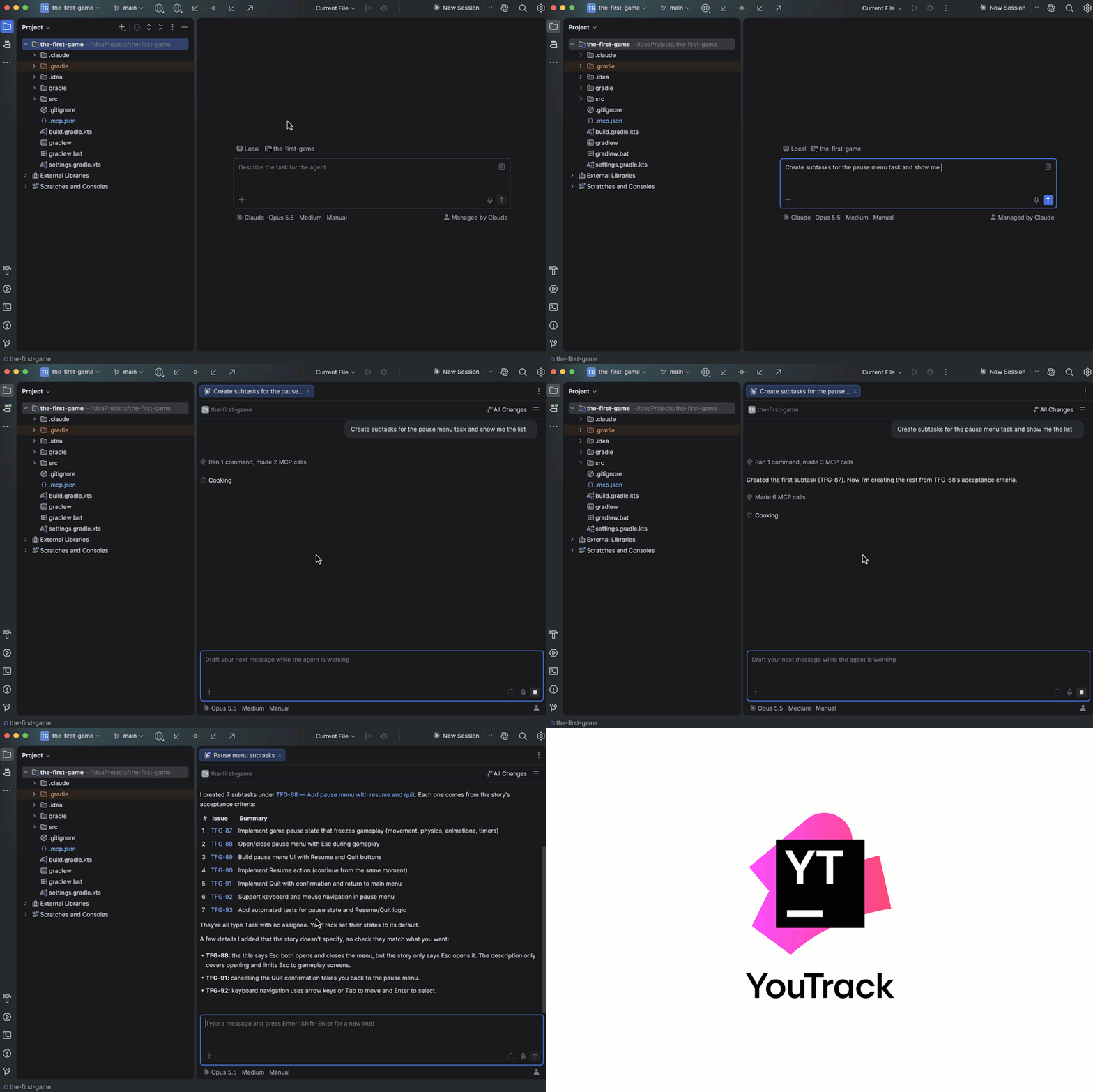
Through MCP, teams can connect YouTrack to a diverse array of tools, including ChatGPT, Claude, and Perplexity, as well as specialized coding assistants like Cursor and the JetBrains IDE suite. This interoperability enables a workflow where, for instance, a QA engineer can interact with a Claude-based agent to pull real-time test results from YouTrack, identify gaps in multi-platform testing, and generate new subtasks—all without the agent needing native "AI" capabilities built into the project management tool itself.
Case studies, such as that of the software firm Fullworks, illustrate the practical utility of this approach. By utilizing MCP to bridge their development environment with YouTrack, the company has successfully automated the creation of tasks and the verification of release requirements across 12 distinct software products. This creates a "shared agentic database," where human-led project management and machine-led task execution coexist in a unified, transparent environment.
Economic and Operational Implications
The economic argument for this strategy is rooted in the Total Cost of Ownership (TCO). As project management tools bundle more AI features, licensing costs have trended upward, often necessitating expensive upgrades for enterprise-grade security and data control. JetBrains claims that by remaining modular, YouTrack can reduce the TCO by up to 70% compared to the combined cost of the Atlassian stack (Jira and Confluence), particularly when factoring in the auxiliary costs of plugins and AI service management.
For organizations that prefer a "no-AI" environment, the operational benefit is absolute control. Administrators retain the ability to toggle AI features off entirely at the account level. This is not merely a preference for simplicity; it is a security posture. By ensuring that core functionality—such as Agile boards, Gantt charts, and Helpdesk modules—is decoupled from AI services, YouTrack ensures that the fundamental engine of the software remains reliable and predictable, regardless of the volatility of the AI market.
Technical Safeguards and Data Privacy
A primary concern for modern enterprises is the training of AI models on private data. JetBrains has addressed this by ensuring that all built-in AI features, such as text-to-issue transformation, grammar assistance, and image-to-text recognition, operate within isolated environments. For YouTrack Cloud, this processing occurs on JetBrains infrastructure, while for YouTrack Server, it remains entirely within the client’s local environment.

The introduction of BYOK support in Q4 2026 represents a further evolution of this strategy. By allowing companies to use their own Large Language Models (LLMs) via their own API keys, JetBrains is essentially offloading the governance of the AI’s behavior to the customer. If a firm uses an internal, private model for security reasons, that model can now be connected to the YouTrack ecosystem, ensuring that data never leaves the firm’s controlled network.
Looking Ahead: The Agentic Future
The upcoming Q4 2026 updates, which include the launch of the "Ask YouTrack" agentic chat and enhanced integration with Slack, signal a shift toward "agentic workflows." In these scenarios, the software acts not just as a repository for information, but as an active participant in project execution.
The ability to turn a Slack conversation into a formal task via AI—while maintaining the context of the discussion—addresses one of the most common friction points in remote team collaboration: the loss of information between informal chat and formal project tracking. By enabling this through an AI-powered plugin, JetBrains aims to capture the workflow velocity that teams often lose when switching between platforms.
Strategic Analysis
The move by JetBrains is a calculated bet that the "AI-fatigue" currently felt by many enterprise IT leaders is a long-term trend rather than a passing phase. As corporations become more sophisticated in their use of AI, they are likely to favor platforms that offer flexibility over those that offer a "one-size-fits-all" solution. By positioning YouTrack as an infrastructure layer that can facilitate AI rather than dictate its use, JetBrains is effectively future-proofing its platform against shifts in AI regulation, model availability, and company-specific security policies.
While competitors will continue to push for tighter, more vertical integration of AI, the success of the YouTrack approach suggests that there is a significant, underserved market for enterprise software that respects the "human-in-the-loop" philosophy. Whether a team is managing a small startup with limited resources or a global enterprise with stringent compliance mandates, the ability to choose when, how, and by whom AI is deployed is increasingly becoming the defining characteristic of a professional-grade project management platform. As the industry moves toward 2027, the focus will likely shift from which vendor has the "most" AI to which vendor offers the most resilient and customizable framework for the modern digital workspace.