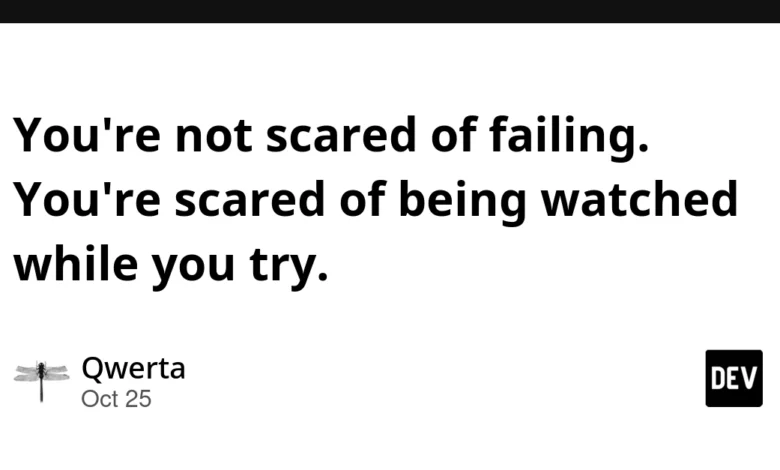
In the contemporary labor market, career transitions have become an increasingly frequent phenomenon. Driven by economic shifts, technological automation, and a cultural pivot toward purposeful work, millions of adults globally decide to pivot into new industries annually. However, beneath the surface of resume revisions, portfolio building, and upskilling courses lies a profound psychological barrier that career coaches and vocational psychologists have spent decades attempting to quantify. According to recent professional observations from career coaching practices, the primary obstacle preventing mid-career professionals from executing a successful pivot is rarely a lack of competence or technical aptitude. Instead, it is the acute social anxiety associated with public vulnerability—the fear of being observed while learning out loud.
This phenomenon presents a distinct challenge within professional development. When individuals articulate their hesitation to enter a new field, they frequently frame the hesitation in terms of technical deficits, stating variations of the phrase, "I am not good enough yet." While objectively accurate for any beginner, this declaration often masks a deeper social reluctance: the dread of public evaluation during the awkward, unpolished initial phases of skill acquisition.
The Psychology of Adult Vulnerability and Professional Expectations
To understand why career pivots induce such high levels of performance anxiety, researchers must examine the societal expectations placed upon adult learners. Children and young adults entering the workforce for the first time possess a built-in social license to fail. Society implicitly and explicitly expects novices to stumble, miscalculate, and require extensive mentorship.
For established adults, however, the social contract changes drastically. Adults changing careers are frequently anchored by their existing identities. They may already hold senior titles, command competitive salaries, and possess recognized expertise in their current domains. Stepping down into an entry-level posture or a junior role requires shedding a hard-won mantle of competence.
Vocational coaching data indicates that the hesitation to apply for new roles or showcase early-stage projects is rarely driven by the abstract risk of rejection. Rather, it is driven by the immediate, visceral cost of being perceived as incompetent by peers, former colleagues, and social networks. The fear is not simply "I might not get the job," but rather, "People I know will see me wanting something I am currently bad at."
Standard career advice—which routinely urges candidates to "just apply," network aggressively, and broadcast their career pivots on professional platforms like LinkedIn—frequently overlooks this psychological friction. When generic advice treats this reluctance as mere irrationality, it dismisses the genuine social and professional costs associated with public failure. For an adult professional, public missteps can feel damaging to professional reputation, network capital, and self-esteem.
Reframing the Threshold: Defining the Scope of Exposure
Recognizing that the fear of public visibility is the true bottleneck in career transitions, modern coaching methodologies have shifted away from traditional confidence-building exercises. Instead, practitioners are increasingly focusing on risk containment and exposure reduction.

The core challenge for career changers is not eliminating fear, which is a natural physiological and psychological response to vulnerability. The challenge is structural: how to make the initial attempts small enough, low-stakes enough, and private enough that an unfavorable early outcome does not trigger social or emotional exhaustion.
Industry analysts and workforce development experts suggest several strategies to mitigate the impact of public visibility during a transition:
- Compartmentalizing Skill Acquisition: Separating the learning phase from the market-facing phase allows professionals to build baseline competence in private before exposing their work to critical audiences.
- Controlled Environments: Utilizing anonymous or hyper-niche communities where early-stage drafts, code, or portfolio pieces can be critiqued without linking directly to a primary professional identity.
- Reversible Experiments: Constructing small-scale projects that require minimal financial or social capital, ensuring that a misstep carries no permanent consequences.
By shrinking the surface area of the exposure, career changers can bypass the paralyzing effects of a real or imagined audience. When the stakes are lowered, the psychological barrier to taking the first step drops correspondingly.
Industry Implications and the Future of Career Coaching
As the modern workforce continues to demand continuous adaptation and lifelong learning, organizations and educational institutions are beginning to recognize the need for psychological safety nets during career transitions. The traditional linear career path has largely been replaced by a portfolio career model, where individuals may pivot across completely unrelated sectors multiple times over a working life.
However, the supporting infrastructure for mid-career transitions remains largely underdeveloped. While technical bootcamps and certification programs excel at delivering hard skills, they frequently neglect the emotional and social mechanics of re-entering the market as a novice.
Human resources professionals and organizational psychologists note that companies welcoming career-switchers benefit significantly from establishing structured onboarding programs that normalize the learning curve. By creating environments where internal transfers and external hires alike are permitted to experiment without immediate pressure to perform at a senior level, organizations can unlock hidden talent pools that might otherwise remain constrained by fear of exposure.
Ultimately, the barrier preventing individuals from initiating a career change is not a deficiency in talent, nor is it a lack of resources. It is the daunting prospect of the spotlight. Until professional culture normalizes the awkward, unpolished realities of adult learning, career changers will continue to grapple with the tension between who they are expected to be and who they are trying to become. Addressing this transition requires moving beyond superficial encouragement and instead designing pathways that allow professionals to stumble safely, privately, and away from the critical gaze of an established audience.