Amazon S3 and Vercel Join Forces to Streamline Cloud Storage and AI App Development for Millions of Developers

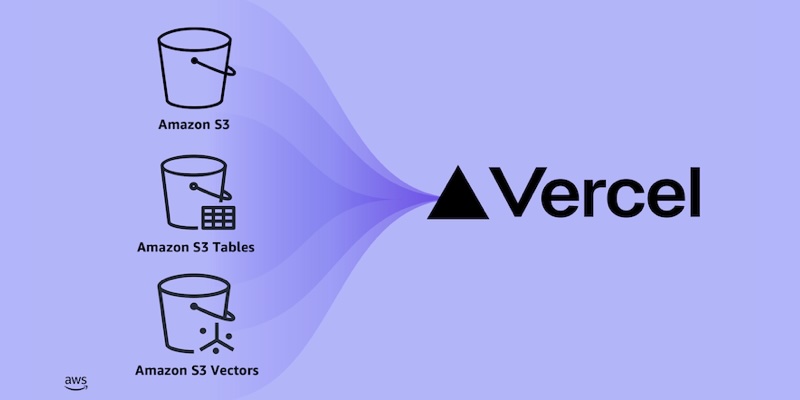
The modern cloud development landscape has reached a significant milestone as Amazon Web Services (AWS) and Vercel announce a native integration between Amazon Simple Storage Service (Amazon S3) and the Vercel ecosystem. Unveiled to the global developer community, this partnership allows engineers building web platforms and artificial intelligence applications on Vercel to provision, manage, and scale Amazon S3 resources directly from the Vercel Marketplace and v0 by Vercel.
By bridging the gap between high-performance frontend hosting and enterprise-grade cloud infrastructure, this development eliminates traditional friction points in cloud architecture. Developers can now harness the immense durability, scalability, and performance of S3—including advanced capabilities like Amazon S3 Tables and Amazon S3 Vectors—without ever needing to leave their familiar deployment workflows. This integration addresses three critical technological workloads: traditional object storage for everyday files, high-speed analytical processing, and vector storage optimized for modern AI applications.
The Evolution of Cloud Provisioning and Developer Experience
Historically, building a comprehensive web application required developers to context-switch constantly between disparate environments. While platforms like Vercel revolutionized rapid deployment and serverless frontend delivery, managing backend infrastructure such as object storage, databases, and authentication often necessitated navigating the complex AWS Management Console. Developers had to manually configure complex Identity and Access Management (IAM) policies, establish secure cross-account roles, and handle static API keys—a process prone to misconfigurations and security oversights.
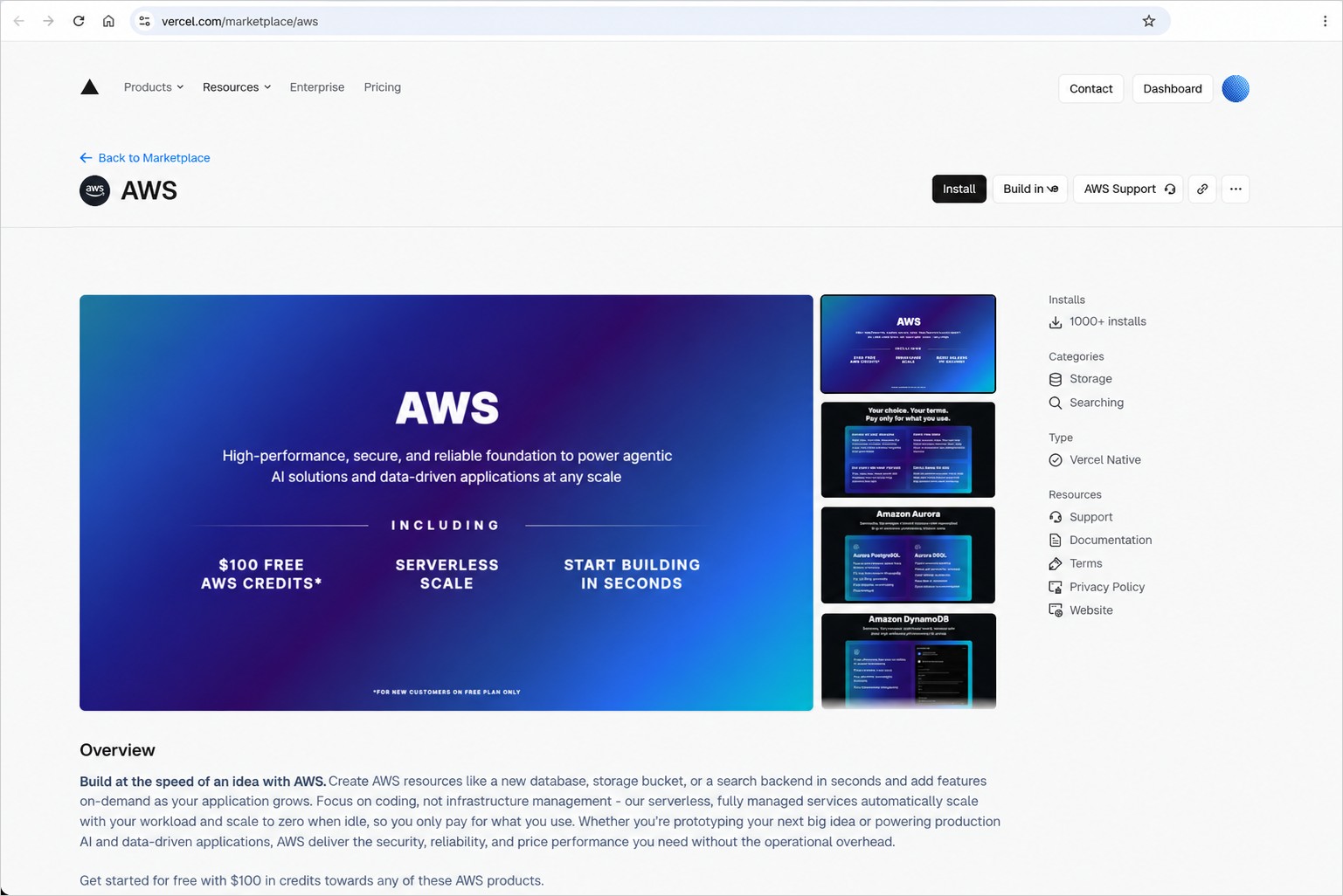
The integration of Amazon S3 into the Vercel Marketplace changes this paradigm entirely. Building upon existing Vercel integrations for Amazon Aurora, Amazon DynamoDB, and Amazon OpenSearch Serverless, the addition of S3 completes a full-stack architecture inside the Vercel dashboard. Teams can now manage their entire data lifecycle—from relational databases and NoSQL document stores to unstructured object storage, open data tables, and AI vector indexes—all housed within a single AWS account and billed on a unified invoice.
Industry analysts note that this move reflects a broader industry trend toward consolidation and frictionless developer experiences. As organizations accelerate their transition to serverless architectures, infrastructure providers are under immense pressure to abstract away operational complexity. By embedding cloud infrastructure directly into code-generation tools like v0 and deployment pipelines like Vercel, AWS and Vercel are drastically reducing the time-to-market for modern software projects.
Chronology and Implementation: From Dashboard to Deployment
The rollout of the S3-Vercel integration has been structured to provide immediate utility for both greenfield projects and established enterprise systems.
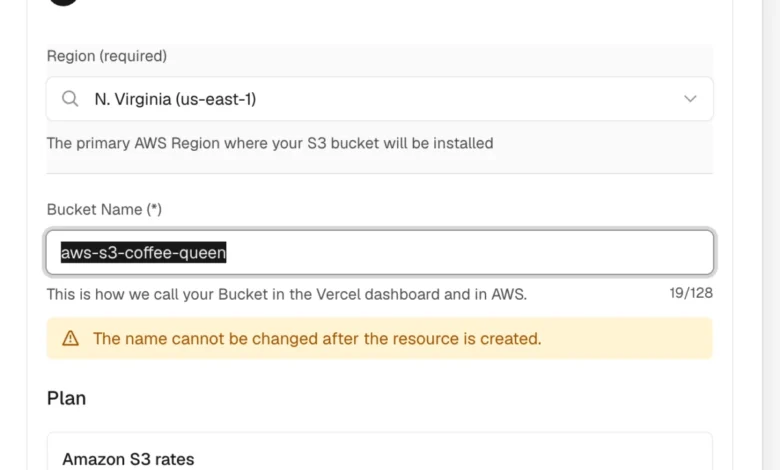
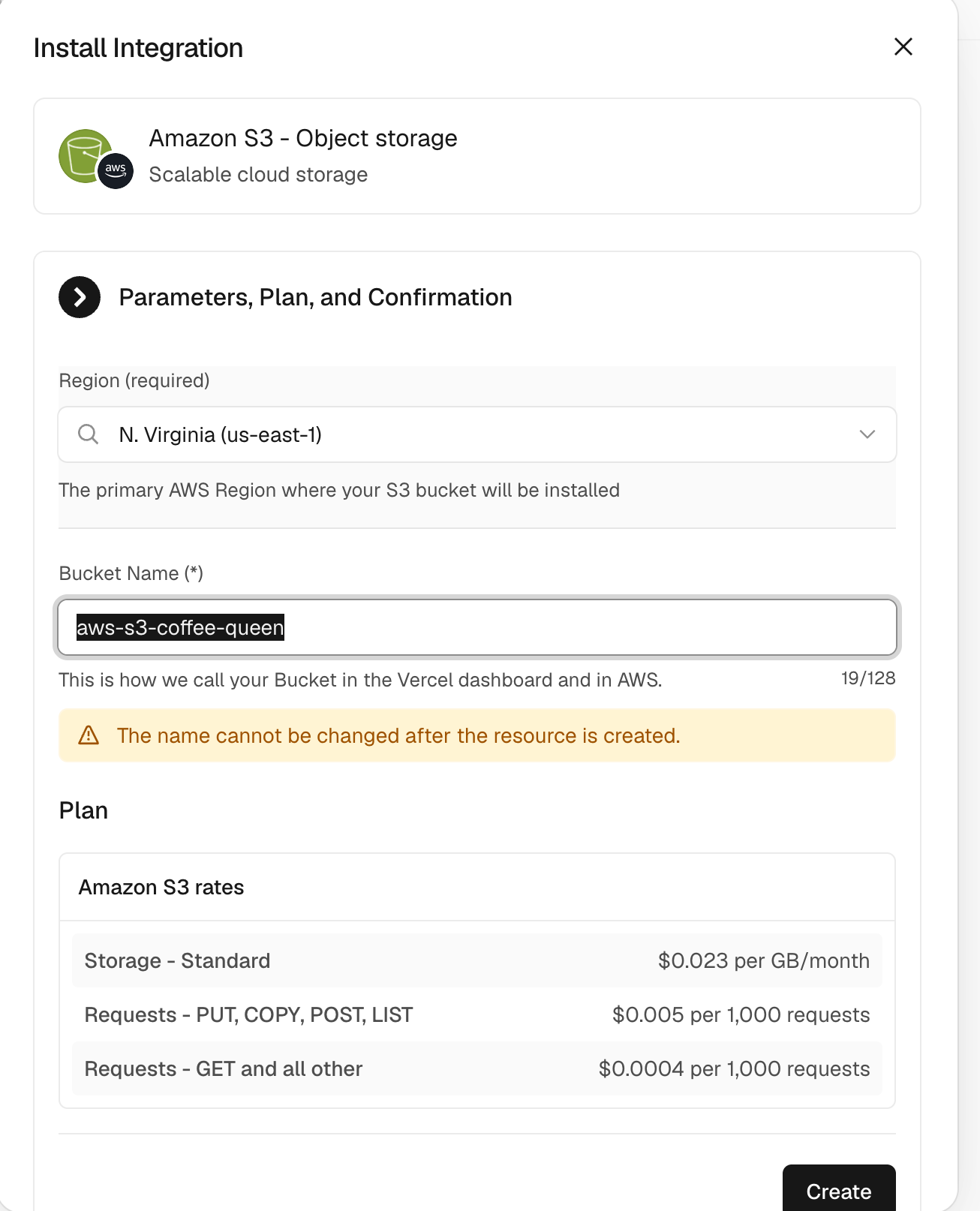
The provisioning workflow has been designed for maximum efficiency. Starting directly from the Storage tab within the Vercel dashboard, developers can initiate a new resource by selecting AWS, choosing a specific bucket type (general purpose, table bucket, or vector bucket), designating an AWS Region, and executing the creation command. The entire backend provisioning cycle completes in a matter of seconds.
Once the resource is instantiated, linking it to a project is handled via the Vercel Command Line Interface (CLI) using standard environment synchronization commands. Under the hood, the integration enforces modern security best practices by completely avoiding static access keys. At runtime, the @vercel/functions/oidc module utilizes short-lived OpenID Connect (OIDC) tokens, exchanging them dynamically with the AWS Security Token Service (AWS STS) to generate temporary, highly scoped credentials.
Technical Deep Dive: Supporting Diverse Workloads
The native availability of S3 on Vercel is not merely a convenience wrapper for basic file uploads; it is architected to support sophisticated, data-intensive workloads across three distinct domains.

1. General Purpose Object Storage
For standard web applications—such as media sharing platforms, e-commerce portals, or document repositories—developers can seamlessly interact with S3 general-purpose buckets using the official AWS SDK for JavaScript. Through simple Next.js API routes or serverless functions, handling multi-part file uploads, object retrievals, and deletions requires minimal boilerplate code while inheriting AWS’s industry-standard 99.999999999% data durability.
2. Advanced Analytics with S3 Tables
Data analytics in serverless environments has traditionally struggled with the overhead of maintaining complex data lake infrastructure. The inclusion of Amazon S3 Tables on Vercel solves this by providing purpose-built object storage for analytics, natively supporting fully managed Apache Iceberg tables. These tables automatically handle maintenance tasks and data compaction as volumes grow.
In a testament to the flexibility of this integration, developers can execute lightweight, high-performance analytical queries directly inside Vercel Functions using embedded engines like DuckDB. By attaching the S3 Table bucket via its Amazon Resource Name (ARN) and leveraging OIDC credentials, serverless applications can process massive datasets—such as regional market metrics or clickstream logs—without spinning up dedicated data warehouse clusters.
3. AI and Semantic Search with S3 Vectors
With the explosive growth of generative AI, Retrieval-Augmented Generation (RAG) agents, and semantic search systems, efficient vector management has become paramount. Amazon S3 Vectors delivers cost-optimized vector storage natively within S3, removing the requirement to provision and maintain a separate, dedicated vector database infrastructure.
While S3 Vectors does not generate embeddings itself, it integrates smoothly with any embedding model of choice. Developers can store document embeddings alongside their raw source files in S3 and execute high-speed similarity queries (QueryVectorsCommand) directly from their serverless backend code, empowering AI-driven support bots and recommendation engines to retrieve contextual data with minimal latency.
Empowering Natural Language Development with v0
Perhaps the most forward-looking aspect of this integration is its incorporation into v0 by Vercel, the company’s generative user interface and application development tool. Developers can now utilize natural language prompts to construct complex, fully functional applications that instantly provision their required backend storage infrastructure.
For instance, requesting a prompt such as "build a photo gallery where users can upload images using AWS" automatically provisions a general-purpose S3 bucket. Asking for "a support bot that answers questions from my PDFs" provisions an S3 Vectors bucket, while requesting "an analytics dashboard for clickstream data" sets up S3 Tables. In every scenario, v0 not only provisions the correct AWS resource behind the scenes but also configures the necessary environment connections and generates production-ready code in the preview panel.
Account Management, Security, and Pricing Models
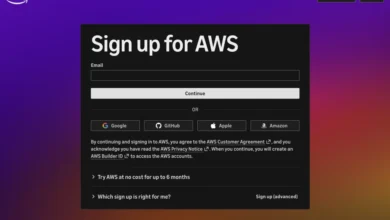
Flexibility remains a core tenet of the AWS and Vercel collaboration. Organizations have two primary pathways when integrating their infrastructure: they can create a brand-new AWS account directly through the Vercel workflow—which includes an incentive of $100 in AWS service credits valid for six months—or they can link an existing enterprise AWS account.
When linking an existing account, Vercel integrates seamlessly while preserving the organization’s existing billing structures, enterprise agreements, and compliance frameworks. All newly provisioned S3 buckets reside securely within the customer’s own AWS account, ensuring that engineering teams retain full ownership of their data, native AWS governance tooling, and auditing capabilities.
There is no additional software licensing charge imposed by Vercel for using the integration; customers simply pay standard, consumption-based Amazon S3 pricing for the storage, retrieval, and analytical operations they consume. The service is available immediately across all commercial AWS regions supported by Vercel.
Broader Industry Implications and Future Outlook
The convergence of Vercel’s developer-first deployment model with AWS’s deep, foundational cloud primitives marks a maturation point for cloud-native software engineering. As frontend frameworks increasingly absorb backend responsibilities through serverless functions and edge computing, the barrier between application code and cloud infrastructure continues to dissolve.
Industry observers project that this integration will significantly lower the adoption curve for advanced cloud technologies among smaller development teams and agile startups, who previously may have been intimidated by the configuration overhead of enterprise storage systems. Concurrently, larger enterprises stand to benefit from standardized, secure provisioning pipelines that enforce zero-trust principles through OIDC token exchange rather than static credential management.
As developers continue to explore the boundaries of web-scale applications and generative AI, the unified AWS-Vercel stack provides a robust, scalable foundation capable of growing from a single prototype to enterprise-grade production workloads without architectural redesigns. Further documentation, regional availability matrices, and community troubleshooting guides are accessible via the AWS Marketplace, v0 platform, and the AWS MCP Server toolkit.