Large language models (LLMs) have transitioned from experimental curiosities to the backbone of modern enterprise software, yet their deployment remains a significant engineering hurdle. While the challenge of achieving high-quality model output has largely been solved through advances in training and fine-tuning, the focus of the industry has shifted toward the "production gap": the disparity between a model’s potential and its real-world performance under load. As organizations move beyond prototypes, they are discovering that naive implementations quickly succumb to latency spikes and prohibitive infrastructure costs. Inference optimization has consequently emerged as a specialized technical discipline aimed at maximizing hardware utilization, minimizing request latency, and controlling the escalating costs associated with high-concurrency environments.
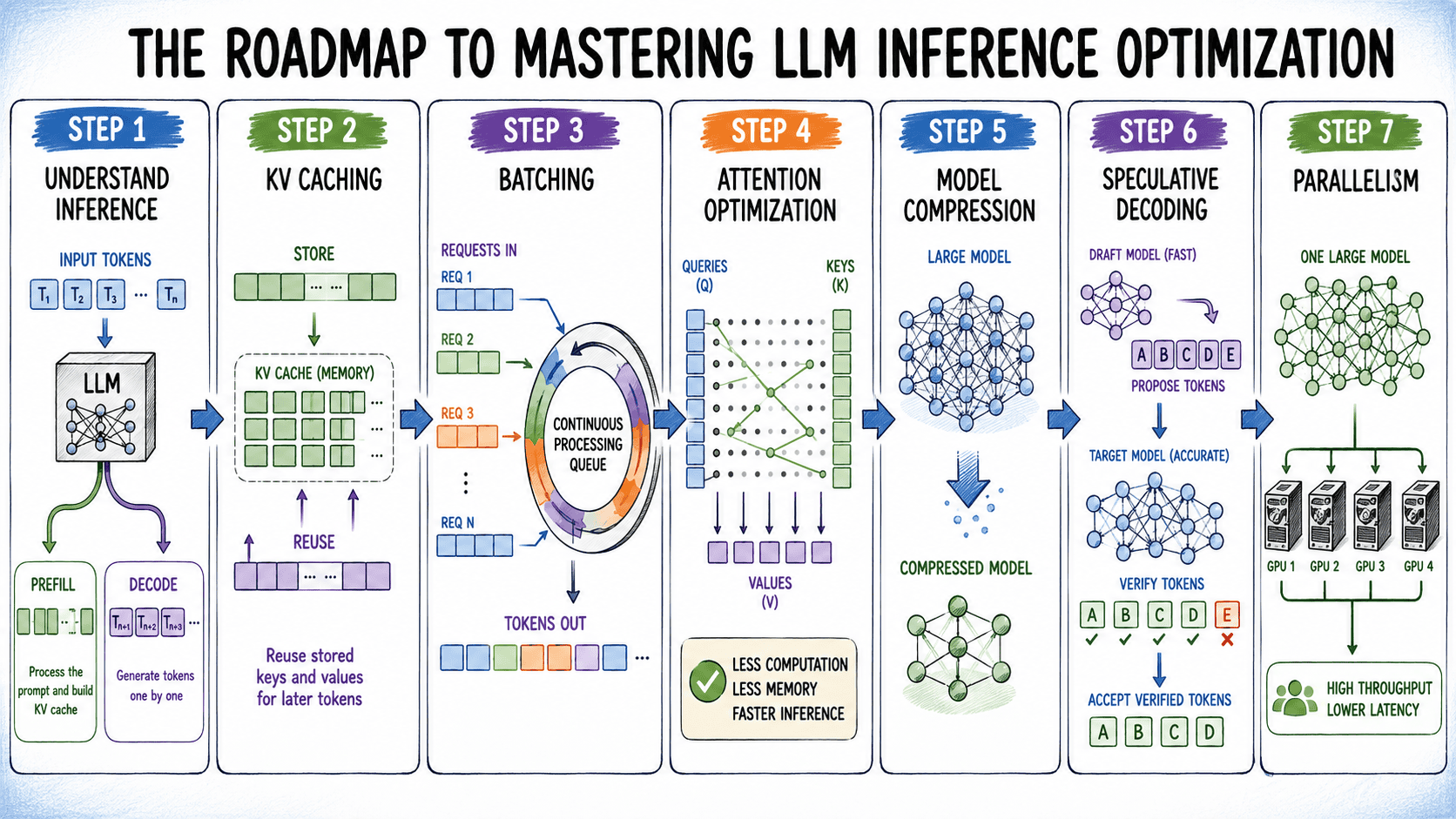
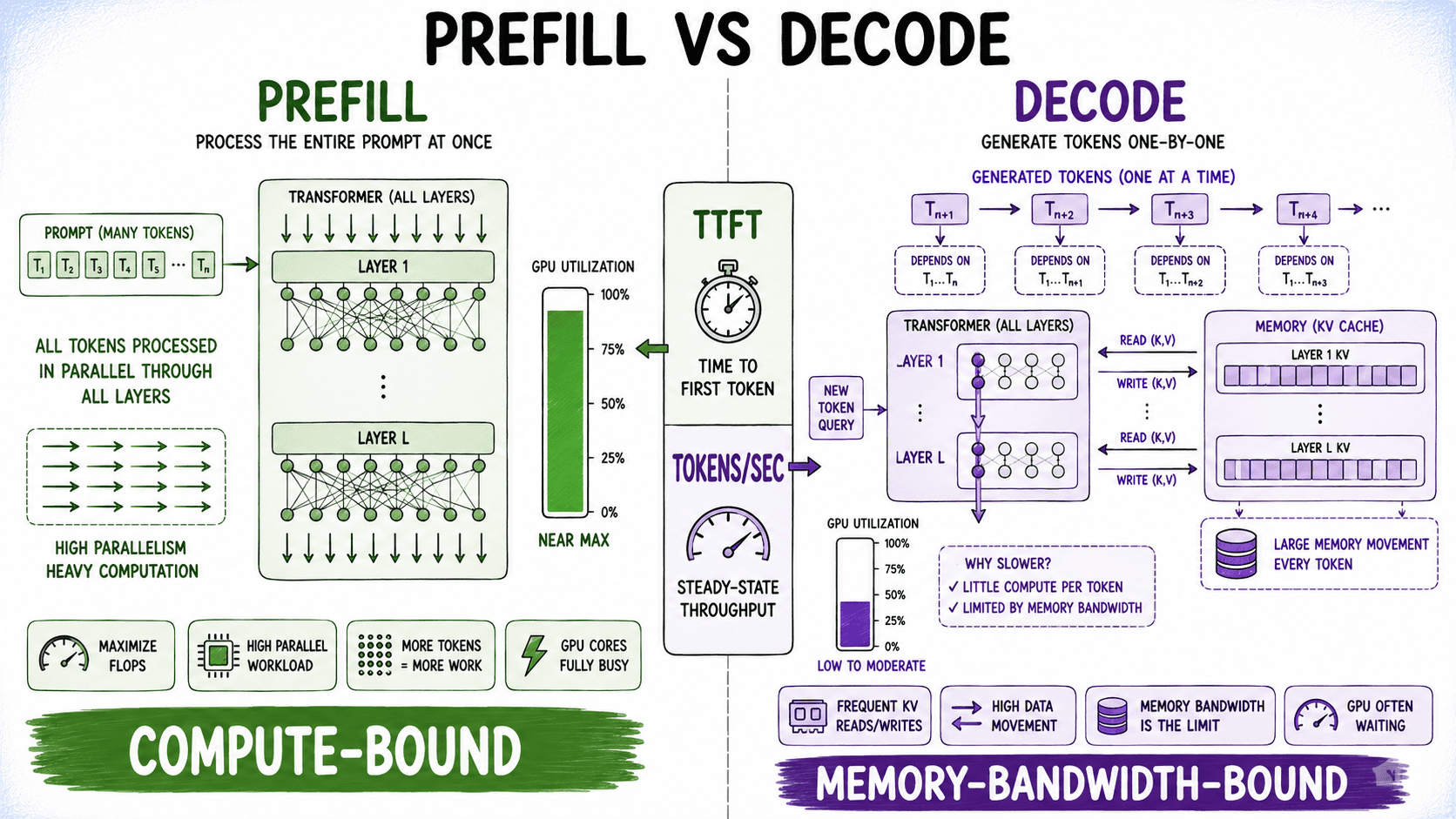
The lifecycle of an LLM request is divided into two distinct computational stages, each governed by different bottlenecks. Understanding this dichotomy is the prerequisite for any serious optimization effort. The prefill phase, which occurs immediately upon receipt of a prompt, involves processing the entire input sequence simultaneously to generate the initial key and value tensors. Because this phase is highly parallelizable, it is compute-bound, meaning performance is largely dictated by the raw floating-point operations per second (FLOPS) of the underlying GPU.
Conversely, the decode phase—where the model generates tokens one by one in an autoregressive fashion—is memory-bandwidth-bound. Because each new token relies on the entirety of the preceding sequence, the system cannot parallelize generation in the same way. The GPU spends the vast majority of its time fetching weights and KV (key-value) cache data from high-bandwidth memory (HBM) rather than performing arithmetic. Consequently, a common mistake among engineering teams is to focus exclusively on raw compute power, neglecting the critical role of memory throughput in determining the final tokens-per-second (TPS) metric.
The Evolution of KV Caching and Memory Management
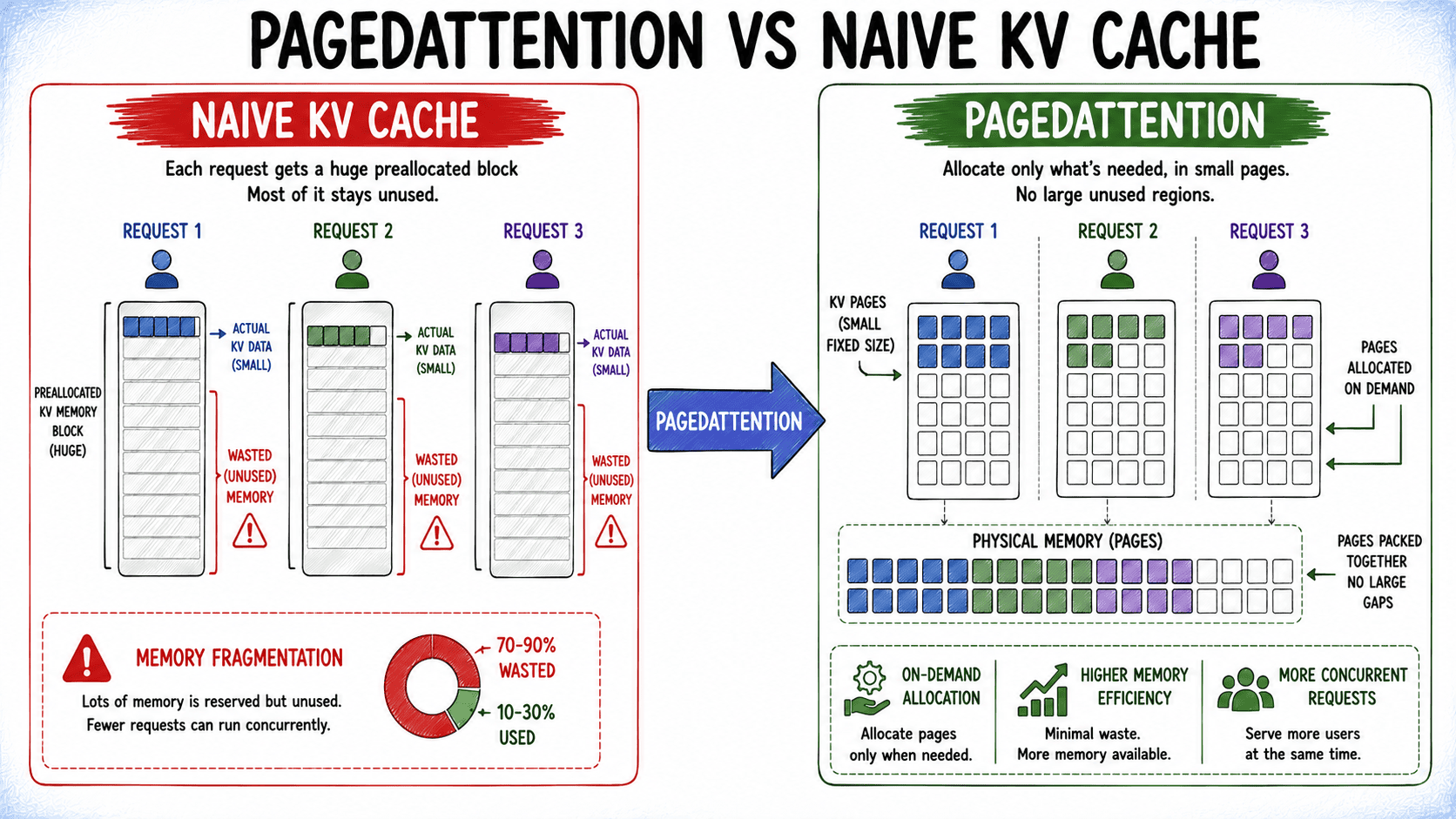
The memory-intensive nature of the decode phase necessitates the use of KV caching. By storing the intermediate key and value states of previous tokens, the system avoids redundant computations that would otherwise scale quadratically with sequence length. However, the KV cache presents its own set of constraints. At 16-bit precision, the cache for a 7B parameter model can consume gigabytes of VRAM for a single long-context request.
In early production environments, developers frequently employed naive allocation strategies, reserving space for the maximum possible sequence length. This resulted in significant memory fragmentation, effectively capping the number of concurrent requests a single GPU could handle. The introduction of PagedAttention, modeled after virtual memory management in operating systems, marked a turning point in this domain. By partitioning the KV cache into fixed-size blocks that are allocated on-demand, systems like vLLM have enabled a massive increase in batch density. Furthermore, the rise of prefix caching—where common system prompts or documents are cached across multiple requests—has allowed developers to eliminate redundant processing in Retrieval-Augmented Generation (RAG) pipelines, effectively lowering the cost-per-query by 30% to 50% in many enterprise settings.
Dynamic Scheduling and Throughput Maximization
Batching strategies have evolved significantly to address the inefficiency of single-request processing. Static batching, the traditional approach of grouping requests into fixed sets, often fails when faced with the variable-length outputs typical of conversational AI. Because the entire batch is held hostage by the longest-running request, GPU utilization drops significantly.
The current industry standard is continuous, or in-flight, batching. By allowing the scheduler to inject new requests into the stream the moment an existing sequence finishes, the system maintains near-constant GPU saturation. This architectural shift has transformed the economics of LLM serving. Data from various cloud providers suggest that moving from static to continuous batching can improve overall system throughput by 3x to 5x without requiring additional hardware investment. This efficiency gain is critical for businesses operating under strict service-level agreements (SLAs) where time-to-first-token (TTFT) and overall latency are non-negotiable metrics.
Architectural Innovations: Attention and Compression
At the core of the Transformer architecture lies the attention mechanism, which historically accounted for the largest share of memory movement during inference. Architectural variants like Multi-Query Attention (MQA) and Grouped-Query Attention (GQA) have been instrumental in mitigating this. By sharing key and value heads across multiple query heads, these designs drastically reduce the amount of data moved through the memory bus, directly addressing the bandwidth bottleneck.
Parallel to these architectural changes, model compression has become a staple of production engineering. Quantization—the process of reducing the precision of model weights from 16-bit to 8-bit or 4-bit—has enabled the deployment of sophisticated models on consumer-grade or edge hardware. Techniques such as GPTQ (Generalized Post-Training Quantization) and AWQ (Activation-aware Weight Quantization) allow for substantial reductions in memory footprint with negligible impacts on perplexity. Industry reports indicate that 4-bit quantized models often retain 95% to 98% of the performance of their full-precision counterparts, while requiring roughly 75% less VRAM.
Speculative Decoding and the Future of Latency
For latency-critical applications, such as real-time interactive agents, speculative decoding has emerged as a sophisticated solution to the autoregressive bottleneck. By utilizing a "draft" model—a smaller, lighter version of the primary model—the system generates a candidate sequence of tokens in parallel. The larger "verifier" model then reviews these tokens in a single forward pass. If the models agree, multiple tokens are generated for the cost of one.
This approach is highly effective in scenarios where the draft model can accurately predict the output of the larger model. Recent benchmarks suggest that speculative decoding can provide a 2x to 3x speedup in token generation, significantly improving the user experience for chat interfaces. However, it requires careful calibration; if the draft model is too inaccurate, the overhead of the verification pass can actually degrade performance.
Implications for Infrastructure Scaling
When models grow too large for a single GPU—or when throughput requirements exceed the capacity of a single node—parallelism becomes necessary. Tensor parallelism splits weight matrices across multiple devices, reducing per-GPU memory requirements and latency, while pipeline parallelism distributes layers across a sequence of devices.
The most recent trend in high-scale infrastructure is the disaggregation of the prefill and decode phases. By routing requests to specialized hardware clusters—using compute-heavy GPUs for prefill and memory-heavy nodes for decoding—organizations can optimize their fleet for the specific characteristics of each phase. This "disaggregated serving" architecture represents the current frontier of LLM infrastructure. As context windows expand to include millions of tokens, the computational demand of the prefill phase grows significantly, making the separation of these two processes not just an optimization, but a requirement for future-proofed AI systems.
The discipline of LLM inference optimization is no longer a niche research field but a core operational necessity. As the industry moves toward increasingly complex, long-context, and high-throughput applications, the ability to navigate these techniques will define the competitive landscape. Success in this area requires a rigorous, data-driven approach: profiling workloads to identify the binding constraint, selecting the appropriate architectural or scheduling intervention, and continuously monitoring performance as models and traffic patterns evolve.