Python 101 Third Edition Kickstarter Campaign Launches To Update Beginner Programming Guide For Modern Standards

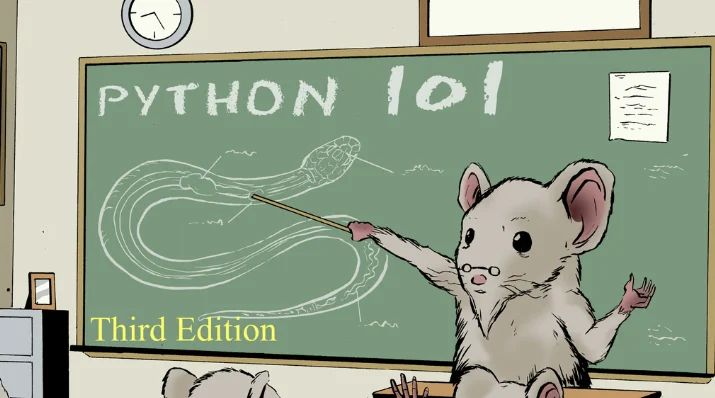
The landscape of software development education is shifting once again as veteran technical author and programmer Michael Driscoll officially announces the launch of a crowdfunding campaign for the third edition of his widely recognized programming guide, Python 101. Hosted on the Kickstarter platform, the new campaign aims to secure the necessary financial backing to rewrite, edit, produce, and publish a thoroughly modernized iteration of a book that has served as an entry point for thousands of aspiring coders over the past decade.
As programming languages evolve to meet the demands of modern computing, artificial intelligence, and data science, foundational educational materials must also adapt. The announcement of this third edition highlights the persistent challenge technical educators face in keeping pace with rapid language updates. By turning to crowdfunding, Driscoll aims to maintain editorial independence while ensuring that the upcoming volume incorporates contemporary Python features, updated industry best practices, and enhanced pedagogical strategies designed for a new generation of students, hobbyists, and professionals looking to pivot into the tech sector.
Main Facts and Campaign Structure
The Kickstarter campaign for Python 101 Third Edition serves as a direct bridge between technical authors and their readership, cutting through traditional publishing bottlenecks. The primary objective of the campaign is to fund the comprehensive overhaul of the text, ensuring that every chapter reflects the current state of the Python ecosystem.
Python has experienced explosive growth over the last ten years, consistently ranking at or near the top of indices measuring programming language popularity, such as the TIOBE Index and the PYPL Popularity of Programming Language Index. This surging demand has driven a massive influx of beginners into the programming pipeline. However, introductory texts written a decade ago often fail to address modern paradigms, tooling, and ecosystem standards that have since become ubiquitous in professional software engineering.
The funds raised through the Kickstarter initiative will be allocated across several critical phases of book production. These include dedicated writing time, professional developmental and copy editing, layout design, technical peer review, and digital as well as physical printing logistics. By leveraging community-backed funding, Driscoll intends to dedicate the necessary hours to refining code examples, clarifying complex abstract concepts, and developing supplementary materials that facilitate a smoother learning curve for individuals who possess zero prior programming experience.
Background Context and Evolution of Python 101
To understand the significance of the third edition, it is necessary to examine the trajectory of the Python 101 franchise within the broader context of technical publishing. When the first edition of the book was released, Python 2 was still heavily utilized in enterprise environments, and the transition to Python 3 was a central topic of discussion within the developer community. Over subsequent years, Python solidified its dominance as the primary language for data analytics, machine learning, web backend development, and script automation.
Throughout these shifts, introductory books have had to balance the need for simplicity with the necessity of teaching future-proof habits. Earlier editions of Python 101 focused heavily on core fundamentals—such as variables, control flow, functions, object-oriented programming, and error handling—while maintaining a conversational and accessible tone.
However, the Python language itself has seen substantial syntactic and performance enhancements in recent years. Features such as structural pattern matching (introduced in Python 3.10), improved type hinting mechanisms, asynchronous programming advancements, and updated package management workflows have fundamentally changed how Python code is written and maintained. A static text from a previous decade risks teaching outdated idioms. Consequently, the third edition represents a necessary structural recalibration rather than a minor typographical refresh.
Chronology of the Project and Production Timeline
The launch of the Kickstarter campaign marks the formal beginning of a structured development timeline that will span several months. While the precise delivery dates of technical books can fluctuate based on editing and peer-review cycles, crowdfunded publishing models typically follow a rigorous milestone-based approach.
In the initial phase, which coincides with the active duration of the Kickstarter campaign, reader engagement and financial pledges establish the baseline production budget. Following the successful closure of the funding period, the author enters an intensive writing and revision window. During this stage, existing chapters are audited against modern Python specifications, and entirely new modules are drafted to address contemporary development environments, such as integrated development environments (IDEs) like VS Code, virtual environments, and modern dependency management tools.
Once the manuscript is fully drafted, it transitions into the editing and technical review phase. This step is crucial for maintaining the pedagogical integrity of a beginner’s book, as code snippets must be rigorously tested across multiple operating systems to ensure error-free execution by readers. Following layout design and typesetting, digital rewards—such as early-access PDF chapters or EPUB files—are typically distributed to backers, culminating in the final production and shipping of physical paperback or hardcover copies.
Target Audience and Pedagogical Approach
A defining characteristic of the Python 101 series has been its explicit focus on accessibility. The third edition maintains this philosophy, targeting a broad demographic that includes absolute beginners, university students, self-taught developers, and professionals from non-technical fields seeking to automate repetitive tasks or transition into data-centric roles.
In modern workforce development, basic programming literacy is increasingly viewed as a foundational skill rather than a specialized domain exclusive to computer science graduates. Professionals in finance, marketing, biological sciences, and administrative management frequently encounter datasets or workflows that benefit immensely from custom automation scripts. By stripping away academic jargon and focusing on practical, real-world examples, introductory texts like Python 101 play a vital role in democratizing technical education.
The pedagogical methodology relies on incremental complexity. Readers are introduced to foundational syntax through bite-sized, digestible explanations before advancing to more complex paradigms like data structures and basic software architecture. By avoiding the assumption of prior coding experience, the book bridges the gap between fear of technology and functional competency.
Rewards and Backer Incentives
Crowdfunding platforms like Kickstarter rely on a tier-based reward system that incentivizes community participation by offering tangible benefits aligned with the size of the financial pledge. For the Python 101 Third Edition campaign, reward structures have been designed to cater to various preferences, ranging from digital-only enthusiasts to collectors of physical technical literature.
Pledge tiers typically include:
- Digital editions of the book in multiple formats (PDF, EPUB, MOBI) for immediate reading and searching across devices.
- Physical paperback or hardcover copies of the final published book, delivered directly to backers.
- Bundled access to complementary learning resources, code repositories, or previous works by the author to provide a comprehensive reference library.
- Acknowledgments within the publication credits for higher-tier backers who wish to support the project at an institutional or benefactor level.
These rewards not only provide value to the individual backer but also foster a sense of shared ownership in the publication’s success. Technical book authors frequently cite community feedback during the crowdfunding phase as an invaluable source of motivation and direction.
Broader Impact and Implications for Technical Publishing
The choice to utilize Kickstarter for the release of Python 101 Third Edition highlights a broader structural trend within the technical publishing industry. Traditional publishing houses often impose strict formatting constraints, aggressive timelines, and rigid royalty structures that may not align with the needs of independent authors or specialized niche audiences.
By bypassing traditional gatekeepers, authors retain creative control over their work, set realistic writing schedules that prioritize quality over speed, and establish direct lines of communication with their readership. This direct-to-consumer model ensures that educational materials remain responsive to real-time shifts in technology.
Furthermore, the success of campaigns centered around programming education demonstrates sustained, organic demand for high-quality, human-authored learning resources. In an era where automated content generation and AI-synthesized tutorials proliferate across the internet, the value of curated, peer-reviewed, and professionally edited instructional books remains exceptionally high. Readers consistently demonstrate a willingness to invest financially in trusted educational guides that offer clear, structured, and reliable pathways to acquiring complex technical skills.
As the Python 101 Third Edition campaign progresses, it stands as a testament to the enduring viability of independent technical publishing and the vibrant, collaborative nature of the global Python community. Through the combined efforts of the author and a supportive network of backers, the upcoming release is positioned to guide the next wave of programmers through their initial steps in software development.