Accelerating Continuous Improvement: How Autonomous Agents and Feature Management Close the Experimentation Gap

Continuous improvement is the lifeblood of modern software development, yet many engineering teams find themselves trapped in a cycle of high-friction experimentation. While the theoretical path to better user outcomes involves testing changes against real behavior, measuring results, and iterating, the reality is often bogged down by operational overhead. Sustaining this cycle is historically slow and costly, as the manual effort required for planning, deployment, and remediation compounds with every attempt. To address these systemic bottlenecks, a new reference architecture has emerged, integrating AWS DevOps Agent, Kiro, and LaunchDarkly to create a closed-loop system that automates the entire experimentation lifecycle.
The primary barriers to velocity in software delivery have long been identified as planning costs, disconnected measurement, and stalled iteration. Planning costs arise when teams spend hours defining feature flag strategies and coordinating implementations before a single user sees a new feature. Disconnected measurement occurs when metrics are siloed from the deployment pipeline, forcing engineers to manually monitor results and intervene if performance regresses. Finally, stalled iteration is the inevitable consequence of a lack of institutional memory; without a structured record of which hypotheses failed or succeeded, teams often repeat the same mistakes, causing progress toward business goals to grind to a halt.
The Rise of Autonomous Orchestration
The integration of AWS DevOps Agent with LaunchDarkly’s hosted Model Context Protocol (MCP) server marks a significant shift in how DevOps workflows are constructed. By leveraging the orchestration capabilities of the AWS DevOps Agent, organizations can now define an improvement goal—such as increasing an add-to-cart rate by 10%—and allow an autonomous agent to handle the heavy lifting. The system functions through a "Plan-Prove-Iterate" cycle, which connects intelligent code generation with robust feature-flag governance.
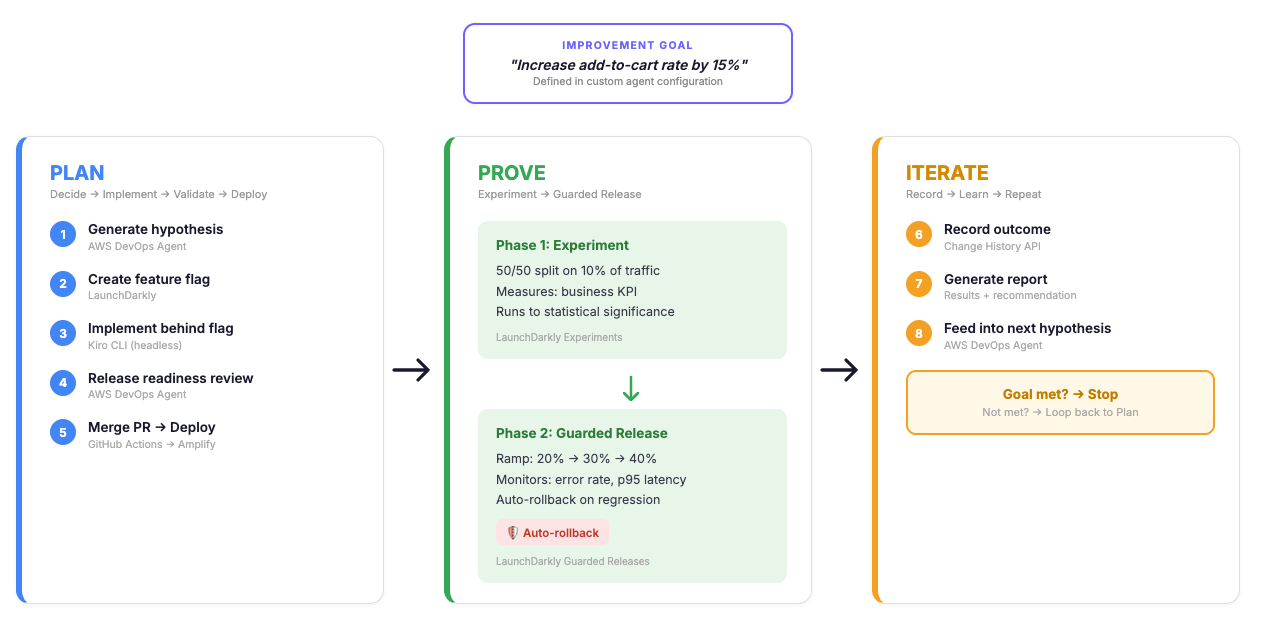
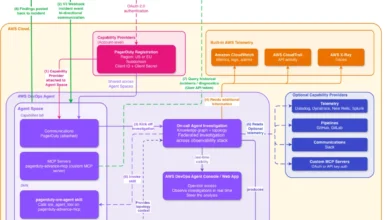
The architecture relies on three core components: the AWS DevOps Agent, which serves as the central brain; Kiro, an AI-powered CLI tool for headless code generation; and LaunchDarkly, which acts as the system of record for experiments and Guarded Releases. In this model, the agent manages the decision logic, while the MCP servers provide the execution tools. This separation of concerns ensures that the agent decides the "what" and "why," while the underlying infrastructure handles the "how."
A Chronology of the Closed-Loop Workflow
The workflow begins with goal clarification. Unlike traditional ticket-based systems, the input here is an outcome-based goal. Once a team sets a target, the agent conducts a preliminary analysis of the repository to generate a hypothesis. This step is critical, as the agent cross-references existing code paths and past experiment logs to avoid repeating failed strategies.

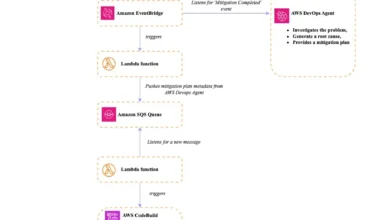
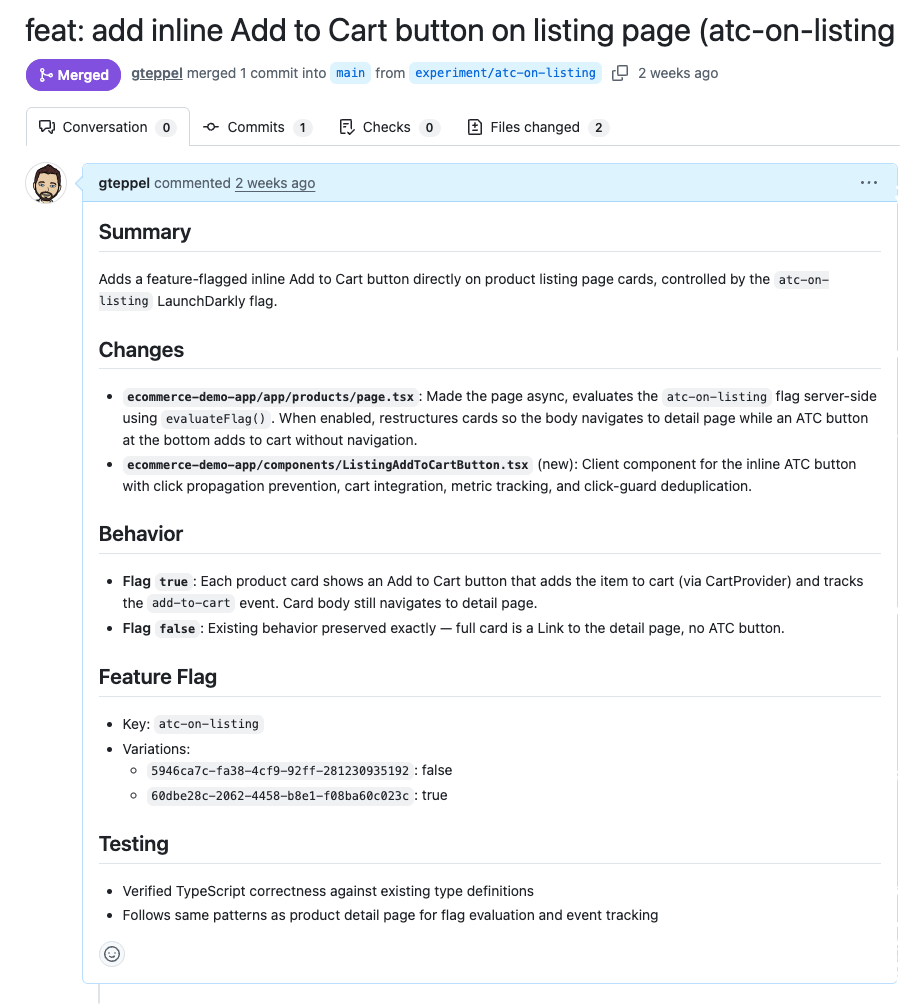
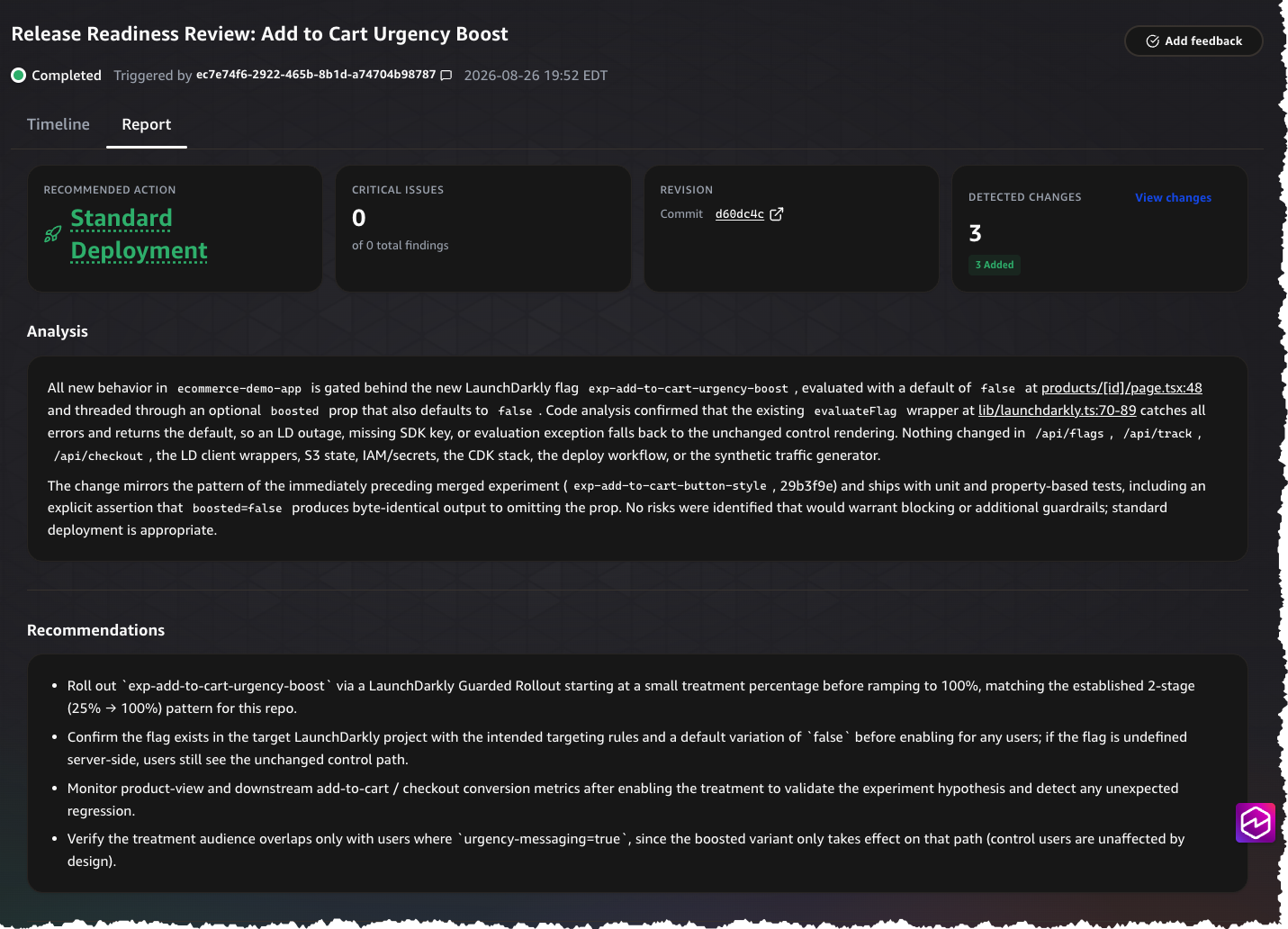
Following the hypothesis phase, the implementation begins. Kiro CLI, operating in a headless environment, writes the necessary code changes. Crucially, every change is gated behind a LaunchDarkly feature flag from the start. This ensures that the code can be toggled off instantly if any issues arise. Once the code is written, a pull request is generated. The AWS DevOps Agent then executes a release readiness review, ensuring that the code adheres to quality standards before it is merged into the main branch.
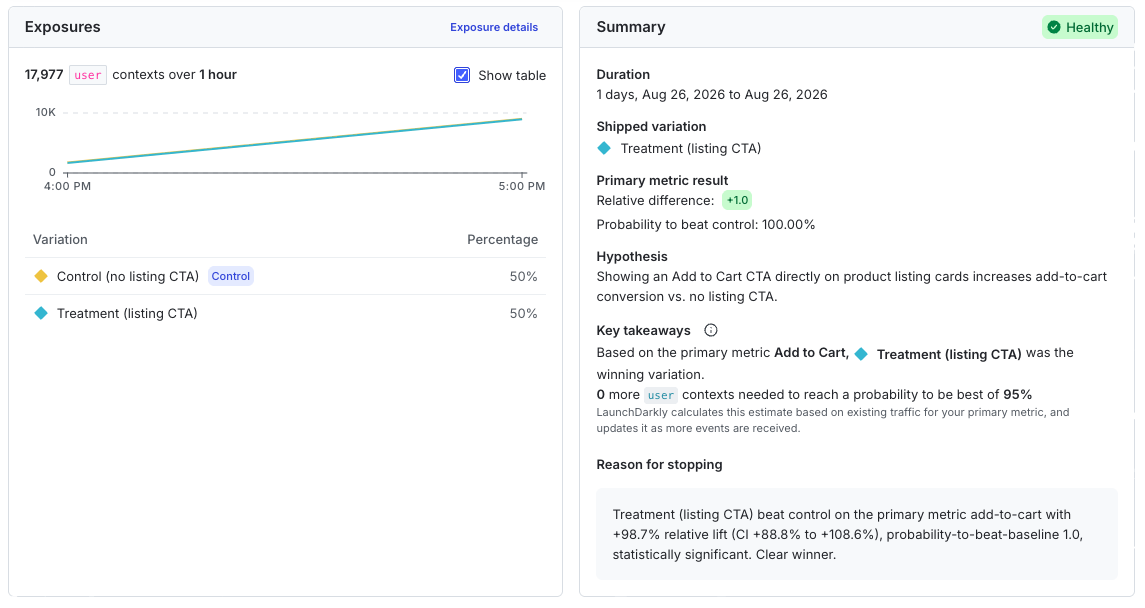
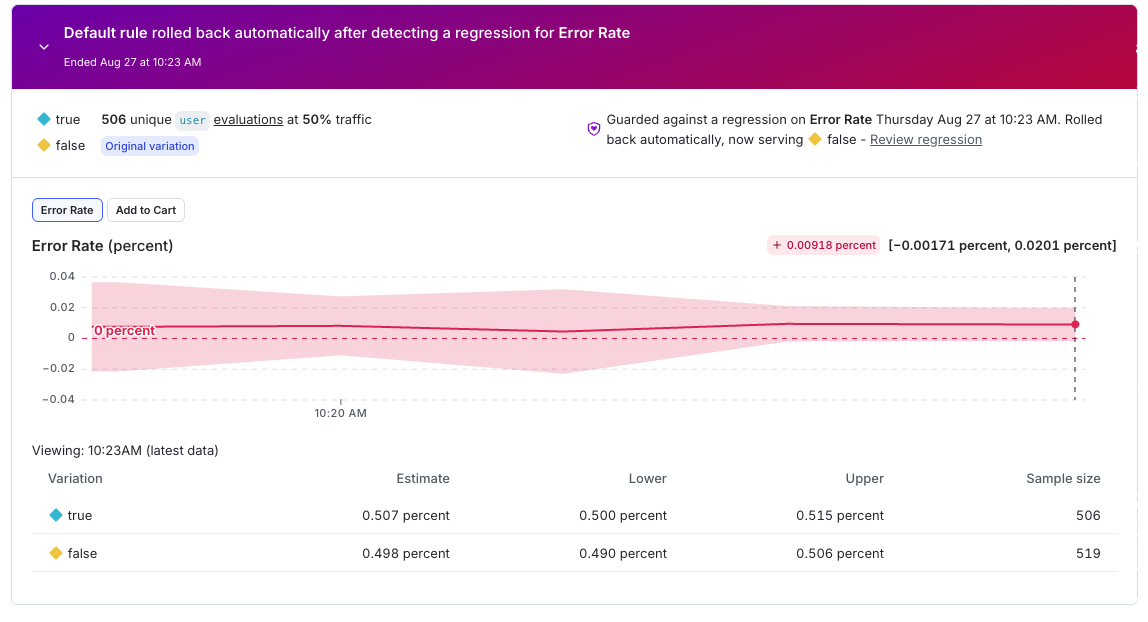
After a successful deployment via AWS Amplify, the "Prove" phase commences. The system initiates a 50/50 A/B experiment on a small subset of traffic—typically 10%—to measure the impact on the primary business KPI. If the treatment variant shows statistical significance, the system transitions to a Guarded Release. During this stage, the feature is rolled out to a larger audience in increments (e.g., 20%, 30%, 40%). LaunchDarkly monitors operational guardrails, such as error rates and p95 page-load times, in real time. If any threshold is breached, the system executes an automatic rollback, reverting the flag state to the control variant without requiring human intervention or a full redeployment.
Supporting Data and Operational Efficiency
The efficiency gains from this automated approach are substantial. In reference implementations, the time required to reach statistical significance for A/B tests has been reduced from days to minutes, largely due to the continuous nature of the automated traffic simulation and the tight integration between observability and deployment tools.
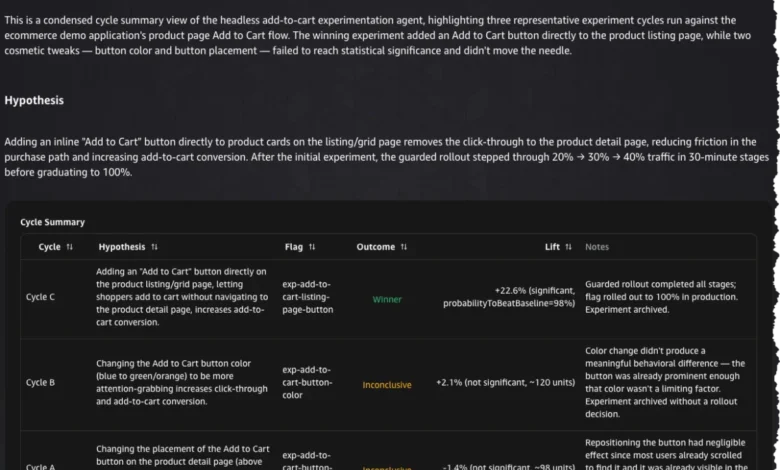
For instance, in a recent demonstration involving an e-commerce platform, the system successfully identified that an inline "Add to Cart" button on a product listing page drove a 17.7 percentage point increase in conversion. Importantly, when a subsequent experiment caused a slight spike in error rates, the system’s automated safety net triggered a rollback within seconds. This prevented the degradation of the user experience, a task that would traditionally have required an engineer to be paged, investigate the issue, and manually roll back the release.
Official Perspectives and Industry Implications
Industry analysts have noted that the move toward "agentic" DevOps is the natural evolution of infrastructure as code. By codifying safety boundaries and decision-making processes into a custom agent, organizations can ensure that they are not sacrificing stability for speed. The ability to programmatically link an outcome (such as a 15% conversion lift) to a specific set of code changes creates a clear audit trail, which is increasingly vital for regulatory and operational compliance in large-scale enterprises.
Furthermore, the shift toward using MCP servers allows for a more modular approach to building developer tools. Because the Experiment MCP Server is stateless and deployed as a container on Amazon Bedrock AgentCore, it can be scaled and updated without interrupting the ongoing experiments. This flexibility is essential for teams that operate across multiple repositories and environments, as it allows them to standardize their experimentation workflow regardless of the underlying application architecture.
Broader Impact on Software Engineering Culture
The implications of this technology extend beyond mere speed. By removing the manual "toil" associated with feature flagging and experiment monitoring, engineers are freed to focus on high-level architecture and creative problem-solving. The system acts as a force multiplier, allowing small teams to operate with the experimental rigor of much larger organizations.
However, this transition also requires a cultural shift. Teams must move away from the "deploy and forget" mentality toward an "experiment and adapt" mindset. The reliance on automated guardrails also necessitates a high degree of trust in the observability stack. If the metrics used for guardrails are poorly defined, the system may inadvertently roll back successful features or allow harmful ones to propagate. Therefore, the success of this architecture is inextricably linked to the quality of the instrumentation—specifically the use of OpenTelemetry and other standard monitoring protocols.
Conclusion and Future Outlook
The reference implementation described here serves as a template for the future of software delivery. By connecting AWS DevOps Agent, Kiro, and LaunchDarkly, developers can create a robust, self-healing pipeline that treats every code change as an experiment. The integration addresses the long-standing problem of manual overhead in CI/CD pipelines and provides a concrete solution to the problem of stalled iteration.
While a "turnkey" experience for this architecture is still in development, the current framework is fully functional for those willing to configure the custom agents and MCP servers. As organizations continue to seek ways to maximize their engineering output while maintaining high levels of production safety, the integration of autonomous agents into the DevOps lifecycle is likely to become the new industry standard. By closing the gap between defining a business goal and verifying its realization in production, teams can finally achieve the promise of truly continuous, data-driven software improvement. The path forward is clear: automate the routine, guard the critical, and let the data dictate the direction of the next iteration.
Related posts: