Android Bench 2.0 Launches to Revolutionize AI Evaluation for Long-Horizon Android Development Tasks

The rapid advancement of artificial intelligence in software engineering has necessitated a fundamental shift in how developers measure the efficacy of large language models (LLMs). Recognizing that current benchmarks often fail to capture the complexities of real-world enterprise development, the Android development team has officially unveiled Android Bench 2.0. This major update marks a departure from the simplistic, single-shot coding challenges of the past, introducing a comprehensive evaluation framework designed to test AI models against multi-day, high-complexity engineering tasks known as Long-Horizon Tasks (LHTs).
The Evolution of AI Coding Benchmarks
The original Android Bench was established to provide a rigorous foundation for evaluating how AI assistants manage Android-specific tasks. During its initial deployment, the industry standard for AI coding benchmarks focused primarily on incremental changes—small bug fixes, simple unit test generation, or localized feature requests. While these metrics served the nascent stages of AI integration, they failed to mirror the true nature of professional software development, which often involves architectural refactoring, dependency management across massive codebases, and the creation of entirely new applications.
The introduction of Android Bench 2.0 is the culmination of months of research aimed at closing the gap between laboratory benchmarks and the realities of production-level coding. By aligning with the Harbor framework, the new iteration provides a more standardized and transparent measurement tool, ensuring that as AI models and agents become more autonomous, their evaluation remains grounded in objective, high-stakes development scenarios.
Defining Long-Horizon Tasks (LHT)
At the heart of the 2.0 update is the introduction of Long-Horizon Tasks. Unlike the traditional coding prompts that could be resolved in minutes, LHTs are designed to simulate work that would typically consume an experienced software engineer several days or even a full week. These tasks include complex operations such as upgrading core project dependencies, migrating legacy codebases to modern architectural patterns like Jetpack Compose, or converting complete cross-platform applications into native Android solutions.
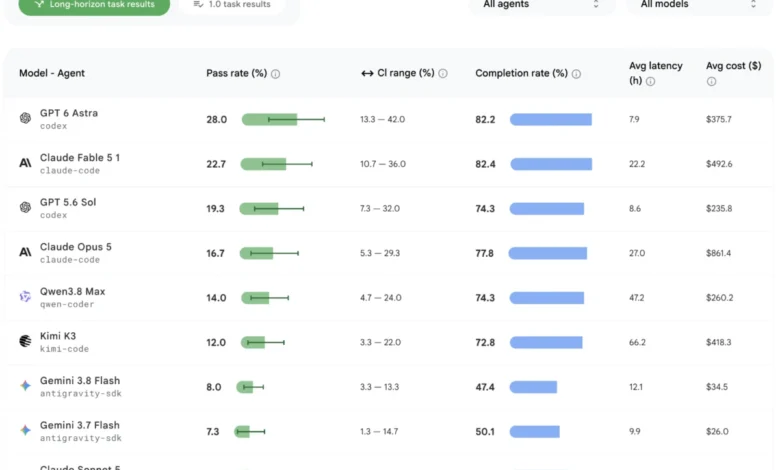
The technical difficulty of these tasks is reflected in the current performance data. While early-stage AI models often achieved pass rates of approximately 91% on simpler, incremental tasks, the new LHT dataset has proven significantly more challenging. Current testing reveals that even the most advanced frontier models struggle to reach a 28% pass rate on these complex, multi-step workflows. This disparity highlights a critical bottleneck in current AI capabilities: the ability to maintain architectural integrity and logical consistency over long, multi-file engineering sessions.

Moving Beyond Binary Grading
One of the most significant methodological shifts in Android Bench 2.0 is the transition from binary pass/fail grading to a continuous, nuanced scoring system. Historically, if an AI agent successfully refactored 90% of a 40-screen application but failed a single edge-case assertion, the entire task was marked as a failure. This approach obscured the model’s genuine architectural strengths and provided little actionable feedback to researchers.
The new scoring framework calculates completion rates based on a holistic evaluation of functionality, visual fidelity, and the absence of regressions. Additionally, the system now applies objective penalties for deviations from architectural constraints or structural requirements. This granular data is accessible through the updated leaderboard, which features detailed model cards. These cards allow developers and researchers to compare models based on pass rates, completion percentages, and average cost per task, providing a comprehensive view of which tools are most cost-effective and reliable for specific production environments.
Insights into Model Capabilities and Limitations
The implementation of LHTs has uncovered key trends regarding how different AI models interact with codebases. Data suggests that models are generally more proficient at generating new code than they are at refactoring or migrating existing, complex systems. When tasks involve deterministic transformations—such as swapping out libraries like Retrofit for Ktor or implementing a ViewModel layer—models display high levels of consistency, even when processing upwards of 8,000 lines of code across 125 files.
Conversely, significant challenges persist in areas requiring runtime validation. When a task requires the model to understand complex dependency injection graphs or navigate breaking changes within a framework, performance drops sharply. Furthermore, knowledge gaps regarding unreleased or proprietary library updates remain a recurring issue. The data confirms that porting cross-platform apps to Android remains a "frontier" challenge, with no current model achieving a 100% success rate, and the most capable models topping out at approximately 80% completion.
Integrating Agentic Evaluation
Android Bench 2.0 is not solely focused on raw model intelligence; it is also prioritizing the evaluation of "agentic" workflows—the integration of AI models into automated, multi-step execution environments. By pairing specific models with their provider-developed agents (such as GPT-6 Astra or Gemini 3.8 Flash with their respective native harnesses), the benchmarking team has begun measuring the impact of infrastructure design on developer outcomes.
Early observations indicate that specific optimizations, such as prompt caching and compact tool windowing, have a measurable impact on performance and resource efficiency. By reducing the token count required to manage complex context, these agents are able to maintain better focus on long-horizon tasks. The platform intends to expand these pairings in the coming months, allowing teams to identify which specific model-agent combinations are most effective for their unique development stacks.
.png)
Market Context and New Model Additions
The latest update to the leaderboard reflects the rapid pace of competition in the AI sector. New models evaluated include OpenAI’s GPT-6, Anthropic’s Fable 5.1, Kimi K3, and Qwen 3.8 Max. As of the current release, OpenAI’s GPT-6 Astra occupies the top spot on the leaderboard with a 28% pass rate on the LHT suite.
This influx of high-performance models signals a competitive environment where performance benchmarks like Android Bench 2.0 are becoming essential for procurement decisions. As companies look to integrate AI deeper into their development lifecycles, the ability to empirically verify that a model can handle architectural migrations without introducing regressions is becoming a prerequisite for enterprise adoption.
The Future of AI-Assisted Development
The launch of Android Bench 2.0 represents a significant milestone in the maturation of AI coding tools. By moving the goalposts from simple code snippets to complex, multi-day engineering projects, the industry is forcing a shift toward more robust, reliable, and architecturally aware AI systems.
For the Android community, this evolution means greater transparency. The ability to see exactly where a model fails—whether it is a struggle with dependency injection or a lack of understanding regarding modern UI patterns—empowers teams to make informed decisions about their tooling. Looking ahead, the Android Bench team has expressed an intent to continue refining the methodology, with future updates expected to cover more diverse edge cases and potentially include human-in-the-loop collaborative metrics.
Developers and AI researchers are encouraged to engage with the updated leaderboard and the comprehensive methodology documentation. As the project evolves, the community’s role in providing feedback via GitHub and industry channels remains a cornerstone of the project’s success, ensuring that the benchmark continues to evolve in tandem with the actual requirements of professional software engineers worldwide. The message is clear: the era of "code completion" as the sole metric of success is over, replaced by a focus on comprehensive, long-term engineering autonomy.