React Native 0.85 Officially Released With Shared Animation Backend and Enhanced Developer Tools

The cross-platform mobile development ecosystem has taken a significant leap forward with the official release of React Native 0.85. Rolled out to developers worldwide, this latest stable version introduces a suite of foundational upgrades aimed at supercharging animation performance, tightening development security, and streamlining project architecture. Crafted through a collaborative effort involving core maintainers and industry partners such as Software Mansion, version 0.85 addresses long-standing performance bottlenecks while establishing a more modular codebase.
As version 0.85 assumes the mantle of the latest stable release, older iterations—specifically version 0.82.x—officially transition into unsupported status, aligning with the project’s strict support lifecycle policy. This release features over 604 individual commits contributed by 58 developers globally, reflecting the robust, community-driven nature of the framework.
The Shared Animation Backend: A Paradigm Shift for Mobile Motion
The most prominent feature of React Native 0.85 is the introduction of the Shared Animation Backend, engineered in close partnership with Software Mansion. Historically, mobile animations in React Native were divided between the built-in Animated library and third-party solutions like Reanimated, each managing update logic through distinct internal pathways.
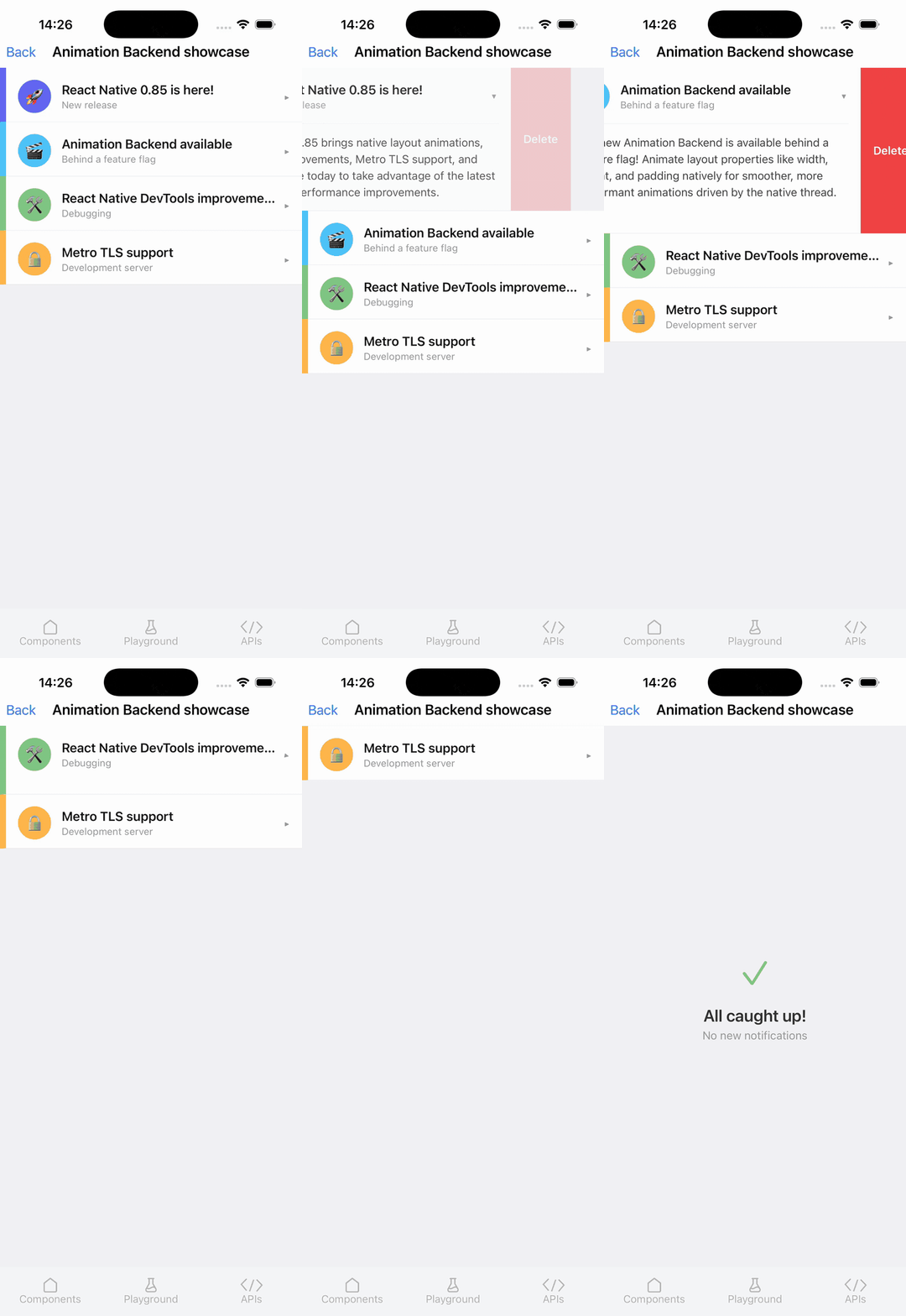
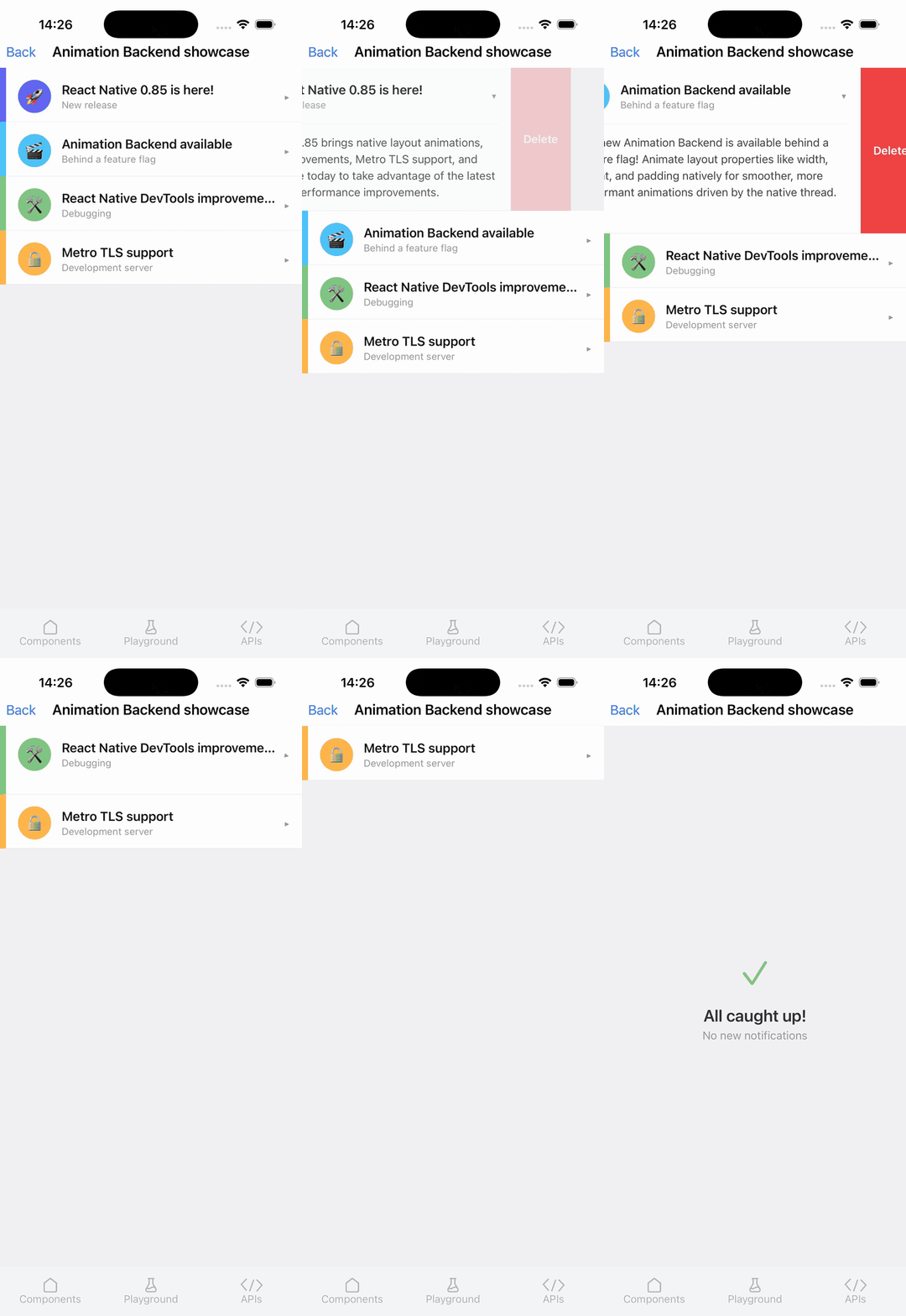
With version 0.85, the core architecture has been restructured to centralize the primary animation update logic directly within the React Native core engine. This unified internal engine now powers both Animated and Reanimated under the hood. For developers, this structural shift yields tangible benefits: Reanimated can now execute advanced performance optimizations that were previously impossible due to structural isolation, while the core team can implement rigorous update reconciliation testing to guarantee long-term stability across future framework updates.
Furthermore, the Animated library has lifted historical restrictions regarding layout property animations. Developers can now animate Flexbox and position properties seamlessly utilizing the native driver. In previous versions, attempting to animate properties like width or layout coordinates on the native thread often resulted in performance drops or fallback to the JavaScript thread. By channeling these updates through the Shared Animation Backend, UI threads can render smooth, 60-fps transitions without bridge congestion.
Developers eager to experiment with the new backend can opt-in via the experimental channel of React Native starting with version 0.85.1, accompanied by comprehensive reference implementations located within the official rn-tester repository.
Developer Experience: Metro TLS Support and DevTools Enhancements
Beyond runtime performance, React Native 0.85 focuses heavily on modernizing the local development loop. Security and API testing workflows have been upgraded through the introduction of native TLS support within the Metro development server.
In modern application development, testing network requests against secure endpoints (HTTPS) and ensuring encrypted Hot Reloading or Fast Refresh (WSS) often presented configuration hurdles during local development. Metro can now accept a comprehensive TLS configuration object within the metro.config.js file, enabling developers to feed custom Certificate Authority (CA), certificate, and private key files directly into the local server. Combined with open-source tools like mkcert, developers can effortlessly generate locally-trusted SSL certificates, eliminating persistent browser security warnings and aligning local test environments closely with production topologies.
Concurrently, React Native DevTools has received targeted usability upgrades. Notable improvements include refined native tab management—particularly optimized for macOS environments—allowing developers to inspect network traffic, performance profiles, and component hierarchies with greater visual clarity and reduced window clutter.
Architectural Cleanup: Jest Preset Extraction and Modern Node.js Requirements
In an effort to keep core packages lightweight and modular, the React Native maintainers have extracted the framework’s default Jest testing preset into a dedicated, standalone package: @react-native/jest-preset.

Previously bundled directly within the primary react-native package, this configuration utility has been decoupled to reduce the overall installation footprint and grant development teams greater flexibility in tailoring their testing pipelines. Upgrading projects to version 0.85 requires a simple one-line modification in jest.config.js, replacing the traditional 'react-native' preset string with '@react-native/jest-preset'.
Simultaneously, the framework has raised its minimum infrastructure requirements. React Native 0.85 officially drops support for end-of-life (EOL) Node.js versions, requiring developers to run Node.js v20.19.4 or higher. This cleanup allows the core team to leverage modern JavaScript runtime features, enhance build speeds, and maintain compatibility with contemporary build tools.
Another notable deprecation removal is StyleSheet.absoluteFillObject. Having been deprecated in prior cycles, the object has been completely removed in favor of StyleSheet.absoluteFill or explicit custom absolute positioning styles, compelling codebases to adopt cleaner, more standardized styling syntaxes.
Chronology of the 0.85 Release Cycle and Upstream Integration
The journey toward React Native 0.85 followed a rigorous release-candidate and testing timeline typical of modern enterprise-grade open-source frameworks. Following the stabilization of the 0.82 release line, core contributors focused heavily on architectural convergence with the New Architecture (Fabric and TurboModules). The integration of the Shared Animation Backend required months of collaborative prototyping between Meta’s engineering teams and Software Mansion specialists to ensure backward compatibility while unlocking native layout animations.
Looking forward, the broader ecosystem is already preparing to absorb these changes. Prominent meta-frameworks, such as Expo, have announced that the upcoming Expo SDK 56 will incorporate React Native 0.85 as its core engine, allowing managed-workflow developers to inherit the performance and security benefits of the new animation backend and Metro TLS support without manual native configuration.
Industry Implications and Strategic Analysis
The release of React Native 0.85 arrives at a crucial juncture for cross-platform application development. As consumer expectations for fluid, native-feeling mobile interfaces continue to rise, frameworks must bridge the performance gap between JavaScript-driven business logic and native UI rendering.
By unifying the animation backend under a single core engine, React Native reduces friction between competing animation libraries, offering a standardized, highly performant path forward. This architectural maturity reassures enterprise stakeholders who rely on React Native for large-scale consumer applications, ensuring that complex UI choreography can be executed reliably without sacrificing frame rates.
Furthermore, the emphasis on developer tooling—such as native Metro TLS support and modularized testing presets—demonstrates a commitment to developer productivity and secure coding standards. By smoothing out friction points in local testing and network inspection, the React Native team continues to lower the cognitive overhead associated with maintaining complex mobile codebases.
Upgrade Path and Getting Started
For existing applications wishing to migrate to React Native 0.85, the core team strongly recommends utilizing the official React Native Upgrade Helper to identify targeted code diffs across project files. Developers initiating new projects can bootstrap an environment using the updated CLI command:
npx @react-native-community/cli@latest init MyProject --version latestWith comprehensive documentation, robust community backing, and over 50 contributors lending their expertise to this milestone, React Native 0.85 solidifies its position as a premier framework for scalable, high-performance mobile engineering.