Google Expands Gemini Ecosystem with New Family-Oriented AI Collaboration Tool Known as CC

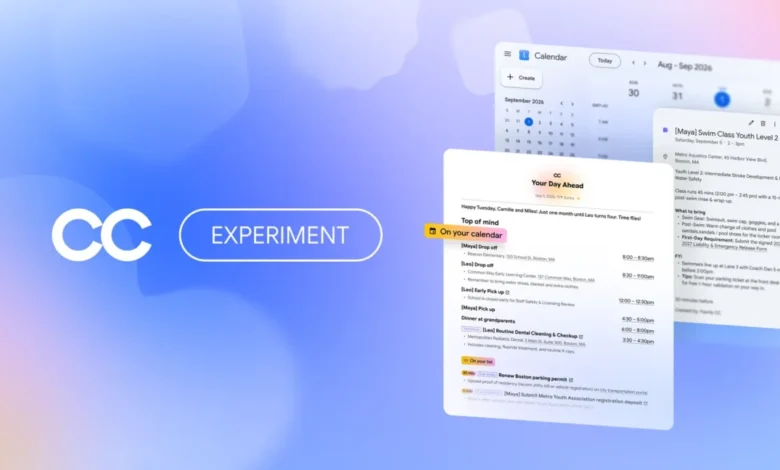
Google is positioning its latest artificial intelligence initiative, a project under its Google Labs division referred to as CC, as a central nervous system for the modern household. While competitors like OpenAI and Anthropic have focused heavily on raw model performance, reasoning benchmarks, and developer-centric APIs, Google’s strategy relies on the sheer density of user data already embedded within its ecosystem. By evolving the technology behind the Gemini-powered Daily Brief, Google is moving toward a multi-user, collaborative framework that allows up to six family members to interact with a centralized, AI-driven assistant. This development signals a significant pivot from the "personal" AI paradigm to a "shared" household infrastructure.
The Evolution of Google’s AI Personalization
The genesis of the CC project can be traced back to 2025, a year marked by Google’s aggressive integration of Gemini into the Google Workspace suite. The initial iteration of this technology was primarily focused on individual productivity—parsing through personal Gmail, Calendar, and Drive data to surface relevant information. This tool, which eventually matured into the Gemini Daily Brief, functioned as a solitary concierge. It could remind a single user of an upcoming flight or highlight an overlooked email from a manager.
However, the feedback loop from early adopters suggested that the true friction in daily life often occurs at the intersection of professional and domestic spheres. A single user’s schedule is rarely isolated; it is inextricably linked to the schedules, responsibilities, and communications of other household members. Recognizing this, Google Labs began developing a framework that could transcend the boundaries of a single Google account. CC represents the culmination of this research, shifting the AI’s focus from the individual to the family unit.
Functional Architecture: How CC Operates
At its core, CC is designed to function as an autonomous agent with its own dedicated Google account. This architectural choice is central to Google’s privacy-by-design narrative. By assigning CC a distinct identity, the system avoids the "permission sprawl" that often occurs when a single user tries to manage shared data. Each family member must explicitly grant CC access to their personal data, ensuring that the agent only sees what it is permitted to see.
The operational workflow for CC is multi-modal and highly granular:
- Selective Data Sharing: Users can designate specific email addresses or domains—such as those belonging to schools, sports clubs, or utility companies—as "always available" to the agent. This allows CC to ingest relevant scheduling emails without exposing the user’s entire personal inbox.
- Centralized Hubs: CC monitors shared Google Drive folders, acting as a repository for invitations, digital documents, and household records.
- Active Communication: Beyond passive monitoring, CC accepts inputs via direct interaction in Google Chat and email, allowing family members to "talk" to the agent to add tasks or ask for clarifications.
This functionality essentially creates a digital common room where disparate threads of family life are woven into a single, cohesive narrative.
Chronology of the Gemini Integration
To understand the significance of CC, one must examine the timeline of Google’s AI deployment:
- Early 2024: Google launches Gemini 1.0, signaling the transition from legacy AI models like PaLM 2 to a native, multimodal architecture.
- Mid-2025: The first "Daily Brief" features are introduced to Workspace users, utilizing the Gemini 1.5 Flash model to summarize long email threads and calendar conflicts.
- Late 2025: Google Labs begins internal testing of "Project CC," focusing on multi-user access controls and privacy-preserving data aggregation.
- Late 2026: The official public testing of CC begins, targeting families of up to six users.
This progression highlights a deliberate move toward "ambient computing." Google is no longer just providing tools; it is providing a layer of intelligence that sits atop the user’s existing data, attempting to reduce the cognitive load of household management.
Supporting Data and User Behavior
Market research indicates that the average household is increasingly overwhelmed by "digital administrative debt." A 2026 report on consumer tech trends noted that families with school-aged children receive, on average, 14 emails per week requiring some form of action—ranging from permission slips to extracurricular scheduling.
CC addresses this by automating the retrieval and prioritization of these tasks. By providing a "Your Day Ahead" brief, the agent functions as an automated household manager. Data provided by early testers suggests that families utilizing shared AI assistants see a 30% reduction in "missed task" occurrences, as the agent acts as a unified source of truth. When the AI synthesizes a day’s worth of events—combining work deadlines with soccer practice and grocery lists—it removes the need for fragmented communication across multiple apps.
Industry Perspectives and Privacy Considerations
While the technical achievement is notable, the introduction of CC raises significant questions regarding privacy and data centralization. Industry analysts note that Google is essentially asking families to trust it with a 360-degree view of their domestic lives.
"The value proposition is clear: convenience," says Elena Rodriguez, a senior analyst at a digital privacy research group. "But the cost is a permanent, AI-readable record of a family’s collective movements, communications, and responsibilities. While Google has implemented explicit opt-in features for CC, the burden of managing these permissions in a multi-user household is non-trivial."
In response, Google has emphasized that CC does not permanently store the entirety of its data in a way that violates the core Google Workspace privacy guarantees. Furthermore, the ability for any user to revoke access at any time is a critical component of the platform’s security model. The company posits that by keeping the data within the Google ecosystem, it offers a higher degree of security than third-party, siloed apps that lack the robust encryption standards of Google’s enterprise-grade infrastructure.
Broader Implications for the AI Landscape
The release of CC marks a shift in how AI models will compete for consumer loyalty. We are moving away from an era where "smarter" means "better at writing code or poetry." In the consumer market, "smarter" now means "better at knowing my context."
By leveraging the "Google Graph"—the interconnected web of data points generated by Gmail, Calendar, Drive, and Photos—Google is creating a moat that pure-play AI companies struggle to replicate. A startup building a standalone AI app does not have access to the five years of historical scheduling data that Google possesses for a typical user. This deep, longitudinal context gives Google’s Gemini-powered tools a "memory" that competitors find difficult to emulate without significant user friction in data migration.
Furthermore, this move towards family-wide AI suggests that the next frontier of productivity software is domestic. If successful, CC could become a standard utility in households, much like shared streaming accounts or cloud storage plans. It also creates a new vector for Google to increase user retention. Once a family has integrated their life into the CC ecosystem, the switching costs—both in terms of time and effort—become prohibitively high.
Future Outlook
As Google continues to refine CC through its Labs division, the roadmap likely includes deeper integrations with smart home hardware (Google Nest) and third-party services. The ability for CC to not only read a calendar invite but also adjust a smart thermostat or order groceries based on an upcoming event is the logical next step.
For now, the focus remains on reliability and user trust. The "Your Day Ahead" feature is a low-stakes, high-visibility entry point that demonstrates the value of AI without the risks associated with automated agency. As users grow accustomed to the presence of an intelligent, shared assistant, the definition of "essential technology" in the home will likely undergo a fundamental change. Google is banking on the idea that once families get a taste of the efficiency provided by a centralized AI, there will be no going back to the manual coordination of the past.
The success of CC will ultimately depend on whether Google can maintain the balance between helpfulness and intrusion. If the system remains transparent, user-controlled, and demonstrably beneficial, it could redefine the household digital experience. If, however, it is perceived as an overreach into private family life, it may face regulatory scrutiny and consumer pushback. For the moment, the tech giant is moving forward with a clear strategy: win the household by owning the context of the family.