Anthropic and Amazon Web Services Launch Claude Fable 5.1 to Deliver Advanced Enterprise Intelligence and Long-Running Workflow Capabilities

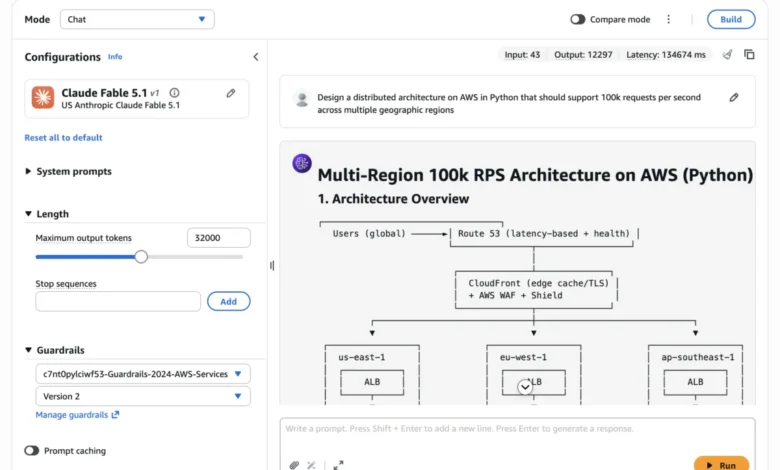
The landscape of enterprise artificial intelligence shifted significantly last week with the official availability of Claude Fable 5.1 on Amazon Web Services (AWS). Developed by Anthropic and integrated directly into the AWS ecosystem, this frontier model represents a major leap forward in how organizations manage complex, long-running computational tasks. Designed explicitly for high-stakes projects that span multiple applications and demand continuous execution over hours or even days, Claude Fable 5.1 aims to redefine software engineering, scientific research, and enterprise automation.
As businesses increasingly demand generative artificial intelligence tools that can move beyond simple query-and-response interactions to autonomous task execution, the release of Claude Fable 5.1 addresses a critical capability gap. By combining Anthropic’s advanced model architecture with the robust infrastructure, security, and scalability of AWS, the collaboration sets a new benchmark for what enterprise-grade artificial intelligence can achieve in secure cloud environments.
Main Facts and Technical Capabilities of Claude Fable 5.1
Claude Fable 5.1 arrives as a top-tier intelligence engine engineered to tackle ambitious, multifaceted projects. Unlike earlier iterations of artificial intelligence models that excel primarily in isolated tasks, Fable 5.1 is optimized for persistence and contextual continuity. According to technical documentation provided by Anthropic and AWS, the model is built to sustain extended sessions, allowing it to own substantial portions of a software development project independently.
The model’s core competencies extend across an entire codebase. It is capable of developing new features, conducting rigorous code reviews, identifying performance bottlenecks, and executing optimization protocols over prolonged periods without losing the thread of the broader project architecture. Beyond software engineering, Claude Fable 5.1 delivers exceptional utility in scientific research, where complex data synthesis, literature reviews, and multi-step analytical workflows require absolute precision and sustained logical coherence across vast amounts of information.
Deployment of the model is facilitated through two primary pathways on AWS: Amazon Bedrock, the fully managed service that makes high-performing foundation models available via an API, and the specialized Claude Platform on AWS. This dual-access model ensures that organizations can integrate Fable 5.1 into their existing cloud pipelines with minimal friction, leveraging AWS tools to scale their artificial intelligence initiatives securely and efficiently.
Chronology and Strategic Integration Partnership
The integration of Claude Fable 5.1 into AWS is the latest milestone in a rapidly accelerating strategic partnership between Amazon and Anthropic. The alliance, which has evolved over the past several years through substantial multi-billion-dollar investments and joint engineering efforts, focuses on bringing cutting-edge frontier models to enterprise customers while addressing the stringent security and compliance requirements of regulated industries.
The timeline leading up to the release of Fable 5.1 reflects a deliberate cadence of capability expansion on AWS. Anthropic models have steadily gained traction within the Amazon Bedrock ecosystem, beginning with earlier versions of the Claude family and scaling up to handle increasingly complex enterprise workloads. Over the past year, AWS and Anthropic have focused heavily on bridging the gap between raw model capability and enterprise governance.
The culmination of these joint efforts led to the formal designation of Fable 5.1 as a Covered Model upon its launch last week. This classification triggers a specialized framework of governance designed to balance cutting-edge model performance with uncompromising data protection and regulatory compliance.
Governance, Security, and Data Retention Policies
With great capability comes heightened scrutiny, particularly regarding data privacy, intellectual property, and safety oversight. Recognizing these concerns, Anthropic and AWS have established rigorous governance protocols specifically tailored for Claude Fable 5.1. As a Covered Model, Fable 5.1 is subject to specialized data retention policies and safety review mechanisms wherever it is offered.
Under the newly introduced aws_review data retention mode within Amazon Bedrock, user prompts and model outputs may be retained for up to 30 days. This retention period facilitates necessary human safety reviews conducted by authorized personnel within the secure AWS boundary. This mechanism addresses safety and misuse concerns without exposing sensitive corporate data to external third parties.
Furthermore, this configuration supersedes legacy options such as the provider_data_share mode. Under the current architecture, Amazon Bedrock ensures that customer data is not shared with the model provider, maintaining a strict boundary between enterprise inputs and external model training pipelines.
To further reassure enterprise clients, AWS and Anthropic introduced Enterprise Frontier Safeguards (EFS). Built collaboratively, EFS allows eligible customers to harness the advanced capabilities of Covered Models like Fable 5.1 while ensuring that their proprietary data remains strictly within a cloud environment under their direct control. This framework is particularly crucial for financial institutions, healthcare organizations, and government agencies that must adhere to strict data residency and privacy mandates.
Supporting Data and Enterprise Adoption Trends
The demand for long-running, autonomous artificial intelligence agents is underscored by broader market trends in cloud computing and enterprise technology. Industry analyses indicate that organizations are increasingly moving away from basic chatbot implementations toward deep workflow automation. Models that can autonomously manage software development lifecycles—from initial architecture planning to deployment and code maintenance—offer substantial return on investment through increased developer productivity and reduced time-to-market.
AWS continues to expand its catalog of foundation models via Amazon Bedrock to meet this surging demand. By providing a centralized hub where enterprises can evaluate, test, and deploy models from leading providers like Anthropic, AWS has established itself as a preferred destination for enterprise artificial intelligence deployment. The inclusion of models capable of multi-hour, multi-application execution reflects a maturation of the market, where businesses no longer view artificial intelligence as a novelty, but as a core operational engine.
Official Responses and Industry Perspectives

Leadership from both Amazon Web Services and Anthropic have emphasized the cooperative nature of the Fable 5.1 launch, framing it as a vital step forward in responsible artificial intelligence deployment.
Representatives from Anthropic noted that the creation of Fable 5.1 was driven by feedback from enterprise developers and researchers who required a model capable of sustaining deep focus over extended workflows. By engineering the model to handle high-stakes tasks without degrading in performance or losing context, Anthropic believes it has bridged the gap between theoretical artificial intelligence capabilities and practical enterprise utility.
Meanwhile, AWS spokespersons highlighted the importance of the Enterprise Frontier Safeguards and the aws_review data retention mode. AWS executives reiterated that enterprise customers should not have to choose between cutting-edge technological capabilities and robust security. The architecture of the Fable 5.1 deployment on Amazon Bedrock is explicitly designed to provide peace of mind to Chief Information Security Officers and compliance officers who must navigate complex regulatory landscapes while empowering their engineering teams with the latest tools.
Broader Impact and Strategic Implications
The introduction of Claude Fable 5.1 on AWS carries significant implications for the software development industry and enterprise operations at large. By enabling a model to take ownership of substantial portions of a software project—handling features across an entire codebase, managing code reviews, and executing performance optimization over extended sessions—the tool fundamentally alters the traditional division of labor between human developers and artificial intelligence systems.
Rather than replacing human oversight, models like Fable 5.1 act as force multipliers, shifting the developer’s role from writing repetitive boilerplate code to orchestrating complex systems and reviewing architectural integrity. In scientific research, the ability to synthesize vast quantities of disparate data over long-running computational sessions can dramatically accelerate discovery timelines in fields ranging from pharmaceuticals to materials science.
At the same time, the stringent security frameworks established by AWS and Anthropic set a new standard for how high-risk, frontier models are deployed in commercial settings. The implementation of EFS and controlled data retention modes provides a blueprint for balancing innovation with accountability, ensuring that the deployment of advanced artificial intelligence does not compromise enterprise trust or regulatory compliance.
As organizations continue to explore the boundaries of generative artificial intelligence, the success of Claude Fable 5.1 on AWS will likely serve as a bellwether for future enterprise deployments. With its combination of frontier-class intelligence, long-running operational endurance, and enterprise-grade security controls, the model establishes a formidable foundation for the next generation of cloud-based automation. Developers and enterprise leaders looking to explore these capabilities further can access comprehensive documentation through the Amazon Bedrock model card and the Claude Platform on AWS, marking the beginning of a new chapter in scalable, secure artificial intelligence integration.
Related posts: