Noise Secures $5.5 Million Seed Funding to Democratize Influencer Marketing Through Performance-Based Creator Networks

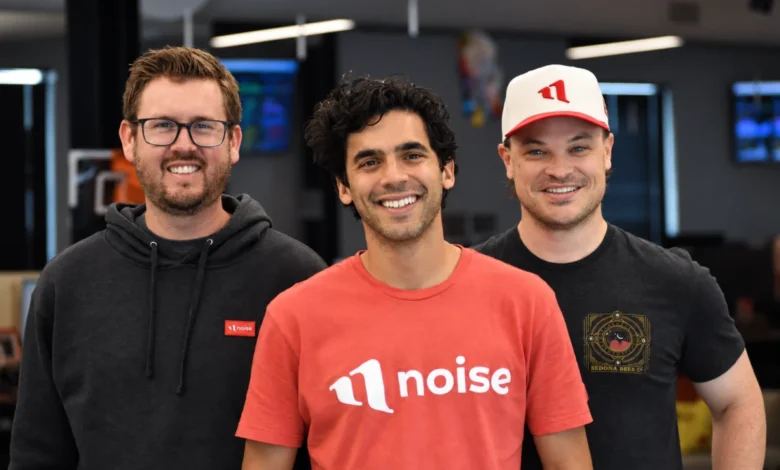
The influencer marketing landscape is undergoing a fundamental transformation as brands shift their focus from high-cost, high-profile celebrity endorsements toward scalable, performance-driven partnerships with everyday consumers. Noise, a burgeoning marketing platform, has emerged at the center of this transition, announcing on Wednesday a $5.5 million seed funding round led by Capital Midwest, M25, and Grishin Robotics. This latest injection of capital brings the company’s total funding to $7.2 million, positioning the startup to challenge the traditional, often opaque, agency-led influencer model.
The funding round also included participation from Capitalize VC and various industry operators, including alumni from major tech firms like DoorDash. This infusion of capital is earmarked for product development and aggressive hiring, as Noise looks to scale its infrastructure to accommodate a growing roster of brands and an increasingly diverse creator base.
A New Model for the Creator Economy
Founded in 2025 by Diego Kafie, Stu Feldt, and Nic Weber, Noise operates on a premise that diverges sharply from the standard influencer marketing playbook. Unlike agencies that connect brands with established social media personalities possessing large, pre-vetted followings, Noise allows anyone with a smartphone to join its platform. The company does not require a minimum follower count, effectively democratizing the ability to monetize social media content.
The operational core of the platform is a performance-based payment structure. Creators are compensated primarily per view rather than through flat-fee contracts. For brands, this represents a significant shift in risk management; they are no longer paying for the perceived clout of an individual, but for the tangible engagement and reach generated by the content. By automating the sourcing, management, and payment of thousands of creators simultaneously, Noise removes the logistical bottlenecks that have historically limited influencer campaigns to a small handful of high-profile partners.
The Origin Story: From Playbite to Platform
The genesis of Noise lies in the founders’ previous venture, Playbite, a mobile gaming app. During their two-year tenure building Playbite, Kafie, Feldt, and Weber struggled with the rising costs of traditional user acquisition. In an effort to scale their gaming app, they experimented with grassroots marketing, training a small cohort of their own users to create promotional social content.
What began as a group of five individuals eventually grew to 100, then hundreds more. The founders discovered that these "amateur" creators were not only more cost-effective but often produced content that felt more authentic and relatable to potential users than high-production advertisements. By teaching regular people how to craft effective social media content, the Playbite team achieved exponential growth in app installs. This experience served as the blueprint for Noise, which now seeks to offer this "small army" marketing strategy to a wider range of businesses.
Market Context and the Growth of Creator Aspirations
The timing of Noise’s expansion aligns with a significant cultural shift. According to recent data, 57% of young people in the Gen Z demographic aspire to be influencers, while over 40% of U.S. adults express an interest in participating in the creator economy. Despite this enthusiasm, the barriers to entry for professional content creation—including the need for expensive equipment, high-level editing skills, and the pressure to maintain a consistent brand identity—remain high.
Noise addresses this friction through integrated training modules. When a user joins the platform, they undergo specific training designed to teach them the fundamentals of content creation, brand storytelling, and platform-specific trends. As these creators gain experience and demonstrate success, they gain access to higher-paying campaigns, creating a meritocratic pipeline that rewards both effort and efficacy.
Strategic Expansion: The Organic-to-Ads Program
As part of its growth strategy, Noise has recently launched its "Organic-to-Ads" program. This feature allows brands to take the content generated by Noise creators—which was originally intended for organic distribution—and leverage it as paid advertising assets on platforms such as Meta and TikTok.
This hybrid approach acknowledges the growing importance of "creator-led" ads, where content that appears native to a user’s feed often outperforms polished, studio-produced advertisements. By facilitating the bridge between organic creator content and paid media spend, Noise is providing brands with a high-volume, low-cost creative pipeline that is easily scalable.
Industry Implications and Competitive Landscape
The influencer marketing industry is currently estimated to be worth over $20 billion, but it remains fragmented. While incumbents like Billo and JoinBrands operate in the same infrastructure space, Noise’s focus on the "everyday creator" and its specific performance-based pay-per-view model distinguish it from competitors that rely more heavily on fixed-price gig structures.
Industry analysts suggest that Noise’s model could have profound implications for startups and mobile-first companies. By lowering the cost of content production and distribution, Noise allows smaller firms to compete with larger organizations that have historically dominated digital ad auctions. For these smaller companies, the ability to rapidly deploy a distributed network of thousands of creators provides a "hacker-growth" advantage that is difficult for competitors to replicate.
However, the rise of such platforms also brings questions regarding the long-term sustainability of the creator lifecycle. Critics of the pay-per-view model argue that it places the burden of risk entirely on the creator. In response, CEO Diego Kafie maintains that the platform provides agency to the creators, who are free to accept or decline campaigns based on the rates set by the brands. He emphasizes that the platform is not designed to replace professional influencers, but rather to create a new category of "everyday creators" who might otherwise lack the opportunity to monetize their digital presence.
Looking Toward the Future
With 1.5 million creators already on the platform, Noise is currently serving a customer base primarily composed of mobile apps and startups with limited marketing budgets. The company’s long-term objective is to broaden its reach to companies of all sizes, including large-scale enterprises that may be looking for more authentic, diverse content streams.
The $5.5 million in seed funding provides the company with a significant runway to refine its algorithms, enhance its training programs, and scale its sales and engineering teams. As the digital advertising market continues to prioritize short-form video and authentic social integration, the demand for platforms that can bridge the gap between amateur creativity and professional marketing is expected to grow.
For the founders, the focus remains on the "democratization of content creation." By turning thousands of casual social media users into brand advocates, Noise is not merely creating a new marketing tool; it is actively shaping the evolution of the creator economy. As the platform matures, its ability to maintain quality control while scaling to millions of users will be the primary test of its long-term viability. For now, however, the successful seed round signals strong investor confidence in the shift away from the traditional influencer status quo and toward a more decentralized, performance-oriented future.