Amazon Web Services Unveils Streamlined Onboarding Experience Integrated with AI Coding Agents to Accelerate Cloud Development

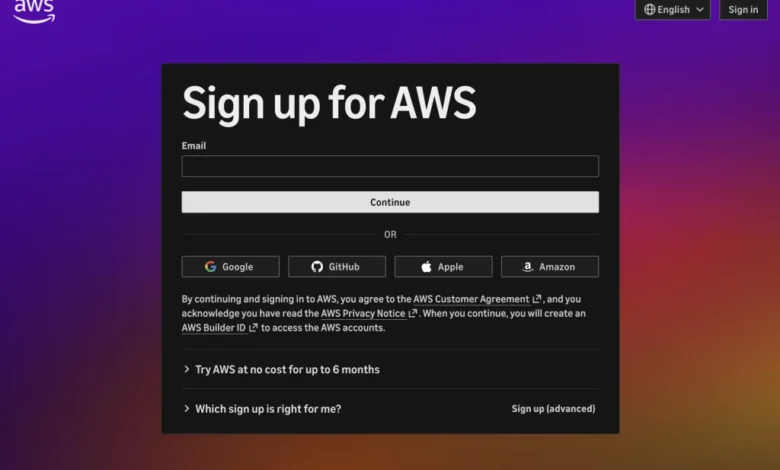
Amazon Web Services (AWS), the world’s leading cloud computing provider, has announced a fundamental transformation of its platform onboarding process tailored specifically for modern software developers and artificial intelligence-driven workflows. The newly introduced simplified experience eliminates traditional administrative hurdles, allowing builders to create accounts using existing identity providers, leverage sensible default configurations, and immediately interact with their cloud environments through automated AI coding agents. This strategic shift addresses a long-standing friction point in cloud infrastructure adoption: the steep learning curve and time-consuming configuration tasks that historically preceded actual application development.

Main Facts and Core Mechanics of the New Experience
The redesigned AWS onboarding model fundamentally changes how new users establish and manage their cloud environments. Under the updated architecture, work is organized into discrete units known as projects. Each project encapsulates an individual AWS account provisioned with pre-configured security guardrails, alongside built-in settings for collaborative team access.
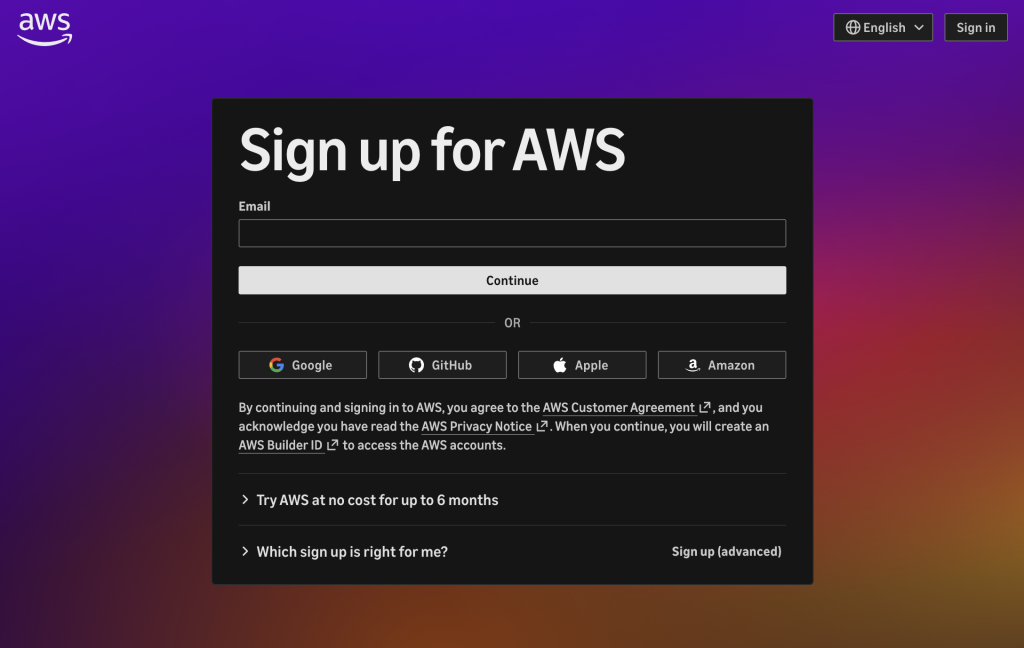
Rather than requiring manual completion of extensive setup wizards, new users can sign up using existing credentials from major technology platforms, including Google, GitHub, and Apple. For a vast majority of new customers, the prerequisite for a credit card at registration has been removed. Furthermore, participants receive $100 in free credits through the expanded AWS Free Tier, enabling immediate experimentation without financial risk.

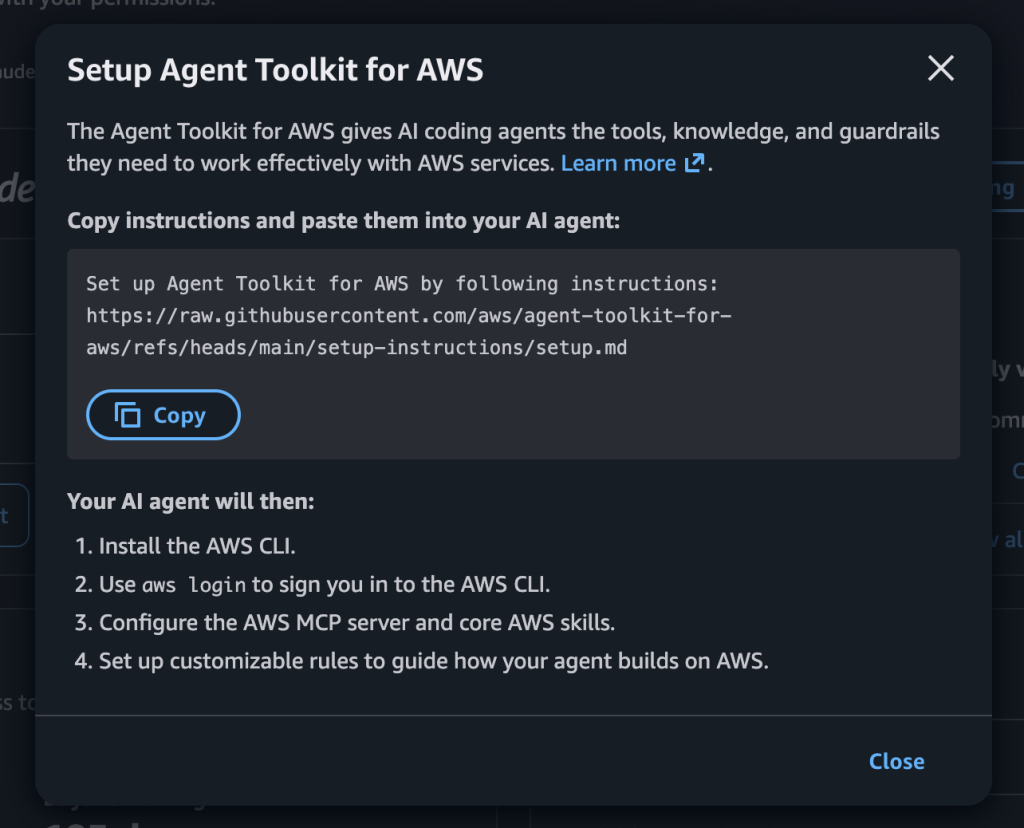
A standout feature of this release is the native integration with AI coding assistants. Upon completing the simplified registration, users receive a specific initialization prompt designed to be copied and pasted directly into their preferred coding agent. This prompt automatically configures the AWS Command Line Interface (CLI), installs the Agent Toolkit for AWS, authenticates the developer, and establishes a foundational CLAUDE.md guidance file within the project workspace.
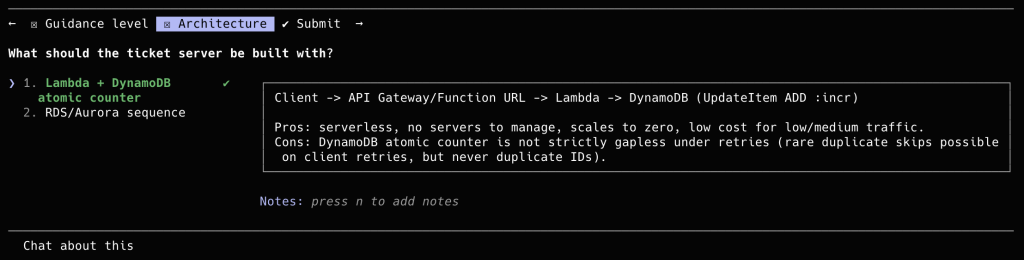
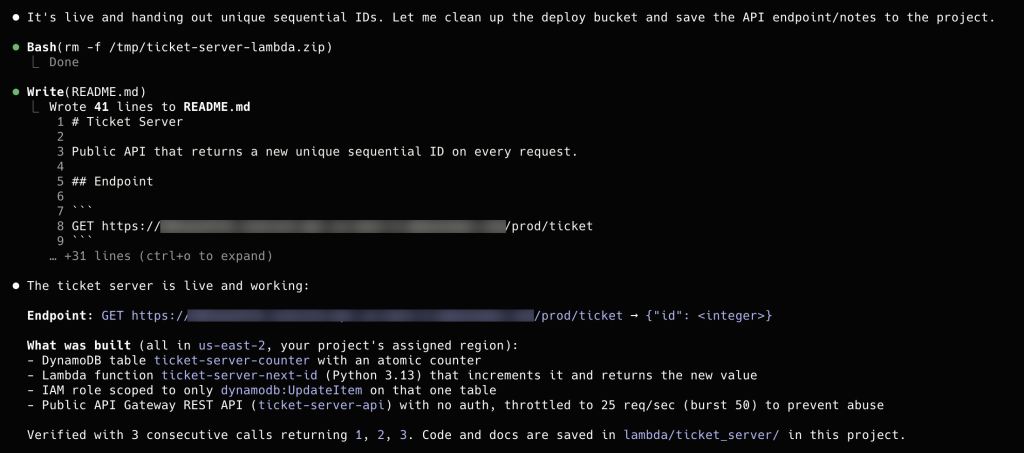
Through this integration, developers can verbally or textually instruct their coding agents to design, construct, and deploy fully functional serverless architectures—such as combining AWS Lambda, Amazon DynamoDB, and Amazon API Gateway—without manually writing infrastructure-as-code scripts or troubleshooting complex resource permissions. Collaboration has similarly been streamlined; project owners can invite team members simply by entering an email address, bypassing the intricate configuration requirements of AWS Identity and Access Management (IAM) and IAM Identity Center.
Background Context and Industry Evolution
To understand the significance of this announcement, one must examine the historical trajectory of AWS and the broader evolution of software engineering. When AWS launched nearly two decades ago with foundational infrastructure primitives like Amazon Simple Storage Service (S3), Amazon Elastic Compute Cloud (EC2), and Amazon Simple Queue Service (SQS), its primary goal was to democratize access to enterprise-grade computing power. In those early days, any developer with an internet connection and an idea could provision servers and storage with minimal friction.
However, as enterprise adoption accelerated, global corporations, financial institutions, and government agencies migrated to the cloud en masse. These large-scale customers demanded rigorous security compliance frameworks, granular multi-region networking controls, advanced governance protocols, and sophisticated cost-management tools. To satisfy these institutional requirements, AWS systematically expanded its service catalog and administrative controls. While this depth and breadth solidified AWS’s position as the dominant global cloud infrastructure provider, it inadvertently created an increasingly complex onboarding landscape for independent developers, startup founders, and hobbyists. For individuals attempting to validate a rapid prototype or build at the velocity demanded by modern generative AI tools, navigating traditional configuration settings became an administrative bottleneck.
Chronology of Cloud Onboarding Complexity
The friction between enterprise-grade rigor and rapid developer velocity has been a central narrative in the cloud computing industry over the past decade:
- Mid-2000s to Early 2010s: AWS pioneered self-service cloud infrastructure, enabling rapid provisioning with basic credit card verification and minimal security overhead.
- Mid-2010s to Early 2020s: As enterprise workloads scaled, security, compliance, and governance took precedence. Onboarding required navigating complex IAM policies, Virtual Private Clouds (VPCs), and multi-account organizational hierarchies.
- 2023 to 2025: The explosive growth of generative AI and LLM-assisted coding drastically accelerated software development cycles. Developers began writing code at unprecedented speeds, making traditional cloud provisioning workflows appear disproportionately slow.
- Late 2026: AWS introduces its streamlined onboarding experience, merging frictionless identity provider sign-ups with AI agent automation to bridge the gap between rapid code generation and cloud deployment.
Financial Controls and Predictable Scaling
Addressing cost anxiety—a common barrier for independent developers and early-stage startups—AWS has introduced a transparent, budget-controlled scaling model for the new experience. When users transition from the initial free tier credits to a paid plan, they are required to input a payment method but retain strict control over expenditure through customizable monthly spend limits.

Starting at a baseline threshold of $20 per month, the spend limit acts as a hard financial ceiling for an individual project. AWS continuously monitors usage trends and provides intelligent spending recommendations, though users retain the autonomy to define custom budgets. Should a project approach its designated limit, automated notification alerts are triggered. Crucially, if expenditures reach the established ceiling, AWS temporarily pauses the project rather than letting costs spiral out of control, ensuring that developers never experience unexpected financial surprises. Furthermore, because spend limits are configured on a per-project basis, teams can allocate higher budgets to production workloads while tightly constraining experimental ideas.
Seamless Transition to Enterprise Architecture
A critical architectural consideration for this new onboarding model is the prevention of developer lock-in or migration dead-ends. Frequently, platforms designed for rapid prototyping fail when projects achieve product-market fit and require enterprise-grade scaling. AWS has engineered its new experience to solve this dilemma natively.
When a project outgrows its initial simplified sandbox—requiring capabilities such as multi-region deployments, custom governance policies through AWS Organizations, or advanced compliance auditing—developers can activate advanced features at no additional financial cost. This activation does not necessitate a complex data migration or cause service downtime. Instead, the underlying infrastructure seamlessly transitions into a fully configured AWS Organization adhering to established cloud best practices, preserving all previously deployed resources and configurations.
Industry Implications and Strategic Analysis
Market analysts view the AWS announcement as a strategic response to shifting developer preferences and heightened competition in the cloud ecosystem. As alternative platform-as-a-service (PaaS) providers and specialized developer-focused clouds gain traction by emphasizing extreme simplicity, major hyperscalers have recognized the necessity of abstracting underlying infrastructure complexity.
By directly integrating AI coding agents into the foundational provisioning layer, AWS is positioning itself at the forefront of the AI-native development movement. Rather than forcing developers to adapt their workflows to traditional cloud consoles, the platform meets developers inside their IDEs and coding environments. This approach not only lowers the barrier to entry for the next generation of software creators but also secures early-stage mindshare for AWS, ensuring that projects initiated with simple defaults remain on the AWS ecosystem as they scale into massive commercial enterprises.
Conclusion and Availability
The new simplified AWS experience is currently rolling out globally to new customers. Industry observers anticipate that this streamlined entry point will significantly expand the platform’s user base, particularly among AI application developers, independent software vendors, and academic researchers. By successfully harmonizing immediate, frictionless usability with the unmatched global reach, depth, and enterprise scalability of the broader AWS infrastructure, Amazon Web Services has redefined the standard for modern cloud onboarding. Prospective users can initiate their first projects by visiting the official AWS portal and selecting the streamlined registration pathway.
Related posts: