LimeWire Launches Developer API to Empower Engineers and Creators with Dynamic AI Image Generation and Upscaling

The landscape of artificial intelligence media creation has undergone a profound transformation, evolving from rudimentary text prompts into sophisticated video art, hyper-realistic photography, and complex graphic design. Amidst this rapid expansion, platforms are continuously seeking ways to bridge the gap between advanced generative models and everyday users. Leading this charge is LimeWire, a brand historically recognized for pioneering peer-to-peer file sharing, which has successfully reinvented itself as a decentralized AI-driven content publishing platform. Expanding upon its consumer-facing interface that allows everyday individuals to act as digital artists, LimeWire has officially launched its new Developer API. This robust infrastructure is engineered to give software developers, content creators, and enterprise platforms direct, programmatic access to LimeWire’s generative AI ecosystem, enabling the dynamic creation and enhancement of visual assets on the fly.
The introduction of the LimeWire Developer API marks a significant milestone in the platform’s ongoing evolution from a legacy software name to a modern Web3 and AI powerhouse. By opening its architecture to external engineers, LimeWire is positioning its technology as an essential backend service for applications ranging from automated publishing workflows to interactive user platforms.
Technical Overview and Core Functionality
At its technical core, the LimeWire Developer API is designed with simplicity and efficiency in mind, adhering to modern RESTful standards. Engineers can seamlessly integrate generative capabilities into their existing software stacks using standard HTTP methods and JSON payloads. Authentication is handled securely via Bearer tokens, ensuring that programmatic requests are properly authorized against user accounts or enterprise subscriptions.
The API currently offers two primary pillars of functionality: automated image generation and high-resolution image upscaling. Through a straightforward POST request to the image generation endpoint, developers can supply a descriptive text prompt alongside configuration parameters such as aspect ratios. For example, generating a bespoke illustration requires nothing more than a concise JSON payload containing the prompt text and dimensional specifications:
curl -i -X POST
https://api.limewire.com/api/image/generation
-H ‘Authorization: Bearer MY_API_KEY’
-H ‘Content-Type: application/json’
-H ‘Accept: application/json’
-H ‘X-Api-Version: v1’
-d ‘
"prompt": "A beautiful princess in front of her kingdom",
"aspect_ratio": "1:1"
‘
Beyond initial creation, the API addresses the common technical challenge of resolution quality in generative AI by offering dedicated upscaling endpoints. Developers can take an existing image asset—identified by its unique system asset ID—and apply programmatic enhancements, increasing the resolution scale up to four times its original size. The upscaling mechanism follows a similarly streamlined request structure:
curl -i -X POST
https://api.limewire.com/api/image/upscaling
-H ‘Authorization: Bearer MY_API_KEY’
-H ‘Content-Type: application/json’
-H ‘Accept: application/json’
-H ‘X-Api-Version: v1’
-d ‘
"image_asset_id": "116a972f-666a-44a1-a3df-c9c28a1f56c0",
"upscale_factor": 4
‘
This dual capability ensures that applications utilizing the API can not only produce novel artwork instantaneously but also refine those assets to meet professional publishing standards without requiring manual intervention in external graphic editing software.

Background Context: The Transformation of LimeWire
To understand the strategic significance of the Developer API launch, it is essential to examine the historical trajectory of the LimeWire brand. Founded in 2000, LimeWire originally operated as one of the most popular peer-to-peer file-sharing clients on the internet, heavily utilized for sharing music and software. However, the platform became embroiled in extensive copyright infringement litigation brought by the Recording Industry Association of America (RIAA). In October 2010, a federal judge ordered the service to disable its core search, downloading, and file-sharing functionalities, effectively bringing an end to its original incarnation.
More than a decade later, in 2022, a new ownership group acquired the intellectual property rights with the vision of relaunching LimeWire as an art and music NFT marketplace. Capitalizing on the subsequent explosion of generative artificial intelligence, the platform pivoted aggressively toward AI content creation tools. By late 2023 and early 2024, LimeWire established itself as an accessible web-based portal where users could generate, publish, and monetize AI-generated images, music, and video content.
The release of the Developer API represents the logical next phase in this corporate reinvention. Rather than relying solely on users visiting the central LimeWire website to generate media, the company is now exporting its technological infrastructure, allowing third-party developers to embed LimeWire’s generative models directly into their own applications, websites, and publishing pipelines.
Chronology of AI Integration and API Development
The rollout of the developer tools follows a carefully orchestrated timeline of technological upgrades implemented by LimeWire over the past several years.
In the initial phase of its AI pivot, LimeWire focused primarily on web application interfaces. The engineering team integrated state-of-the-art text-to-image models, allowing users to input simple text prompts and receive high-definition digital artwork. As the community grew and adoption accelerated among digital creators, requests for automation tools and backend integrations surged.
Recognizing the demand from independent developers, bloggers, and enterprise software architects, LimeWire initiated internal testing of programmatic access points in late 2023. Engineers required a system that could handle scalable requests without latency issues, leading to the optimization of the API endpoints released in early 2024. The official documentation portal was subsequently published, providing developers with comprehensive guides, authentication protocols, and testing environments.
Industry Implications for Content Creators and Publishers
The ability to generate and manipulate AI imagery dynamically via API carries profound implications for content creators, digital publishers, and software engineers. Traditionally, producing custom visual content for articles, blogs, and marketing campaigns required significant manual effort. Content managers typically spent hours searching stock photo libraries, negotiating licensing fees, or utilizing complex design software to produce relevant graphics.
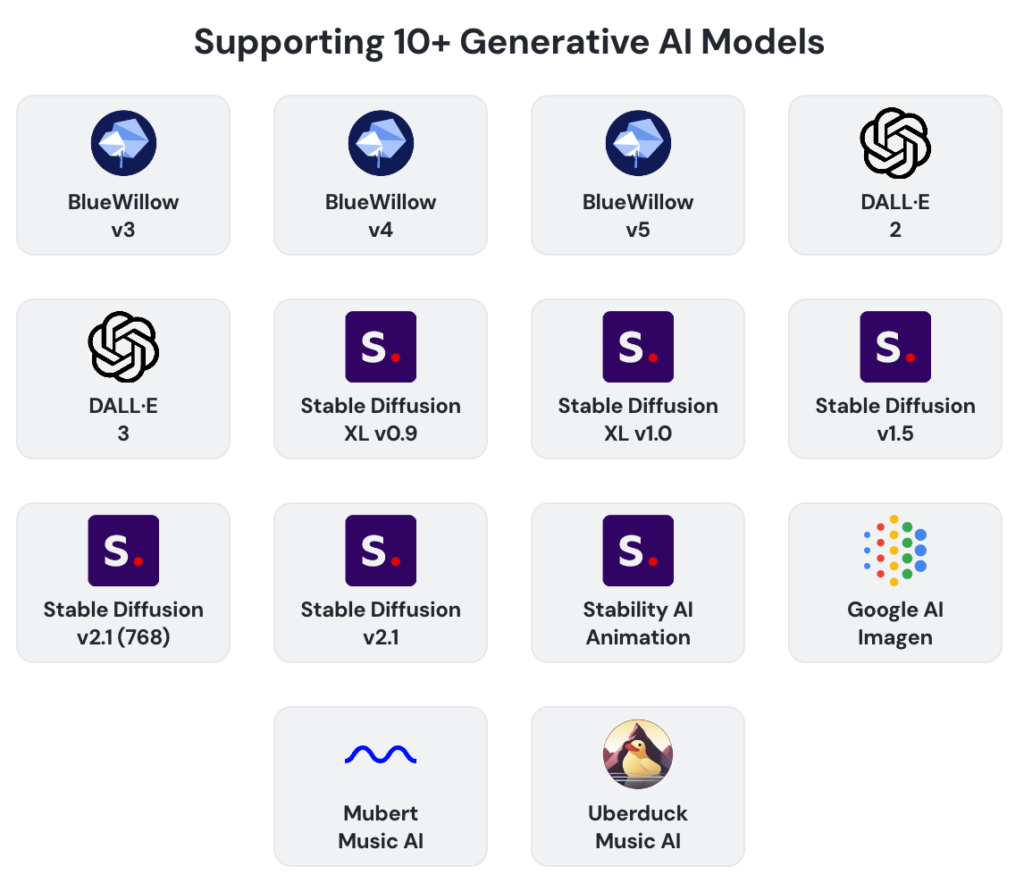
With the LimeWire Developer API, publishing workflows can be entirely automated. For example, a content management system can be configured to parse keywords from a newly written article, automatically formulate a descriptive prompt, and dispatch an API call to LimeWire to generate a bespoke featured image. This eliminates reliance on generic stock photography and ensures that every visual asset is uniquely tailored to the accompanying text.
Furthermore, authors and independent novelists can leverage the technology to illustrate their written works programmatically. By feeding narrative descriptions or character profiles into the generation pipeline, creators can produce hundreds of consistent illustrations for digital books, graphic novels, and interactive storytelling platforms.
Beyond individual creators, software platforms can white-label or integrate the API to offer native AI generation features to their own user bases. Blogging platforms, social media management tools, and e-commerce websites can incorporate LimeWire’s technology under the hood, empowering their users to generate marketing graphics and product mockups without ever leaving the host application.
Broader Market Impact and the Future of Generative Infrastructure
The launch of LimeWire’s Developer API underscores a broader industry trend: the commoditization and API-driven distribution of generative artificial intelligence. As foundational models become more accessible, the competitive advantage for tech companies lies increasingly in the quality of their interfaces, the reliability of their developer tools, and the flexibility of their integration frameworks.
By positioning its platform as a developer-friendly utility, LimeWire is diversifying its revenue streams and expanding its market reach beyond casual consumers. Analysts note that API-first business models allow AI companies to scale efficiently by embedding their services directly into enterprise workflows, where usage volumes are consistently higher than on consumer-facing websites.
However, the expansion of generative AI APIs also brings regulatory and ethical considerations to the forefront. As programmatic generation becomes faster and easier to automate, platforms must maintain rigorous safety guardrails, content moderation policies, and copyright compliance mechanisms to prevent the misuse of automated tools for generating harmful, misleading, or unauthorized intellectual property. LimeWire has incorporated safety filters within its API architecture to mitigate these risks, ensuring that generated content adheres to community and legal standards.
As the software engineering community begins to experiment with the new endpoints, the true impact of the LimeWire Developer API will be measured by the creativity of its integrations. Whether powering automated newsrooms, enhancing indie game development, or streamlining enterprise marketing pipelines, the tool represents a significant step forward in making advanced generative AI a ubiquitous, invisible utility embedded seamlessly within the digital ecosystem.