Maximizing AI Efficiency: How GitHub Copilot Redefines Agentic Coding Performance Through Smart Context Management


The pursuit of artificial intelligence efficiency has long been plagued by a deceptive metric: token counts. For years, developers and engineers optimizing AI models operated under the assumption that shorter tool outputs inherently translated to lower costs and faster execution. However, a comprehensive engineering initiative undertaken by GitHub challenges this conventional wisdom, demonstrating that localized token conservation can inadvertently trigger a cascade of costly recovery steps, thereby inflating overall project duration and expenses.

Published by GitHub staff software engineers Erik Krogh Kristensen and Napalys Klicius, recent technical disclosures outline how GitHub Copilot has pivoted away from merely shrinking individual interactions. Instead, the engineering team has optimized for end-to-end task completion, introducing four critical refinements to the GitHub Copilot CLI and its underlying orchestration harness that collectively slash resource waste without degrading model output quality.
The Pitfalls of Localized Token Optimization
The foundational premise of the GitHub research centers on what developers describe as the "local metric trap." In an effort to curb escalating inference costs, external utilities—such as the Rust Token Killer (RTK)—have been deployed to aggressively shorten shell command outputs before an AI agent processes them. While these utilities successfully reduce the token count of a single tool response, GitHub’s agentic coding benchmarks revealed a critical downstream flaw.
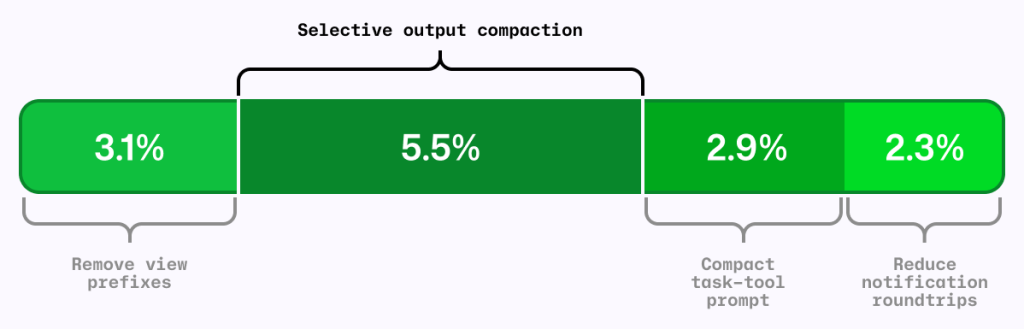
When an AI coding agent receives heavily truncated data and encounters missing context, it frequently initiates a recovery loop. To piece together the necessary information, the model is forced to reopen original files, rerun diagnostics commands, or execute supplementary search queries. These corrective turns ultimately expand the session context window, increase task duration, and escalate end-to-end costs. Consequently, an optimization that wins locally by shrinking a single prompt can fail globally by requiring more total computational turns to complete a complex coding task.
Recognizing that token reduction cannot come at the expense of model comprehension, GitHub implemented a rigorous evaluation framework. Potential system adjustments were first vetted offline utilizing standardized agentic coding benchmarks, followed by controlled online A/B testing across active production environments before official deployment.
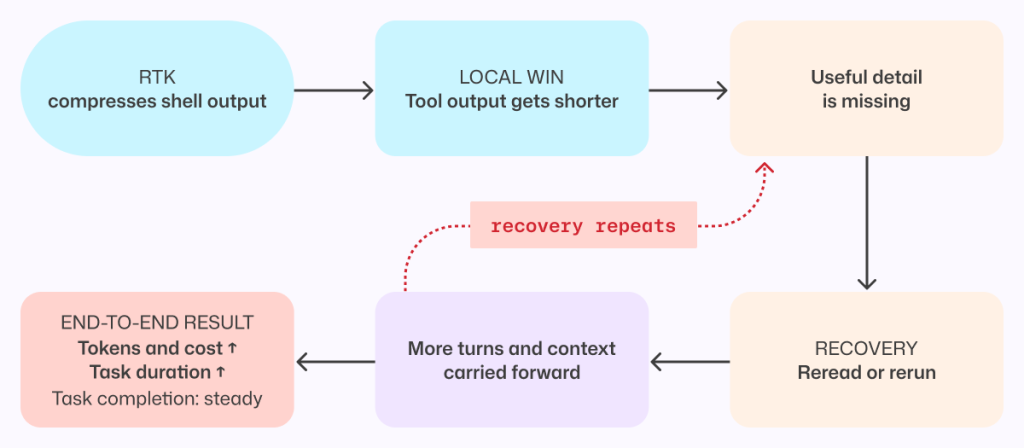
Four Pillar Improvements to the Copilot Harness
To achieve true efficiency, GitHub integrated four systemic modifications into the Copilot product ecosystem, ensuring that improvements in the command-line interface concurrently benefited other integrated workflows, such as Copilot code review and the core GitHub Copilot application.
1. Selective Output Compression
Rather than indiscriminately shortening every tool response, GitHub developed a selective output compressor designed to filter predictable noise while preserving vital programming context. Empirical analysis of build, test, and lint logs indicated that standard output streams frequently contain repetitive text patterns that add little value to an agent’s reasoning process.
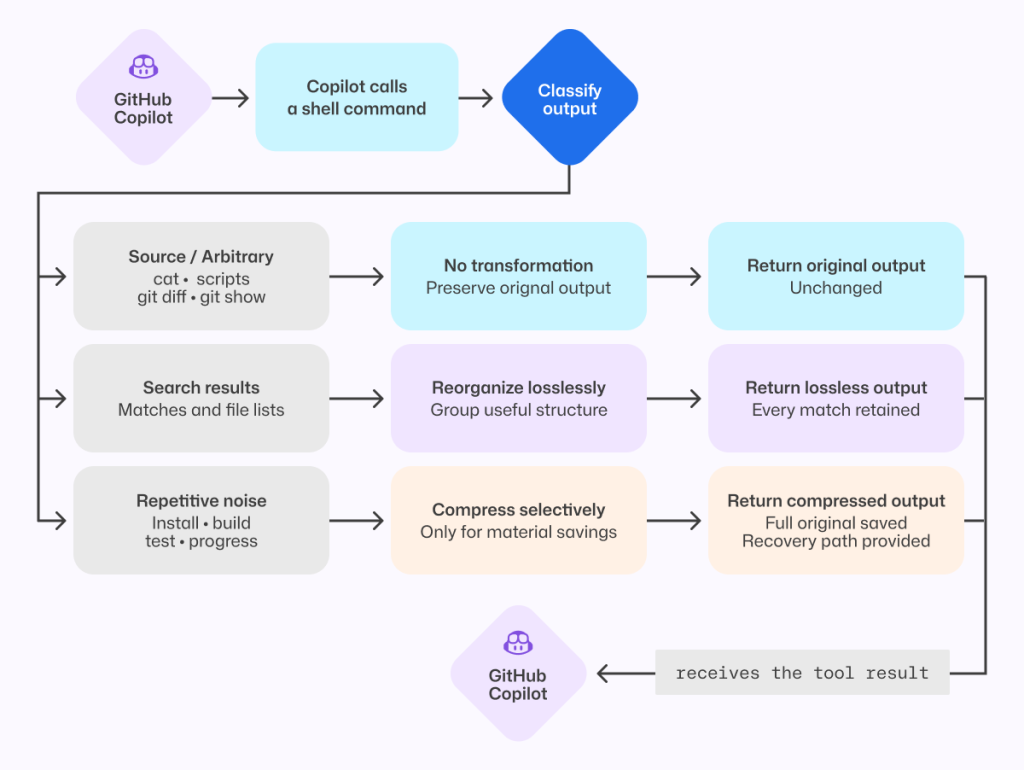
However, early prototypes that compressed source code or git diffs proved overly aggressive, forcing models to frequently retrieve the uncompressed data. The finalized architecture implements a strict three-part policy: it preserves source-like outputs unchanged, reorganizes search results without data loss, and compresses repetitive installation or build logs only when a direct recovery path back to the original text remains intact. Online telemetry confirmed that this conservative approach lowered average session costs without creating statistically significant task-success regressions.
2. Eliminating Redundant Formatting
A significant breakthrough in reducing baseline prompt consumption came from auditing the view tool, which agents utilize to ingest file contents. Historically, file-viewing protocols prefixed every line with explicit line numbers—a convention inherited from legacy editing tools that targeted specific line entries.

Because modern AI coding agents resolve edits by matching surrounding blocks of code rather than referencing static line numbers, these prefixes served no functional purpose in the prevailing workflow. Although individual line-number prefixes consumed minimal data, their cumulative presence across thousands of file reads per session introduced substantial overhead. Eliminating these prefixes reduced model-inference costs by approximately 5% in offline evaluations and delivered a steady 3% reduction in average daily inference costs per user during online trials, all while maintaining absolute parity in edit success rates.
3. Prompt Optimization Without Intent Loss
Instructions embedded within system prompts guide agent behavior on every operational turn, but accumulated descriptive text across tool schemas and agent definitions can bloat token usage. GitHub deployed an iterative meta-prompting loop wherein Copilot helped rewrite its own administrative instructions, successfully cutting prompt lengths by roughly half.
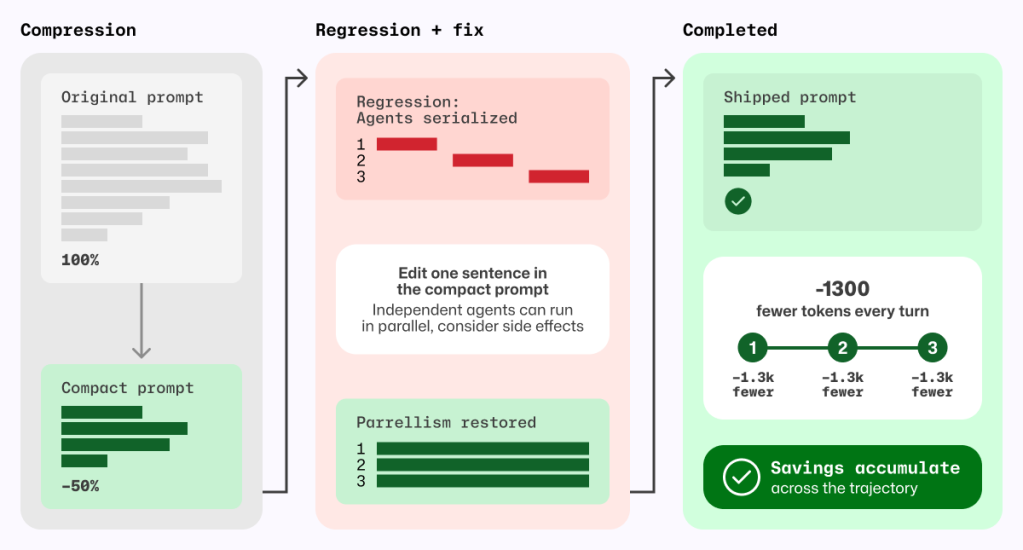
Initial deployments, however, highlighted the risks of aggressive prompt reduction. An early online experiment inadvertently transformed cautious parallelism guidelines into a rigid scheduling directive, forcing independent sub-agents to execute sequentially rather than concurrently. Promptly pausing the experiment, the engineering team introduced rigorous behavioral regression testing and refined the instruction down to a single, permissive sentence: "Independent agents can run in parallel; consider side effects." This adjustment successfully restored concurrent task execution while permanently removing approximately 1,300 tokens per turn.
4. Intelligent Notification Batching
Agentic coding environments frequently rely on background processes, executing long-running shell scripts or sub-agent investigations concurrently with primary tasks. Previously, when a background process concluded, the system notified the model without supplying the underlying result, compelling the agent to spend an additional, redundant turn requesting the data.
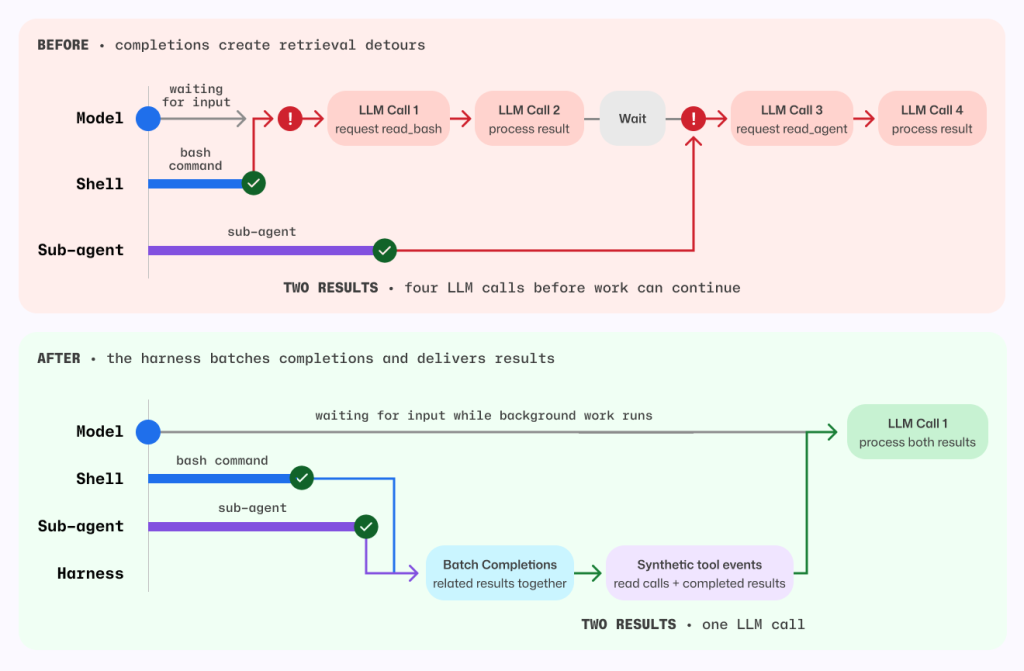
The updated Copilot harness introduces smart notification batching, capturing completed background results and immediately delivering them directly into the standard tool-result format. By bundling multiple completed notifications into a single model delivery, the architecture eliminates unnecessary retrieval detours. This orchestration refinement successfully reduced overall AI-credit resource consumption by roughly 2.3% per session.
Implications for the Future of AI Development
The systematic overhaul of GitHub Copilot underscores a broader maturation phase within the generative artificial intelligence industry. As enterprises scale their deployment of autonomous coding agents, raw model capability is increasingly mediated by the efficiency of the surrounding software harness.

GitHub’s findings suggest that future efficiency gains will rely less on brute-force model parameter reduction and more on architectural precision—specifically, eliminating redundant formatting, preventing repetitive exploratory loops, and aligning prompt structures with rigorous behavioral testing. By focusing on outcomes rather than isolated interaction metrics, engineering teams can deliver faster, more cost-effective developer tools that respect both cloud infrastructure limits and the developer’s time.