Bridging the Intelligence Gap: How the Model Context Protocol is Standardizing AI Integration

The rapid ascent of Large Language Models (LLMs) has fundamentally altered the landscape of software development and human-computer interaction. While these frontier models demonstrate an uncanny ability to generate text, synthesize information, and write code, they remain trapped within the confines of their static training data. To be truly effective, an AI must be able to interact with the world: accessing real-time databases, executing administrative tasks, and querying internal company resources. This transition from passive "chatbots" to proactive "agents" is currently hindered by a lack of standardization. Much like the fragmentation that once paralyzed the IDE ecosystem before the introduction of the Language Server Protocol (LSP), the current AI landscape is a patchwork of bespoke, proprietary integrations. The emerging Model Context Protocol (MCP) seeks to resolve this, offering a universal standard that promises to transform the way AI applications connect to data, eventually enabling an ecosystem where intelligence and information are seamlessly interoperable.
The Architecture of Agentic Workflow
At the core of the current AI limitations is the "context window" and the "tool-use" paradigm. Modern LLMs are designed to recognize when their inherent knowledge is insufficient to answer a user’s prompt. When this happens, they engage in a process known as tool use. In this workflow, a user might ask an AI to provide a weather report for a specific location. The LLM, recognizing it lacks real-time meteorological data, triggers a call to an external tool—a function designed to query a weather API and return the requested data.
While conceptually brilliant, this process is functionally fragile in practice. Without a universal protocol, every AI developer must build custom adapters for every single service they wish to integrate. If a developer wants their AI to read from a SQL database, fetch logs from a cloud provider, and pull files from a local directory, they must manually construct unique interfaces for each. This creates an M x N complexity problem, where M AI clients must be engineered to communicate with N distinct data sources. As the number of tools grows, the maintenance burden becomes unsustainable for even the most robust development teams.
The Historical Precedent: Learning from LSP
To understand why the Model Context Protocol is considered a potential turning point, one must look back at the development of the Language Server Protocol (LSP). Before LSP, developers of code editors—such as VS Code, Sublime Text, or Vim—had to build unique plugins for every programming language they wanted to support. Similarly, language developers had to write custom plugins for every individual editor. It was a fragmented, inefficient market that hampered developer productivity.
LSP introduced a standard JSON-RPC based interface that allowed any editor to speak to any language server. Suddenly, a single language server could provide autocompletion, error checking, and refactoring to any IDE that implemented the standard. By adopting this "M + N" model, the ecosystem exploded. MCP is attempting to replicate this success for the AI era. By standardizing how an LLM client requests information or executes a command, MCP allows a developer to build an "MCP Server" once and have it immediately available to every AI client—whether it is Claude Desktop, a terminal-based agent, or a custom internal dashboard—that supports the protocol.

Technical Foundations and Protocol Mechanics
The Model Context Protocol operates on a client-server architecture, utilizing the JSON-RPC 2.0 specification to handle requests and responses. The communication is transport-agnostic, typically occurring over standard input/output (stdio) or HTTP with Server-Sent Events (SSE). This flexibility allows it to run locally on a developer’s machine or across a distributed cloud infrastructure.
When a client initiates a connection, it performs a handshake to negotiate capabilities. The protocol classifies the features provided by a server into three primary categories: Resources, Prompts, and Tools. Resources are read-only data streams, such as file contents or database records. Prompts are predefined templates that help steer the LLM toward better performance for specific tasks. Tools are the most significant component: they represent executable functions that the AI can call to perform actions, such as sending an email, querying an API, or modifying a file.
The process of tool discovery and execution is automated. A client queries the server for its list of available tools, which includes metadata and input schemas. The LLM then receives this list, identifies which tool best fits the user’s intent, and generates a structured request. The client acts as a secure intermediary, presenting the tool call to the human user for authorization before executing it. This "human-in-the-loop" mechanism is a critical safety feature, ensuring that AI agents do not perform unauthorized actions, such as deleting files or making financial transactions without explicit approval.
Broader Implications and Industry Adoption
The shift toward a standardized protocol has profound implications for both enterprise and consumer software. For corporations, it offers a path to connect proprietary data silos to AI agents without rebuilding their entire data architecture. By exposing internal databases or internal documentation as MCP servers, companies can grant their AI workforce secure, controlled access to the information they need to be productive.
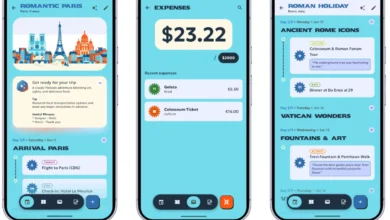
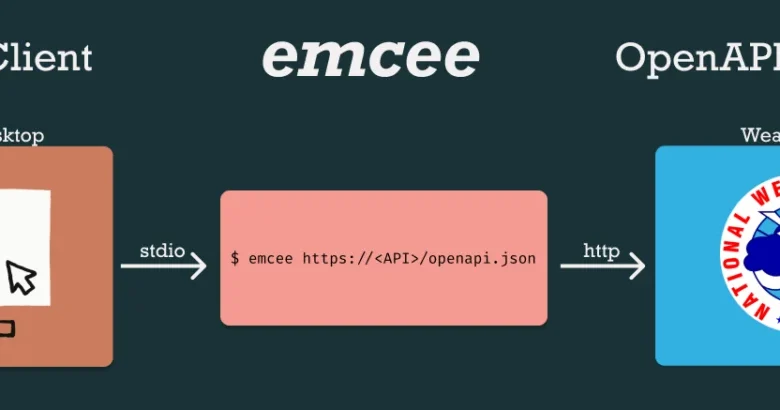
Furthermore, the emergence of the MCP ecosystem has sparked an influx of developer tooling. Open-source projects are already simplifying the creation of these servers. For instance, frameworks like Hype are designed to bridge the gap between simple Python functions and functional MCP servers by using decorators, allowing developers to turn existing scripts into AI-ready tools with minimal configuration. Similarly, projects like Emcee are focused on auto-generating MCP servers from existing OpenAPI specifications, enabling companies with legacy web APIs to immediately plug their services into the AI-enabled future.
The transition to a standardized protocol also encourages a "modular" approach to AI development. Instead of building monolithic AI applications that attempt to do everything, developers can focus on building highly specialized MCP servers that excel at specific tasks—such as managing calendar events, interacting with local macOS APIs, or processing complex scientific data. This modularity fosters a vibrant, collaborative ecosystem where tools can be shared, versioned, and improved independently.
Navigating the Future of Agency
The ultimate goal of the Model Context Protocol is to facilitate the transition from simple chatbots to autonomous agents. As researchers and developers give these models access to a growing number of tools, the boundary between "asking an AI to do something" and "having an AI solve a problem" begins to blur. With a thousand tools at its disposal, an agent can perform multi-step workflows that were previously impossible, such as researching a market, drafting a document, formatting it according to corporate standards, and saving it to the appropriate cloud storage folder—all through a single user command.
However, this increased agency necessitates a renewed focus on security and governance. As AI agents gain the ability to interact with more sensitive systems, the importance of the protocol’s authorization layers and the transparency of its tool-calling mechanism becomes paramount. The industry is currently in a phase of rapid experimentation, with projects like iMCP demonstrating how even deeply entrenched ecosystems, such as Apple’s macOS, can be opened up to AI integration through these standardized interfaces.
As the industry moves forward, the adoption of the Model Context Protocol will likely become a key differentiator for AI platforms. Platforms that support open standards will benefit from a network effect, as the library of available tools and integrations grows exponentially. Conversely, proprietary, closed-loop systems risk isolation, as they will be unable to leverage the collective innovation of the broader developer community.
The Model Context Protocol represents a necessary evolution in the architecture of intelligent systems. By solving the M x N integration problem, it provides the foundation upon which the next generation of AI-driven productivity tools will be built. Whether it is simplifying the development of local agentic workflows or enabling secure enterprise data access, the standard offers a clear, scalable path forward. As with all foundational technologies, the true value will be revealed as developers move beyond the initial excitement and begin to build the robust, real-world applications that will define the next decade of software engineering. The era of manual integration is ending; the era of interoperable, agentic intelligence has only just begun.