Embracing Probabilistic Programming to Solve the Crisis of Certainty in Software Engineering

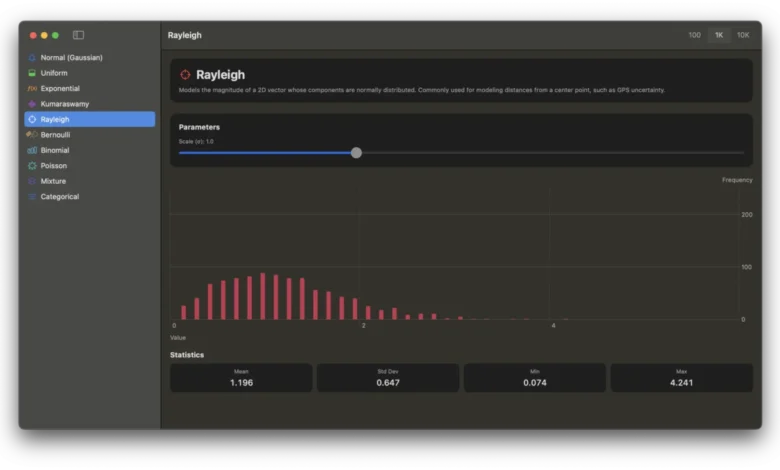
The fundamental architecture of modern software development is built upon a binary foundation: the Boolean logic of true or false, zero or one, and pass or fail. However, this rigid structure often fails to account for the inherently chaotic and noisy nature of the physical world. In fields ranging from geolocation services and sensor fusion to predictive analytics and user behavior modeling, developers are increasingly finding that binary outcomes are insufficient to describe reality. A growing movement in the software engineering community is now advocating for the adoption of probabilistic programming, a paradigm that treats uncertainty not as an error to be suppressed, but as a first-class data type.
The Problem of Premature Certainty
In contemporary software design, particularly within mobile applications utilizing GPS, the reliance on absolute comparisons leads to frequent, logical errors. A standard implementation, such as checking if a user’s current location is within 100 meters of a target destination, relies on a simple Boolean check. However, Global Positioning System (GPS) data is inherently probabilistic; it is subject to signal interference, atmospheric conditions, and hardware limitations. The CLLocation object in platforms like iOS provides a horizontalAccuracy property, yet developers often ignore this metadata in favor of a binary "if" statement.
By collapsing the "wavefunction" of the user’s location into a single Boolean value, developers create an environment where the application acts with a level of confidence that the data does not actually support. This leads to erratic behavior, such as a ride-sharing app failing to register an arrival, or a fitness tracker reporting physiologically impossible speeds. The issue is not the code itself, but the underlying abstraction, which forces developers to categorize ambiguous inputs as definitive facts.
A Paradigm Shift: The Evolution of Probabilistic Types
The theoretical basis for resolving this conflict was established in 2014, when researchers at the University of Washington and Microsoft Research published a seminal paper titled "Uncertain: A First-Order Type for Uncertain Data." The researchers proposed that instead of performing calculations on raw, noisy values, developers should wrap these values in a container that tracks their probability distribution.
The concept is deceptively simple but mathematically rigorous. Rather than executing a comparison that results in a boolean true or false, the developer receives an Uncertain<Bool> value. This object encapsulates the probability that the condition is true. This approach shifts the developer’s perspective from deterministic logic—where a bug is defined by an incorrect true/false result—to probabilistic logic, where the developer must decide what threshold of confidence is required for a specific action.
Chronology of Implementation and Adoption
The migration of these concepts from academic research into practical application has been a slow process, hindered primarily by the lack of native support in mainstream programming languages. While the original 2014 research was implemented in C#, the subsequent years saw the development of libraries designed to port these capabilities to more modern, expressive languages such as Swift.
In recent months, developers have begun to integrate these "uncertainty-aware" frameworks into production environments. The transition generally follows a three-stage chronology:
- Identification of Critical Paths: Developers identify high-noise areas of the codebase, such as sensor-dependent features, where Boolean logic consistently fails.
- Incremental Migration: Rather than performing a wholesale architectural rewrite, teams wrap existing data structures in
Uncertaintypes, allowing the new system to coexist with legacy code. - Configuration of Confidence Thresholds: The most challenging phase involves determining the appropriate probability threshold for various operations. A high-stakes financial calculation might require 99.9% confidence, while a UI state change might be acceptable at 75%.
Statistical Foundations: Monte Carlo and SPRT
To function effectively, these systems rely on two primary computational strategies: Monte Carlo sampling and Sequential Probability Ratio Testing (SPRT). Monte Carlo methods allow for the estimation of complex outcomes by running thousands of simulated iterations of a function. For example, if a developer wants to determine the expected value of a payout in a digital slot machine, they can use Monte Carlo sampling to run 10,000 "spins" in milliseconds, arriving at a statistically sound expected value rather than an analytical guess.
The challenge of computational overhead is mitigated by SPRT. In traditional programming, one might sample a sensor 1,000 times to be sure of a result. SPRT allows the system to determine when it has sufficient data to make a confident decision, often requiring far fewer samples for simple comparisons while scaling up automatically for complex, multi-variable calculations. This allows for a balance between performance—essential for mobile applications—and the high degree of accuracy required for critical system decisions.
Broadening the Scope: Sensor Fusion and Behavior Modeling
The implications of adopting probabilistic types extend far beyond simple geolocation. In the realm of sensor fusion, where data from gyroscopes, accelerometers, and GPS must be synthesized, the Uncertain<T> model provides a standard way to handle noise. By representing these inputs as normal, exponential, or mixture distributions, engineers can build systems that naturally account for sensor drift and latency.
Furthermore, this model is becoming an essential tool in user behavior analytics. When modeling metrics such as API response times or the probability of a user tapping a specific button, developers are dealing with non-linear, often bimodal distributions. By using libraries that support mixture distributions, engineers can account for phenomena like the "morning rush" in coffee shop foot traffic or the "long tail" of network latency, providing a more accurate picture of application health than simple averages ever could.
Industry Implications and Expert Commentary
Software architects who have adopted this paradigm emphasize that the primary value is not necessarily the precision of the output, but the forced intellectual humility that the process requires. As Alan Kay once remarked, "Point of view is worth 80 IQ points." By treating uncertainty as a first-class citizen in the code, the developer is forced to confront the reality of their data, rather than hiding behind the illusion of binary precision.
Critics of the approach, however, point to the potential for "over-engineering." Introducing a probabilistic layer adds complexity, requires developers to have a foundational understanding of statistics, and creates new debugging challenges. If the underlying probability distributions are incorrectly defined—such as choosing a normal distribution for data that is actually skewed—the resulting logic can be more misleading than simple binary checks.
The Path Forward
The future of software engineering, particularly in an era of machine learning and sensor-rich mobile environments, appears to be moving away from the "it depends" frustration of senior-level development toward a more disciplined, probabilistic approach. The goal is not to eliminate uncertainty, as that is impossible in any real-world system, but to manage it with the same rigor currently applied to memory management or type safety.
As developers continue to ship and iterate, the integration of probabilistic programming will likely become a standard practice for any application that interacts with the physical world. By moving beyond the binary "if" statement, the industry is finally acknowledging that the real world is not black and white, and our code should no longer pretend that it is. The transition will be measured, iterative, and undoubtedly complex, but it represents a necessary evolution for software that claims to be truly intelligent and responsive to its environment. In the end, the most robust systems are those that admit what they do not know, allowing the machine to compute the odds and the human to define the risk.