Bridging the Gap: How Traditional Machine Learning and Agentic Reasoning Create Superior AI Systems


The rapid evolution of artificial intelligence has moved beyond the simple input-output paradigm that characterized the last decade of machine learning development. For years, the industry relied on supervised learning models—static, highly efficient algorithms designed to process structured data and yield probabilistic outcomes. While these models have become the backbone of modern enterprise infrastructure, they are inherently limited by their inability to reason, plan, or interact with external environments. A new architectural approach, known as agentic reasoning, is currently bridging this divide. By integrating traditional predictive models into broader, autonomous agentic frameworks, developers are creating systems that do not merely forecast outcomes but actively participate in complex, multi-step workflows.
The Foundation: The Efficiency of Traditional Machine Learning
Traditional machine learning (ML) has achieved remarkable success through specialization. By training on vast, labeled datasets, models such as gradient-boosted decision trees, random forests, and deep neural networks have reached near-human performance in specific domains. For instance, in financial services, fraud detection models process millions of transactions per second, flagging anomalies with high precision. In healthcare, image recognition algorithms analyze radiology scans to detect malignancies, often matching the accuracy of experienced radiologists.
These systems are favored by engineers for several fundamental reasons: speed, auditability, and reliability. Once a model is trained and deployed, its behavior is deterministic given a specific input. Because these models are static, they avoid the "hallucination" risks associated with generative AI, making them ideal for high-stakes environments where regulatory compliance and output consistency are non-negotiable.
However, the rigidity of these models is also their primary weakness. In 2024, industry analysts noted that while companies were spending billions on predictive models, the "last mile" of automation remained elusive. A predictive model can identify that a customer is likely to churn, but it cannot draft a personalized retention offer, verify the customer’s account history, or negotiate a new contract. This disconnect necessitates a human intermediary, which limits the scale and responsiveness of the enterprise.
The Emergence of Agentic Reasoning
Agentic reasoning represents a fundamental shift in how AI is conceptualized. Unlike traditional ML, which functions as a static function mapping input $x$ to output $y$, an agent functions as an iterative loop: it perceives the environment, performs reasoning, executes an action, and observes the outcome.
The transition from "model" to "agent" is largely driven by the capabilities of Large Language Models (LLMs). These models serve as a "reasoning engine" that can decompose complex, ambiguous human instructions into manageable sequences. If traditional ML is the "calculator" of the modern tech stack, agentic reasoning is the "project manager."
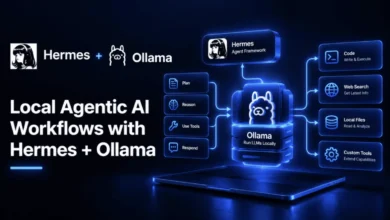
The development of agentic frameworks—such as LangGraph, AutoGPT, and CrewAI—has accelerated this shift. These platforms allow developers to build "guardrails" around LLMs, forcing them to adhere to specific protocols while using external tools. This enables the AI to query SQL databases, browse the web, or trigger API calls to internal software systems, effectively allowing the AI to "do" things rather than just "think" about them.
Chronology of the Shift: From Static Models to Autonomous Agents
The trajectory of AI development over the last decade illustrates a clear path toward agency:
- 2015–2018 (The Era of Specialized Models): Focus on maximizing accuracy in specific tasks like image classification and natural language sentiment analysis.
- 2019–2022 (The Rise of Large Language Models): Breakthroughs in transformer architectures allowed for generalized knowledge, though models remained largely passive, answering questions without taking external actions.
- 2023 (The "Tool-Use" Breakthrough): The introduction of function calling in models like GPT-4 enabled LLMs to output structured data that could trigger external software, marking the birth of modern agentic systems.
- 2024–Present (The Hybrid Architecture Era): The current focus has shifted to "orchestration," where companies integrate legacy predictive models with LLM agents to manage end-to-end business processes.
Data-Driven Implications of Hybrid Systems
The integration of agentic reasoning with traditional ML is not merely an aesthetic improvement; it yields measurable gains in operational efficiency. According to recent industry surveys, enterprises that have transitioned to "agentic" workflows report a 30% to 50% reduction in human-in-the-loop requirements for repetitive back-office tasks.
The key advantage lies in the reduction of "context switching." In a legacy system, a data analyst might need to pull a report from an ML model, manually verify the data against a CRM, and then write an email to a client. In an agentic system, the AI performs these steps in milliseconds. By offloading the "connective tissue" of the workflow to the agent, organizations can reallocate human capital toward high-level strategy rather than administrative processing.
Official Responses and Industry Perspectives
Major technology firms have begun pivoting their product roadmaps to support this architecture. At recent industry conferences, executives from leading AI labs have emphasized that "intelligence" is no longer defined by a model’s score on a benchmark, but by its "utility in the wild."
"The goal is not to have an AI that answers every question correctly, but to have a system that can resolve a business problem from end to end," says one lead research engineer at a major cloud provider. "If the model doesn’t know the answer, a truly agentic system shouldn’t just guess; it should know which tool to query to find the truth."
However, this transition is not without risk. Security professionals have expressed concern over "agentic drift," where an autonomous system might make suboptimal decisions if not properly constrained. To mitigate this, developers are increasingly adopting "human-in-the-loop" checkpoints, where the agent proposes a series of actions that a human must approve before execution.
Broader Impact: The Future of Enterprise Workflows
The implications of this hybrid architecture extend across almost every industry. In insurance, the claims process—historically a slow, manual process—is being transformed. An agentic system can ingest a claim, run a fraud detection model to assign a risk score, cross-reference the policy details, and draft an approval letter. If the risk score is high, the agent automatically flags the case for human review, providing a summary of why it was flagged.
In supply chain management, an agent can monitor global shipping data, cross-reference it with a demand forecasting model, and automatically reorder inventory or reroute shipments when a disruption is detected.
The most significant takeaway is that agentic reasoning acts as a force multiplier for existing investments. Instead of discarding legacy machine learning models, companies are finding that these models are the essential "specialized tools" that agents require to be effective. The agent provides the reasoning and orchestration, while the predictive model provides the accuracy and consistency.
Conclusion
The evolution of AI systems toward a hybrid model of agentic reasoning and traditional machine learning marks the maturation of the technology. We are moving away from the novelty of chat-based interfaces toward the utility of autonomous, outcome-oriented systems. By recognizing that models are best at pattern recognition and agents are best at orchestration, the industry is building a future where AI does not just provide information, but takes responsibility for the processes that drive our global economy. As these systems continue to improve, the divide between "digital tools" and "intelligent coworkers" will continue to blur, redefining the standard for operational excellence.