The Growing Crisis: Identity-Based Attacks and Operational Resilience in the Education Sector

The educational landscape, ranging from primary schools to large-scale university systems, has become an increasingly precarious target for cybercriminals. New data from the Sophos State of Cybersecurity 2026 report indicates that identity-based attack vectors—including phishing, malicious email, and credential theft—now account for 85% of all cyberattacks against educational institutions. This figure significantly outpaces the 79% average observed across all other industry sectors, signaling that schools, colleges, and universities are currently facing an asymmetric threat environment where human identity has become the primary perimeter—and the primary point of failure.
The Anatomy of an Identity Breach
For modern cyber-adversaries, the strategy is consistent: bypass the front door by compromising a legitimate user. Across both higher and lower education, malicious email serves as the single most common technical root cause of security incidents. In lower education, email-based threats account for 31% of entry points, while in higher education, the figure sits at 29%.
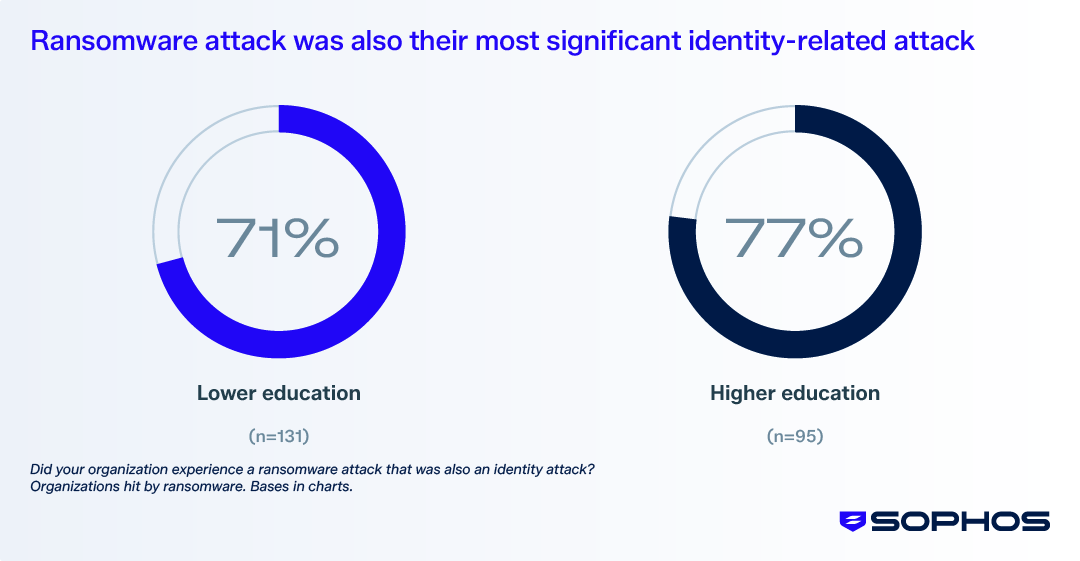
However, the threat extends far beyond the initial entry. The data reveals a critical convergence: 73% of education victims reported that their most significant identity-based attack of the past year was also the specific incident that led to a ransomware deployment. This overlap is particularly acute in higher education, where 77% of ransomware victims identify their primary identity breach as the catalyst for the subsequent encryption event. This statistic, six percentage points higher than the global industry average of 67%, suggests that once an adversary gains a foothold through stolen credentials or a phished account, they are rarely stopped before they can pivot to deploying ransomware.
A Reversal of Progress in Lower Education
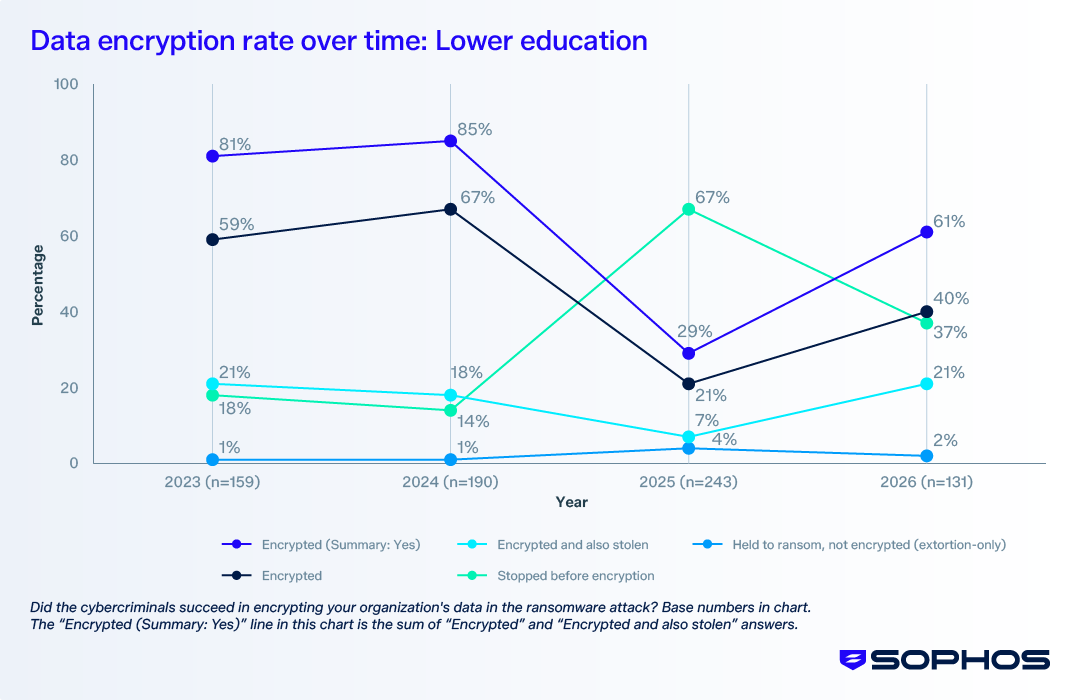
The past year has witnessed a concerning regression in the defensive posture of primary and secondary education providers. Historically, lower education institutions demonstrated an ability to thwart attacks before they reached the encryption stage. The 2025 reporting cycle noted that lower education was highly effective at stopping attackers early. However, this progress has been dramatically reversed in 2026.
The percentage of ransomware attacks that successfully reached the data encryption phase in lower education has more than doubled, surging from 29% in 2025 to 61% in 2026. This figure now exceeds the global survey average of 56%. Across the entire education spectrum, 58% of all recorded attacks culminated in data encryption. While backup restoration efforts have seen a rebound—with 77% of lower education and 69% of higher education providers successfully utilizing backups to restore their systems—the fact that attackers are reaching the encryption stage with such frequency suggests that traditional preventative controls are failing to keep pace with the speed of modern ransomware campaigns.
The Operational Burden of Recovery
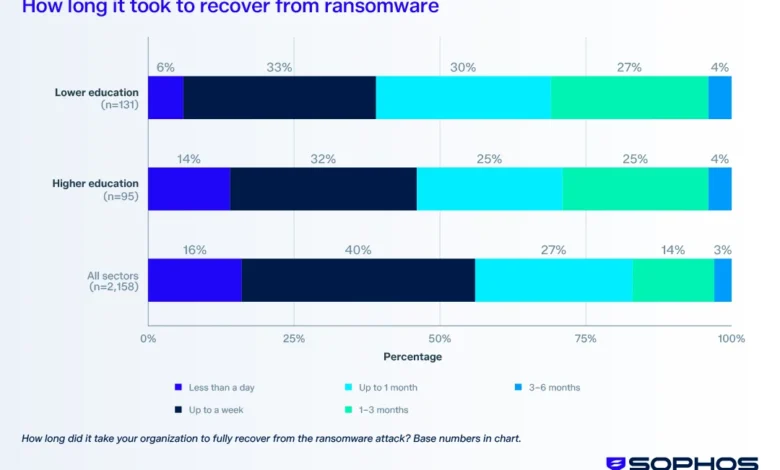
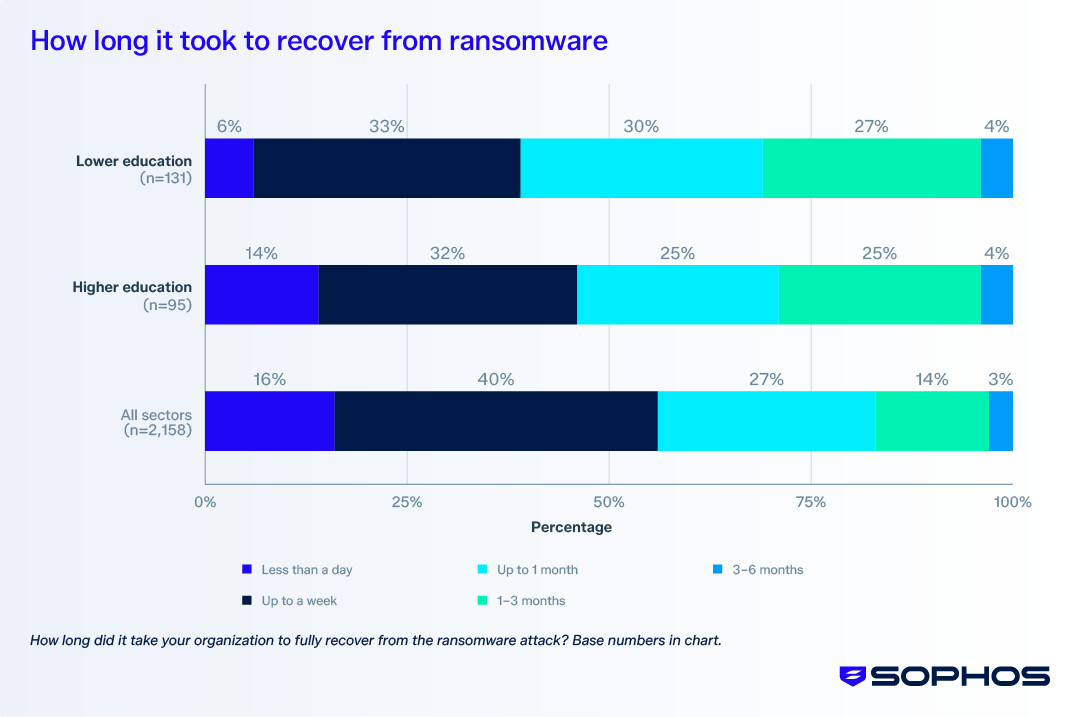
Beyond the immediate technical failure, the education sector faces a distinct crisis regarding recovery timelines. When systems are compromised, the ability to restore operations is a critical metric for institutional continuity. Unfortunately, education providers are nearly twice as likely as the average organization to face a recovery process lasting one month or longer.
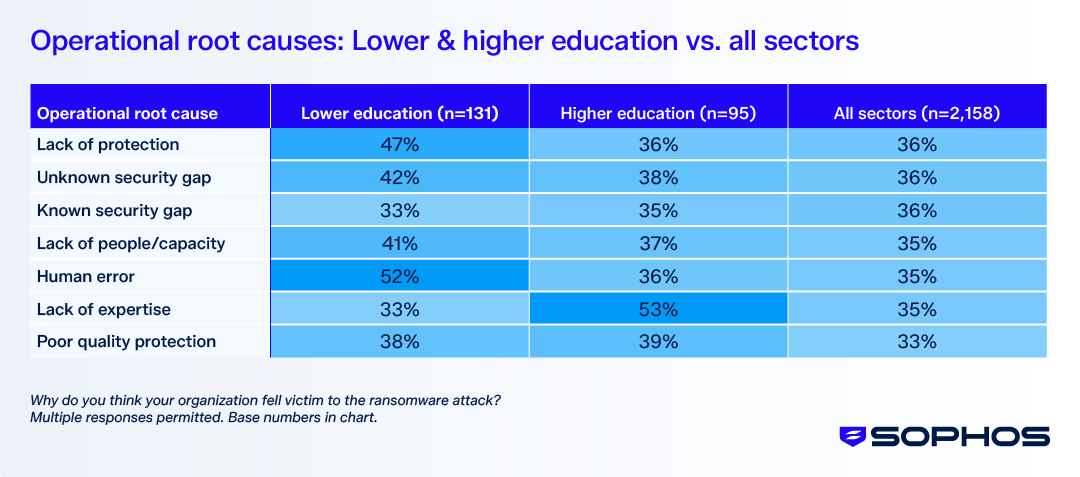
This delay is not merely a technical inconvenience; it represents a profound disruption to the learning environment, impacting student outcomes, administrative services, and institutional trust. The data indicates that education providers frequently struggle with operational shortcomings that exacerbate these delays. These include a lack of qualified personnel, insufficient budget allocation for cybersecurity, and complex, fragmented IT architectures that make rapid incident response a logistical challenge.
The Paradox of Defensive Investment
Perhaps the most troubling finding in the recent report is the efficacy gap between security investments and actual outcomes. The vast majority of victims in the education sector—98%—reported having Multi-Factor Authentication (MFA) enabled at the time of their breach. Despite this, they still suffered from successful encryption.
Furthermore, firewalls and other perimeter security tools are often functioning as intended, flagging suspicious activity before the ransomware detonates. In 65% of cases within the education sector, firewalls correctly identified the initial threat signal. Yet, even when these signals were caught early, 51% of those institutions still ended up with their data encrypted.
This disconnect highlights a systemic issue: cybersecurity tools are generating the right data, but they are operating in silos. They are logging the signal, but they are not acting on it in a coordinated fashion. The industry is currently moving toward a "defense system" posture, where identity, endpoint, and network controls are expected to share telemetry and automate responses in real-time. Without this integration, the manual intervention required to interpret these alerts is too slow to stop an automated, machine-speed attack.
Financial Implications and Economic Trends
The financial landscape of ransomware in education is showing signs of volatility. Interestingly, the median ransom demand directed at education institutions has fallen for two consecutive years, hitting a multi-year low of $775,200. Conversely, the median ransom payment made by these institutions has seen a slight uptick, reaching $515,000.
While these figures remain below the broader global median of $769,000, they represent a significant drain on limited educational budgets. For many schools and universities, the cost of an attack is not just the ransom; it is the secondary cost of forensic investigation, legal fees, public relations, and the inevitable rise in insurance premiums.
The Human Cost: Mental Health and Leadership Pressure
The impact of these attacks extends well beyond the server room. The pressure placed on IT and security teams in educational settings has reached a breaking point. Following a ransomware event, 53% of higher education teams reported facing intense, direct pressure from senior leadership.
This environment has led to a measurable decline in workforce stability. Approximately 40% of education IT staff reported taking time off due to stress or mental health issues directly attributed to the fallout of cybersecurity incidents. This level of burnout creates a dangerous cycle: as teams face exhaustion, their ability to maintain complex, integrated security systems diminishes, leaving the institution even more vulnerable to the next wave of attacks.
Looking Ahead: Strategic Recommendations
The evidence suggests that the education sector cannot simply "buy" its way out of this crisis through more tools. The priority must shift toward interoperability. By integrating existing defenses—connecting the email gateway, the firewall, and the identity provider into a unified response system—educational institutions can shrink the window of opportunity for attackers.
The current reliance on individual security products that function independently is no longer sustainable. As cyber-adversaries continue to leverage stolen identities to move laterally through networks, the only effective countermeasure is a strategy that treats identity not just as an entry point, but as a continuous thread to be monitored and protected across the entire infrastructure.
For education administrators, the message is clear: the current trajectory of recovery times and encryption rates is unsustainable. Investing in the integration of existing cybersecurity assets is the highest-leverage action available to protect both the sensitive data of students and faculty and the operational integrity of the institutions themselves. As the sector moves through 2026, the focus must transition from merely logging signals to enabling a fully automated, synchronized defense system capable of acting on those signals before a breach can escalate into a full-scale catastrophe.