Official React Native Support for Meta Quest Devices Announced at React Conf 2025

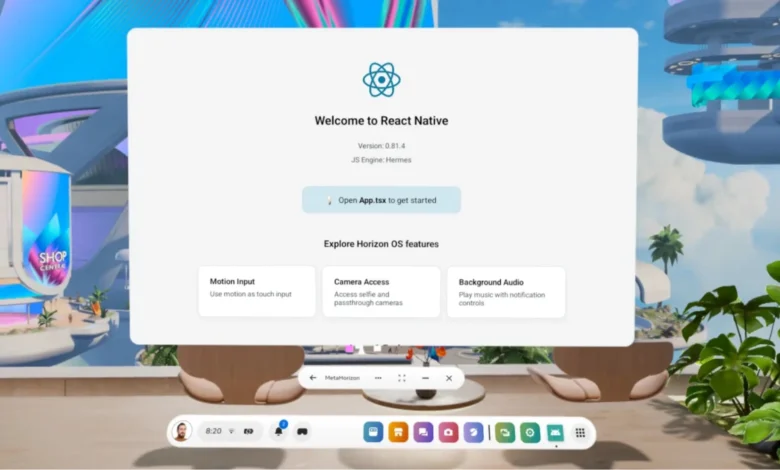
The cross-platform software development landscape underwent a significant shift as engineering teams rolled out native framework support for spatial computing hardware. During the keynote presentations at React Conf 2025, organizers officially announced native React Native support for Meta Quest virtual reality devices. This milestone advances the project’s multi-platform vision first articulated in August 2021, bridging traditional mobile application development paradigms with modern head-mounted immersive hardware. By leveraging Meta Horizon OS—an operating system rooted in the Android Open Source Project (AOSP)—developers can now build, debug, and deploy immersive virtual reality applications using familiar JavaScript and TypeScript codebases without fragmenting the broader ecosystem.
Background Context and the Evolution of the Multi-Platform Vision
React Native originally launched with a core mandate to streamline knowledge sharing and codebase reuse across iOS and Android. Over the subsequent decade, this footprint steadily expanded to encompass alternative form factors, including desktop environments like macOS and Windows, living room entertainment systems through Apple TV, and the web via modern abstractions such as react-strict-dom.
In August 2021, core contributors published the Many Platform Vision manifesto, outlining a strategic roadmap to scale React Native horizontally into emerging device categories. The underlying philosophy posited that as new hardware paradigms emerged, developers should not have to learn entirely disparate tech stacks or split their business logic across fragmented frameworks.
The integration with Meta Quest represents a realization of this long-term objective. Meta Quest headsets run Meta Horizon OS, which shares a foundational ancestry with standard Android. Because of this architectural alignment, the existing Android build systems, debugging tools, and JavaScript runtimes require minimal modifications to operate inside a virtual reality headset. Rather than inventing a bespoke runtime for spatial computing, the framework team chose to extend React Native’s robust Android abstractions, ensuring that developers can transition smoothly from mobile app creation to spatial app deployment.
Technical Workflow and Development Architecture
Transitioning an existing React Native codebase to support Meta Horizon OS relies heavily on established tooling, with Expo providing an expedited entry point for engineering teams. Developers can launch a standard Expo project, spin up a local development server, and preview user interfaces directly within an attached Meta Quest headset via Expo Go.
For production-grade applications requiring deeper hardware integration, custom native modules, or store-ready binaries, developers utilize Expo development builds. Project configuration is heavily simplified through the introduction of specialized tooling, such as the expo-horizon-core plugin. This plugin automatically handles build-time requirements for Meta Horizon OS, mapping parameters such as default window dimensions (typically initialized at 1024x640dp), target device strings (encompassing Quest 2, Quest 3, and Quest 3S models), headtracking states, and application identifiers directly inside the project manifest (app.json or app.config.js).
Additionally, engineers must configure custom build scripts within package.json to handle distinct compilation variants, separating mobile Android targets from Quest-specific builds using product flavors like mobileDebug and questDebug. For teams operating outside the Expo ecosystem, equivalent manual modifications must be applied directly to native Android Gradle files, manifest configurations, and orientation settings.
Navigating AOSP Constraints Without Google Play Services
Because Meta Horizon OS is derived directly from the Android Open Source Project (AOSP), applications run on standard Android APIs while operating entirely independently of Google proprietary services. This architectural distinction carries profound implications for software architecture. Meta Quest environments lack Google Mobile Services (GMS), meaning applications cannot rely on Google Play Services, native Google Maps integrations, or standard Google Play billing frameworks out of the box.
Consequently, development teams must audit their dependency trees before porting mobile applications to spatial hardware. Libraries that assume the presence of Google Play Services or mobile-specific hardware triggers can cause runtime crashes or build failures. To mitigate this friction, the ecosystem has introduced targeted drop-in replacements for common utilities. For example, specialized packages like expo-horizon-location and expo-horizon-notifications supply platform-aware alternatives tailored explicitly to Horizon OS constraints.

Furthermore, physical hardware sensors common on smartphones—such as cellular modems, telephony stacks, and GPS chips—are absent on head-mounted displays. Restricted permissions and unsupported Android intents must be systematically scrubbed from application manifests. To assist in this transition, Meta maintains comprehensive documentation detailing unsupported dependencies and prohibited permission requests, allowing developers to filter out incompatible modules prior to compilation.
To manage cross-platform codebases cleanly, React Native provides robust runtime inspection utilities. Using modules provided by expo-horizon-core, developers can execute conditional logic based on runtime device detection:
import ExpoHorizon from 'expo-horizon-core';

// Check if running on a Horizon device
if (ExpoHorizon.isHorizonDevice)
  console.log('Running on Meta Horizon OS!');


// Check if this is a Horizon build
if (ExpoHorizon.isHorizonBuild)
  console.log('This is a Horizon build variant');


// Access the Horizon App ID
const appId = ExpoHorizon.horizonAppId;
console.log('Horizon App ID:', appId ?? 'Not configured');
This capability ensures that a single repository can successfully output binaries for iOS, Android mobile, web, and spatial computing environments simultaneously, gracefully degrading or substituting features where hardware limitations dictate.
Spatial Design, Typography, and Input Adaptation
Deploying user interfaces inside a head-mounted display requires a radical departure from traditional touch-first mobile design principles. While mobile applications rely on direct finger contact, high-density touch targets, and vertical scrolling gestures, spatial computing interfaces are rendered in three-dimensional space and viewed at varying distances.
UX designers must scale up typography, expand interactive hit areas, and adjust whitespace ratios to guarantee legibility across variable depths. These constraints closely mirror those encountered when adapting mobile apps for desktop monitors, tablet multitasking windows, or foldable devices, where software must adapt fluidly to resizable display containers.
Input mechanics represent the single most substantial divergence from traditional mobile app design. Meta Quest users interact with applications primarily via physical handheld controllers, advanced optical hand-tracking systems, or optional Bluetooth mice and keyboards. Controllers function analogously to spatial pointer devices, introducing interaction patterns deeply reminiscent of desktop and web environments—specifically hover states, focus rings, and cursor-driven navigation.
React Native’s event propagation and component models readily support these paradigms, provided developers avoid rigid touch-only assumptions. Building resilient spatial applications mandates explicit support for focus states, keyboard listeners, and alternative pointer inputs, ensuring that users navigating via hand gestures or controller rays experience predictable and accessible UI feedback.
Broader Industry Implications and Future Outlook
The formal inclusion of Meta Quest within the React Native ecosystem signals a maturing convergence between mobile application development and spatial computing. Historically, building virtual reality software demanded specialized expertise in native C++ game engines like Unreal or Unity, or proprietary SDKs that created steep barriers to entry for mainstream web and mobile engineering talent.
By enabling millions of existing React Native developers to deploy functional 2D and hybrid 3D interfaces directly to VR headsets using standard JavaScript and React patterns, Meta and the React Native core team have dramatically lowered the cost and complexity of spatial app creation. Enterprise software, productivity suites, collaborative workspaces, and media streaming services can now port their existing codebases to Meta Horizon OS with minimal friction, expanding the utility of virtual reality hardware beyond gaming into general-purpose computing.
As spatial computing hardware continues to evolve through lighter form factors and higher-resolution optical stacks, frameworks that abstract underlying hardware complexities will likely dominate enterprise adoption. The React Conf 2025 announcement marks a critical inflection point in this transition, validating that cross-platform frameworks can successfully scale beyond traditional screens into immersive, three-dimensional computing environments.
Related posts: