Mastering Digital Media Pipelines: How Comprehensive File Management Platforms are Reshaping Developer Workflows and User Experience

In the contemporary digital ecosystem, the ingestion, processing, and distribution of user-generated and external media represent some of the most persistent architectural challenges for software engineers. As web and mobile applications increasingly rely on rich media content—ranging from high-resolution user avatars and dynamic video uploads to complex multi-page PDF documents—the burden of managing disparate file formats, inconsistent dimensions, and unpredictable storage states has grown exponentially. Historically, development teams were forced to construct bespoke media processing pipelines from scratch, allocating significant engineering hours to handle edge cases, server scaling, security vulnerabilities, and content delivery network (CDN) optimization. Today, however, a shift toward specialized third-party infrastructure utilities has redefined how organizations approach the complete lifecycle of digital assets. Platforms such as Filestack have emerged as comprehensive solutions designed to streamline uploading, real-time transformation, and global delivery, effectively abstracting away the underlying complexities of media management.
The architectural necessity for specialized media infrastructure stems from the sheer diversity of data modern applications must ingest. Users routinely submit files across a broad spectrum of sizes, codecs, color profiles, and orientations. Without standardized ingestion frameworks, applications risk performance degradation, storage bloat, and security exploits via malicious file uploads. The modern developer demands an ecosystem that not only accepts these files securely from virtually any source—whether local device storage, enterprise cloud drives, or social media networks—but also instantly converts them into uniform, optimized formats suitable for downstream consumption. This demand has catalyzed the growth of File-as-a-Service (FaaS) models, where robust application programming interfaces (APIs) and comprehensive software development kits (SDKs) replace custom-built backend scripts.
The onboarding journey for modern developers utilizing these utility-driven media platforms typically begins with low-friction evaluation phases. Industry standards now dictate that infrastructure-as-a-service providers offer accessible trial periods, such as 21-day risk-free evaluations, allowing technical teams to test integration depth within staging environments without immediate financial commitments. Upon account registration, engineers gain access to centralized developer consoles, extensive API keys, and language-specific code libraries. A critical component of this initial setup phase is comprehensive technical documentation. For engineering teams evaluating architectural dependencies, clear code samples, detailed endpoint specifications, and guides covering authentication, webhook management, and rate-limiting are essential determinants of platform adoption.
Once integrated, the first major operational hurdle in any media pipeline is the ingestion phase. Allowing end-users to upload files seamlessly requires both intuitive front-end user interface components and secure, scalable back-end handlers. On the client side, modern JavaScript integrations allow developers to initialize file pickers with minimal code configurations. A standard implementation requires only basic initialization parameters and method calls to invoke a feature-rich modal window:
// Using JavaScript
const client = filestack.init("apikey");
const picker = client.picker();
picker.open();
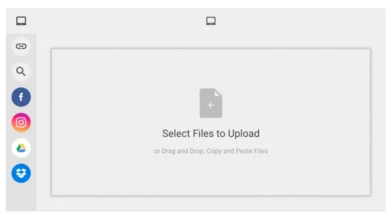
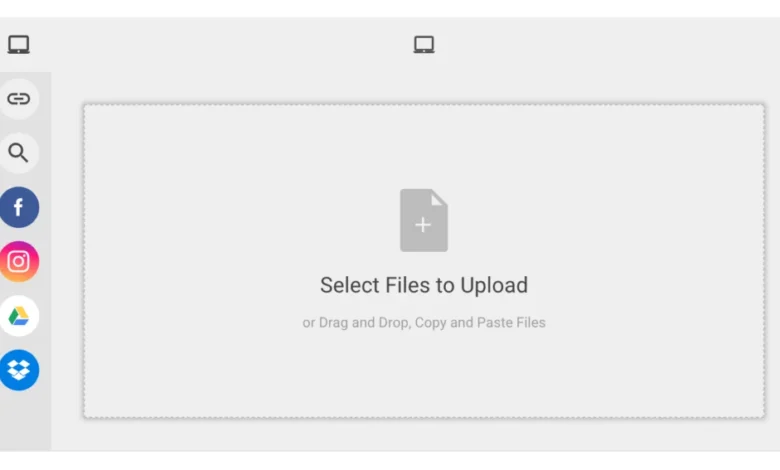
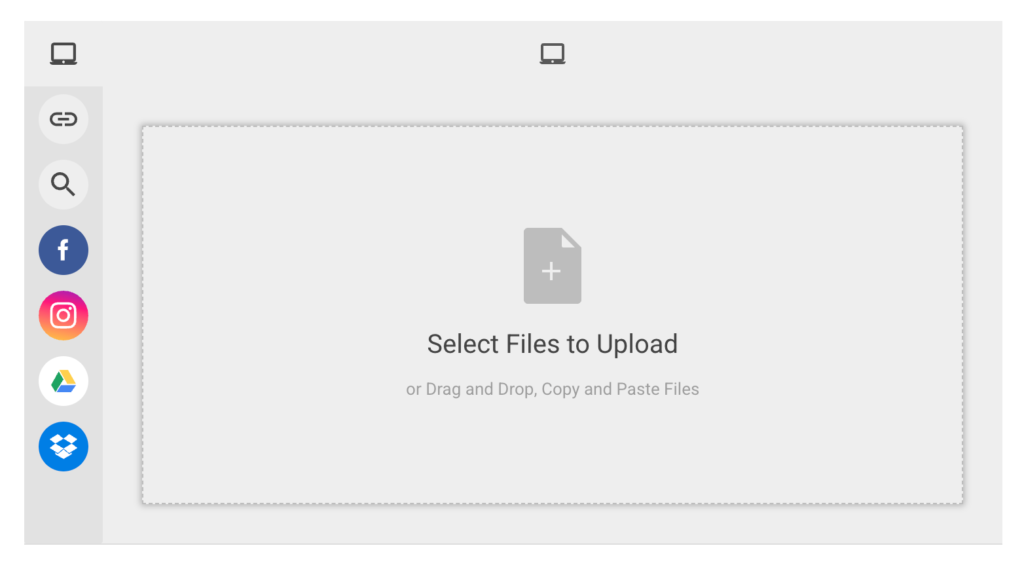
The resulting user interface component is often highly sophisticated, offering responsive layouts, drag-and-drop functionality, progress bars, and native validations for file types and maximum dimensions. Furthermore, contemporary upload widgets extend their utility by integrating natively with more than twenty popular third-party cloud storage and social media services, including Google Drive, Dropbox, GitHub, Facebook, and Instagram. This multi-source connectivity significantly enhances user experience, enabling individuals to transfer files directly from their preferred cloud repositories without needing to download them locally first.
For backend-heavy architectures or automated data ingestion pipelines, client libraries in languages like Python provide robust alternatives to client-side widgets. Backend uploads allow developers to programmatically intercept, validate, and route files directly to cloud storage buckets—such as Amazon S3—while attaching custom metadata or upload tags for downstream analytics and indexing. A typical server-side implementation utilizes structured dictionaries to define storage parameters and destination paths:
from filestack import Client

client = Client(APIKEY)

store_params =
    'location': 's3',
    'path': 'folder/subfolder/',
    'upload_tags':
          "foo":"bar"


filelink = client.upload(filepath='path/to/filename.jpg', store_params=store_params)
By supporting both synchronous and asynchronous backend transfers alongside client-side drag-and-drop interfaces, modern media utilities ensure that architectures can scale regardless of whether files originate from human users or automated system processes.
The second critical phase of the media lifecycle involves transformation—the process of converting raw, unoptimized source files into precise formats required by the application layout. Because end-users upload files of arbitrary dimensions, color spaces, and compression levels, real-time manipulation capabilities are vital. Transformations are no longer restricted to static images; modern platforms process complex video transcoding, document conversion (such as rendering PDF pages as viewable PNGs), and real-time vector adjustments on the fly.
File transformation can be executed synchronously via URL-based parameters or asynchronously through orchestrated workflows. URL-based transformations, in particular, offer a lightweight paradigm where structural modifications are encoded directly into the asset’s delivery path. For example, adjusting an image’s dimensions or applying aesthetic filters requires appending declarative commands to the base content delivery network URL:
// Resize an image to have a width of 300px
https://cdn.filestackcontent.com/resize=width:300/pdn7PhZdT02GoYZCVYeF

// Add a color filter, rotate the image, and add a "polaroid" border to the image
https://cdn.filestackcontent.com/resize=width:300/sepia=tone:80/polaroid/pdn7PhZdT02GoYZCVYeF
Beyond basic cropping, scaling, and color grading, advanced transformation suites support intelligent face detection, automated background removal, watermarking, security masking, and format conversion tailored to the requesting browser’s capabilities (such as serving next-gen formats like WebP or AVIF to compatible clients). Moreover, when applications require end-users to curate their own media—such as cropping a profile picture before submission—interactive transformation user interfaces can be embedded directly into the application workflow, empowering users to apply filters and adjustments without developer intervention.
The final mile of the media pipeline is content delivery. Regardless of how efficiently a file is uploaded and transformed, if it fails to reach the end-user’s browser with minimal latency, user engagement and conversion rates suffer. In the realm of web performance, milliseconds translate directly to business revenue; studies consistently demonstrate that slower page load times correlate with higher bounce rates and reduced e-commerce conversions. To mitigate latency, modern file management architectures rely heavily on globally distributed Content Delivery Networks (CDNs).
When a transformed asset is requested for the first time, the CDN caches the generated file at edge locations strategically positioned close to the geographic location of the consumer. For subsequent requests, the asset is served instantly from the edge cache without requiring reprocessing by origin servers. Enterprise-grade caching policies typically maintain these cached copies for structured durations—often up to thirty days—before re-evaluating origin availability or refreshing cached assets upon new requests. This caching architecture drastically reduces server load, ensures predictable response times, and guarantees high availability even during traffic spikes.
Analyzing the broader implications of adopting dedicated media utility platforms reveals a fundamental shift in software development economics. By outsourcing the undifferentiated heavy lifting of file ingestion, cloud routing, real-time transformation, and global delivery, engineering organizations can redirect precious internal resources toward core product features and business logic. Maintaining a custom infrastructure for video transcoding and image processing demands specialized DevOps oversight, continuous security patching against media-parsing vulnerabilities, and constant capacity planning. Utilizing a managed service mitigates these risks, offering predictable scalability, compliance certifications, and enterprise-grade reliability out of the box.
In conclusion, the evolution of digital media management reflects a broader maturation in web development philosophy—one that favors modularity, API-first architecture, and specialized infrastructure services over monolithic, self-hosted solutions. Platforms that seamlessly guide files from their initial state of ingestion, through complex transformation workflows, and out to high-speed global delivery networks provide indispensable leverage for modern engineering teams. As digital content continues to grow in volume, complexity, and resolution, the adoption of robust, end-to-end media utilities will remain a cornerstone of high-performance web and mobile application architecture.