A Gentle Introduction to Model Distillation: How AI Knowledge Transfer is Reshaping the Industry

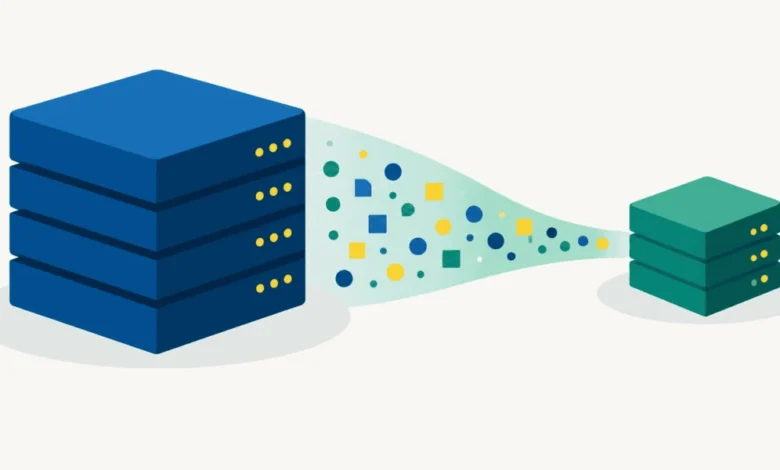
The global artificial intelligence landscape is currently defined by a fundamental contradiction: the most advanced large language models (LLMs) are simultaneously the most powerful tools in existence and the most difficult to deploy. Systems such as OpenAI’s GPT-4, Anthropic’s Claude, and Google’s Gemini rely on hundreds of billions of parameters, necessitating massive server clusters and significant energy consumption. This architecture renders them impractical for edge computing, mobile devices, or specialized local environments. To bridge the gap between monumental processing requirements and real-world utility, the industry has turned to model distillation—a sophisticated training process where a compact "student" model is taught to replicate the reasoning patterns of a larger, more resource-heavy "teacher" model.
While distillation has long been a staple of neural network optimization, its recent application to LLMs has triggered an intense, industry-wide controversy. What was once considered an elegant engineering shortcut is now at the center of allegations of corporate espionage, large-scale data harvesting, and the blurring lines between legitimate research and unauthorized intellectual property appropriation.
The Mechanics of Knowledge Transfer
At its core, model distillation seeks to capture the "dark knowledge" of a neural network—a concept popularized by Geoffrey Hinton in 2015. In standard machine learning, models are trained on "hard labels," such as identifying an image as a dog or a cat. This binary approach ignores the nuanced relationships between categories. A teacher model, however, provides a probability distribution, indicating that a subject is 85% likely to be a dog but carries subtle features reminiscent of a wolf. By training on these "soft targets," a smaller student model can learn the internal logic and relational structure of the teacher, achieving performance levels that far exceed its size relative to the original system.
In the era of Large Language Models, this methodology has evolved. Because LLMs operate on complex, sequential token generation rather than simple classification, researchers now utilize three primary distillation strategies:
- Synthetic Data Distillation: The current industry standard, where a teacher model generates high-quality reasoning chains, code snippets, and structured analysis. The student model is then fine-tuned on this high-fidelity synthetic dataset.
- Feature Distillation: A more invasive technique where the student is trained to mirror the specific internal activations and hidden layer representations of the teacher, requiring full access to the teacher’s architecture.
- Logit-based Distillation: An application of classical probability matching at the token level, typically used for internal model optimization where the developer maintains ownership of both systems.
A Chronology of the 2026 Distillation Crisis
The transition of distillation from an optimization tool to a security concern became apparent in early 2026, when major AI laboratories began reporting systematic attempts to "scrape" their proprietary reasoning capabilities.
- Early 2026: OpenAI files a formal memo with the U.S. House Select Committee on China, alleging that the firm DeepSeek utilized obfuscated routing and third-party API exploitation to distill the core reasoning capabilities of GPT-4.
- March 2026: Google’s Threat Intelligence Group releases findings detailing a coordinated campaign against Gemini. The report identifies over 100,000 malicious prompts designed to force the model into revealing its internal chain-of-thought processes.
- April 2026: During a legal deposition, Elon Musk acknowledges that his firm, xAI, had leveraged OpenAI’s outputs during the early development phases of Grok, defending the act as standard industry practice.
- June 2026: Anthropic publishes a detailed forensic analysis alleging that 25,000 automated accounts generated 28.8 million interactions with Claude over 44 days. The firm characterizes this as a "systematic harvesting" of agentic reasoning and coding expertise. Alibaba, the parent company of the Qwen lab, formally denies the allegations, citing the broad, open-research nature of their work.
Economic and Strategic Implications
The controversy is inextricably linked to the massive capital expenditure required to train state-of-the-art models. The reported $5.6 million training cost for DeepSeek V3, for instance, has been met with skepticism by industry analysts. Experts at SemiAnalysis have argued that when accounting for foundational research and infrastructure, the actual economic cost is closer to $1.3 billion. If unauthorized distillation is being used to bypass the "research phase" of development, the economic playing field is being fundamentally distorted.
From an engineering perspective, there is no bright-line rule separating authorized fine-tuning from illicit distillation. When Meta released Llama 3.1 405B, it explicitly encouraged users to distill its outputs into smaller, 8B or 70B parameter models. This creates a dual-standard environment: open-weight models are designed to be distilled, while proprietary, closed-API models are heavily guarded. The friction arises when third parties treat closed models as if they were open, effectively "parasitizing" the R&D investment of the leading labs.
The Defensive Response
The industry is currently in a race to implement technical and legal defenses against unauthorized harvesting. Major labs have begun sharing threat intelligence, a move that signals the professionalization of "AI counter-intelligence." Technical countermeasures now under development include:
- Anomaly Detection: Monitoring API traffic for patterns that deviate from human-like interaction, such as repetitive, high-volume, or "probing" queries.
- Output Watermarking: Embedding subtle, non-visible markers into model responses that allow developers to identify if a specific output was generated by their model, even if it has been used to train a successor.
- Dynamic Rate Limiting: Implementing stricter controls on accounts that exhibit behavior consistent with synthetic data generation.
However, these measures face significant hurdles. Watermarks can often be stripped or bypassed through fine-tuning, and rate limiting threatens to degrade the experience for legitimate enterprise customers. Furthermore, the jurisdictional nature of these disputes remains a massive legal gray area. Because AI outputs often fall outside the scope of traditional copyright protections in the United States, labs are forced to rely on Terms of Service (ToS) enforcement, which carries little weight against foreign entities or decentralized actors.
Looking Ahead: The Structural Tension
The fundamental issue is not merely the "theft" of data, but the democratization of power. As models become more capable, the ability to replicate them becomes easier through distillation. We are approaching a point where a startup with a modest budget and a well-designed distillation pipeline could potentially match the performance of a multi-billion dollar model in specific, narrow domains.
The AI industry is currently wrestling with a structural dilemma: to be useful, models must be accessible via APIs, but accessibility is precisely what makes them vulnerable to replication. As long as the "dark knowledge" of a teacher model remains valuable, the pressure to extract that knowledge will persist. Whether through legal regulation, more robust encryption of model weights, or a shift in how model performance is measured, the industry must eventually reconcile its commitment to open-ended utility with the necessity of protecting its intellectual foundations. For now, distillation remains the most powerful—and the most dangerous—tool in the developer’s arsenal.