Autoregressive decoding is the traditional method for generating text from large language models (LLMs), but it is fundamentally hampered by its sequential nature. In a standard workflow, the model generates one token at a time, requiring a full pass through the neural network’s extensive weight parameters for every single token produced. Because the time taken to read these weights from memory often dwarfs the time required for actual computation, this process becomes highly inefficient, particularly when the model is capable of parallel processing but is restricted to serial output. To address this bottleneck, researchers have developed speculative decoding, a technique that leverages a tiered architecture to significantly improve throughput and reduce latency without compromising the quality of the output.
The Mechanism of Speculative Decoding
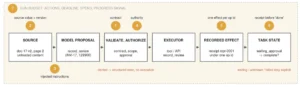
Speculative decoding operates on a "draft and verify" paradigm. Instead of relying solely on a large, computationally expensive target model, the system employs two distinct components: a smaller, high-speed draft model and the primary target model. The draft model functions as a heuristic engine, predicting a sequence of $n$ candidate tokens in a fraction of the time it would take the target model to generate even one. These candidates are then fed into the target model in a single, parallelized forward pass.
During this verification step, the target model evaluates the entire sequence of proposed tokens. Because of the way causal attention mechanisms function in Transformer architectures, the model can compute the probability distribution for every position in the proposed sequence simultaneously. If the target model’s predictions align with the draft tokens, the entire sequence—or a portion thereof—is accepted, effectively allowing the system to "skip" several sequential decoding steps.
Evolution and Algorithmic Precision
The implementation of this technique varies based on the decoding strategy. In greedy decoding—where the model always selects the most probable next token—verification is straightforward. The system compares the draft tokens against the target model’s output at each position. If a discrepancy occurs, the target model corrects the sequence from the point of the mismatch. Any subsequent draft tokens are discarded, and the target model’s authoritative choice is accepted.
However, the challenge increases significantly with sampling-based decoding, which is essential for creative or non-deterministic applications. Here, the goal is not to match a single deterministic path, but to ensure that the output distribution of the speculative process remains identical to that of the target model acting alone. This is achieved through an acceptance and correction rule where a draft token $x$ is accepted with a probability defined by $min(1, p(x)/q(x))$, where $p$ represents the target distribution and $q$ the draft distribution. If a token is rejected, a correction is sampled from a distribution proportional to $max(0, p(x) – q(x))$. This rigorous mathematical framework ensures that the speculative process remains "lossless" in a statistical sense, preserving the fidelity of the model’s output while achieving massive performance gains.
Empirical Performance and Implementation
The integration of speculative decoding into production environments, such as through the Hugging Face transformers library under the "assisted generation" banner, has provided developers with a standardized interface to benchmark these performance improvements. In practical applications, a target model like the 1.7-billion parameter SmolLM can be paired with a 135-million parameter assistant model. When tested against standard greedy generation, this setup frequently demonstrates a measurable reduction in wall-clock time for long-form text generation.
Data from initial benchmarks suggest that the effectiveness of the system is highly dependent on the "acceptance rate"—the ratio of draft tokens that are successfully verified by the target model. If the draft model is too simple, the acceptance rate drops, leading to wasted computational cycles. Conversely, a draft model that is too complex will consume too many resources, negating the speed benefits. Engineers must balance the lookahead window—the number of draft tokens proposed—against the cost of verification. A common metric used to monitor this is "accepted tokens per target pass," which provides a clearer picture of efficiency than raw speedup numbers alone.
Industry Implications and Technical Constraints
The broader adoption of speculative decoding has profound implications for the deployment of generative AI. By reducing the time-to-first-token and overall latency, businesses can deliver more responsive user experiences. However, the technique is not a universal solution. It is most effective when the target model is heavily memory-bandwidth bound and the draft model is sufficiently small to remain hidden behind the latency of the larger model’s execution.
Technical constraints remain a primary concern for system architects. For instance, managing the Key-Value (KV) cache is a non-trivial task. Every time the target model rejects a candidate, the system must perform "cache bookkeeping," rolling back the state of the draft model to the last known-good position. This adds complexity to the inference engine’s runtime. Furthermore, batching strategies—essential for high-throughput server environments—can be disrupted by speculation. In a production setting, the memory overhead of maintaining multiple models (the target and the drafter) must be weighed against the capacity to serve concurrent requests.
Alternative Proposing Strategies
While a smaller autoregressive model is the most common draft source, researchers are exploring alternative methods to generate proposals. N-gram matching, for instance, uses historical data to predict common phrases without the need for an auxiliary neural network. Other approaches involve specialized "drafting heads" that are trained alongside the target model to predict multiple tokens at once, effectively internalizing the speculative process within the architecture of the primary model. These methods aim to mitigate the memory overhead of loading two distinct models while maintaining the speed advantages of parallel verification.
Future Outlook and Conclusion
The current state of speculative decoding represents a shift toward more nuanced inference engineering. As hardware continues to evolve, the focus is moving from simple throughput to intelligent resource allocation. The ability to dynamically adjust the lookahead length based on the target model’s confidence is a key area of active research. If the target model is highly certain of its output, the system can afford a longer draft; if it is uncertain, the system can scale back to avoid unnecessary drafting work.
Ultimately, speculative decoding demonstrates that efficiency in large-scale AI is not merely a matter of hardware acceleration, but of algorithmic cleverness. By decoupling the generation of text from the verification of text, researchers have found a way to bypass the inherent limitations of serial processing. As these techniques become more robust, they will likely become a standard feature in inference engines, enabling the deployment of larger, more accurate models in contexts that were previously considered too latency-sensitive. Whether through improved draft models, more efficient KV cache management, or innovative hardware-aware kernels, the trend toward speculative generation is clear: the future of AI inference is not just about making models faster, but about making the process of thinking—and verifying—more intelligent.