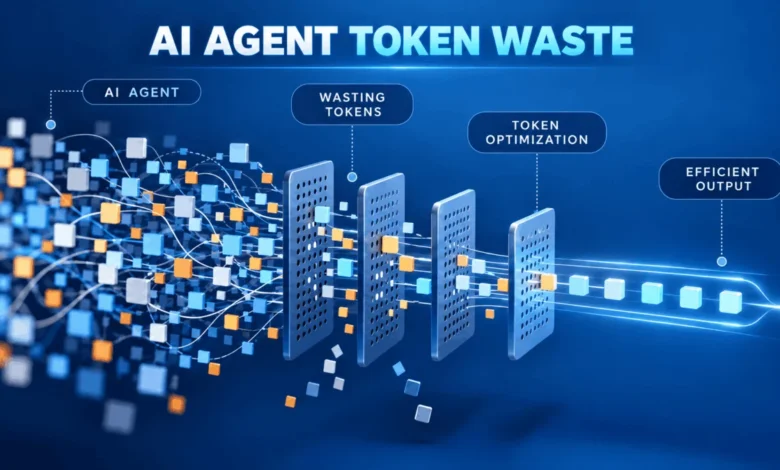
In the rapidly maturing field of generative AI development, the transition from weekend prototyping to enterprise-grade production introduces a critical fiscal and technical challenge: the escalating cost of inference. While initial proofs-of-concept often function within generous free-tier limits, production environments frequently face "token bloat," where the cost of maintaining an agent’s state becomes unsustainable. Industry analysts note that without architectural guardrails, an agent’s token consumption often grows quadratically relative to its operational complexity, creating a silent performance drain that impacts both latency and the bottom line.
The Economics of Contextual Overhead
The fundamental failure in many agentic systems stems from a confusion between "context" and "state." Context refers to the ephemeral, immediate payload transmitted to an LLM for a specific inference turn, while state represents the durable, historical record of the agent’s actions. When developers conflate the two—by appending every interaction to a growing prompt array—they essentially force the model to re-process an entire history of redundant data during every single API call.
Data from cloud infrastructure monitors indicates that for long-running agents, this "append-only" architecture can lead to a 300% increase in token costs within the first thirty days of operation. By optimizing these interactions, engineering teams can achieve significant cost reductions while simultaneously lowering the probability of model hallucinations caused by "context noise."
1. Eliminating the Append-Only Trap
The most common culprit in token waste is the uncontrolled growth of conversation history. By treating the prompt array as a permanent log, agents inevitably grow slower and more expensive as they age.
The Strategy: Developers should transition to a sliding window mechanism coupled with semantic rolling summarization. By retaining only the last few interactions in raw format and condensing older turns into dense, compressed summaries, the agent maintains its "memory" without the overhead of massive, redundant data. For critical details—such as specific user IDs or file paths—engineers should rely on an external, deterministic database like Redis or SQLite, allowing the agent to "query" for specific facts only when necessary, rather than holding them in active memory.
2. Streamlining Tool Ingestion Through Middleware
Modern agents frequently interact with third-party APIs such as Stripe, Jira, or AWS. These services are designed for machine-to-machine communication, often providing deeply nested, verbose JSON payloads that are largely irrelevant to an LLM’s reasoning process.
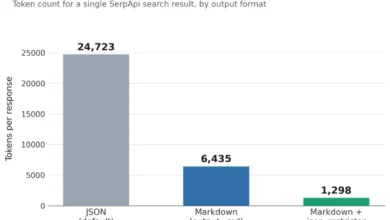
The Strategy: Implementing a middleware transformation layer is essential. This layer serves as a filter that strips away null values, redundant metadata, and structural boilerplate before the data reaches the model. Converting complex JSON structures into concise YAML or Markdown can reduce the token footprint of a single API response by 60% to 80%. However, caution is required; stripping away "next_token" cursors or pagination metadata can inadvertently break the agent’s ability to navigate data, demonstrating the need for precise filtering rather than aggressive deletion.
3. Replacing "Grep-and-Dump" with AST-Aware Retrieval
In coding agents and RAG (Retrieval-Augmented Generation) systems, the "grep-and-dump" approach—where the entire content of a file is provided to the agent—is highly inefficient. For a simple function call, dumping a 4,000-line codebase into the context window is a massive waste of resources.
The Strategy: Modern architectures are shifting toward Abstract Syntax Tree (AST) retrieval. By using tools like Tree-sitter to parse code into a live call graph, an orchestrator can retrieve only the specific function signatures, docstrings, and dependencies required for the task. This surgical precision allows the agent to reason about a codebase with a fraction of the token expenditure, though it requires a robust, asynchronous indexing pipeline to ensure the "map" of the code remains current.
4. Implementing Context-Aware Tool Pruning
Many frameworks inject the entire suite of available tools into the model’s system prompt by default. For an agent equipped with 50 tools, this could represent over 1,500 tokens of static "noise" on every single request.
The Strategy: Employing a finite state machine to govern tool availability allows the agent to operate with "context-aware" tool sets. In a discovery phase, the agent only sees search tools; in an execution phase, it only sees mutation tools. While this significantly lowers token consumption, it creates a trade-off with cache efficiency, as dynamic prompt prefixes can hinder the use of cached KV (Key-Value) states.
5. Enforcing Circuit Breakers on Reasoning Loops
Autonomous agents are susceptible to "stuck" states where a recurring tool failure triggers an infinite cycle of retries and reasoning attempts. Without hard limits, these loops can consume thousands of output tokens at a high cost to the enterprise.
The Strategy: Developers must implement orchestrator-level circuit breakers. These logic gates enforce maximum retry counts and cap the output budget per action. If a threshold is crossed, the system should escalate to human intervention or a deterministic fallback. Industry leaders in AI orchestration, such as LangChain and LlamaIndex, now provide built-in callback hooks specifically for this purpose, emphasizing that the cost of terminating a stalled task is far lower than the cost of a runaway billing event.
6. Maximizing KV Cache and Prompt Prefixing
LLM providers use KV caching to avoid recomputing attention over static prompt prefixes. However, developers often inadvertently break these caches by placing dynamic variables—such as timestamps or user-specific session IDs—at the beginning of the prompt.
The Strategy: The most effective approach is to adopt a "static-to-dynamic" gradient. By placing all permanent system instructions and organizational guidelines at the absolute top of the prompt and relegating dynamic variables to the end, developers can ensure that the majority of the request is cache-friendly. Adhering to the documentation provided by major model vendors regarding cache boundaries can reduce latency and cost by allowing the system to skip the re-processing of the static prefix.
7. Cascaded Routing for Task Complexity
Perhaps the most significant source of waste is the "over-utilization" of frontier models. Using a high-end, expensive model to perform basic intent classification or log parsing is a misallocation of resources.
The Strategy: Adopting a cascaded routing model, where a lightweight, fast model handles routine tasks and only routes complex reasoning to a frontier model, can dramatically improve the cost-to-output ratio. Tools such as LiteLLM allow for the implementation of provider-agnostic routing logic. While this adds complexity, the long-term impact on operational expenditure is profound, particularly for high-volume, predictable workloads.
Broader Implications and Long-Term Stability
As AI agents move from the experimental stage into the core of enterprise operations, the focus is shifting from "making it work" to "making it efficient." Token optimization is no longer just a billing concern; it is a fundamental aspect of system reliability. A bloated context window increases the "failure surface" of an agent, leading to a higher frequency of timeouts and hallucinations.
The architectural decisions made in the early stages of development compound over time. Stale facts in a vector store, outdated documentation in episodic memory, and inefficient prompt structures eventually erode the quality of the agent’s output. By treating token consumption as a metric of data quality and system hygiene, engineering teams can build resilient, cost-effective AI agents that remain stable and performant as they scale to meet enterprise demand. As the industry evolves, the ability to balance these seven patterns will distinguish mature, production-ready AI systems from those that remain fragile and overly expensive.