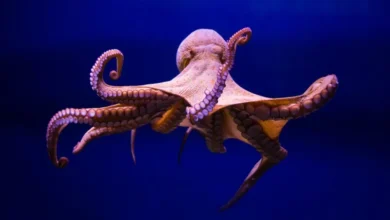
Friday Squid Blogging: Rare Bigfin Squid Spotted Off the California Coast Marks a Milestone in Deep-Sea Exploration


Marine researchers and deep-sea biology enthusiasts have celebrated a significant milestone following the official announcement of a live bigfin squid sighting in the northeastern Pacific Ocean. Documented off the coast of central California, this encounter marks the very first time an active, living member of the elusive Magnapinna genus has been visually recorded in these specific regional waters. The footage, which has quickly garnered widespread attention across scientific and public platforms alike, provides unprecedented insight into one of the ocean’s most mysterious and otherworldly inhabitants. While deep-sea expeditions frequently encounter geologic marvels and unusual benthic lifeforms, capturing a healthy specimen of the bigfin squid on camera remains an extraordinary rarity due to the extreme depths at which these creatures reside.
The announcement, made public on September 2, has renewed interest in the physiological adaptations of deep-sea fauna and the persistent challenges of exploring the abyssal zones. As researchers continue to analyze the footage, marine biologists emphasize that encounters with Magnapinna are few and far between, underscoring the vast gaps that still exist in our cataloging of bathypelagic biodiversity. Beyond the immediate biological significance of the sighting, the event also serves as a traditional focal point within online technical and cybersecurity communities for open discussions regarding contemporary digital threats, unaddressed vulnerabilities, and the broader intersection of technology, science, and public policy.
Anatomy and Mystique of the Magnapinna Genus
To understand why the sighting of a bigfin squid generates such intense excitement within the scientific community, one must examine the unique morphology of the Magnapinna genus. Unlike more commonly studied cephalopods that inhabit coastal waters or the upper pelagic zones, bigfin squids are structurally adapted to thrive in the crushing pressures and perpetual darkness of the deep ocean, typically residing in the bathypelagic and abyssopelagic zones ranging from 1,000 to over 4,000 meters below the surface.
The defining characteristic of the bigfin squid is its disproportionately long, slender appendages. Both its arms and tentacles can extend up to fifteen to twenty times the length of its mantle, trailing behind the creature in a dramatic, elbow-like bend. This bizarre physiological structure gives the squid an uncanny, almost extraterrestrial appearance as it hovers motionlessly above the seafloor. Marine biologists hypothesize that these trailing filaments are used to drag along the benthic substrate, sweeping up microscopic prey or benthic organisms. Unlike aggressive, fast-swimming squids found in shallower waters, the bigfin squid appears to be a passive ambusher, conserving precious metabolic energy in an environment where food is exceptionally scarce.
Because these organisms inhabit such remote depths, nearly all historical knowledge of the genus has been pieced together from rare remotely operated vehicle (ROV) footage, accidental bycatch, or damaged specimens recovered by deep-sea research vessels. The central California sighting provides marine biologists with valuable comparative data regarding the geographical distribution of the species, confirming that Magnapinna ranges far beyond the specific tropical and subtropical trenches where previous encounters were primarily documented.
Chronology of Deep-Sea Encounters with the Bigfin Squid
The history of human interaction with the Magnapinna genus is relatively brief, characterized by sporadic, serendipitous discoveries rather than systematic observation. The scientific narrative of the bigfin squid began in the late 20th century, punctuated by incremental technological advancements in deep-sea submersible engineering and camera sensitivity.
The initial discovery of the genus occurred in 1998, when researchers operating near the Hawaiian Islands captured grainy footage of an unusual cephalopod utilizing robotic deep-sea equipment. This initial sighting introduced the scientific community to the dramatic proportions of the creature’s elbowed arms. Throughout the 2000s and 2010s, additional sightings were reported by various oceanographic institutions operating in the Gulf of Mexico, the Indian Ocean, and the southern Atlantic. Each new video added fragments to the puzzle, revealing subtle variations in pigmentation, size, and behavioral patterns.
The September announcement off the coast of central California represents a crucial geographic expansion in this timeline. By confirming the presence of Magnapinna in the northeastern Pacific, marine scientists have established that the genus is not restricted to equatorial or isolated oceanic basins. The deployment of advanced, high-definition ROVs equipped with low-light imaging technology has played a pivotal role in this progression. Where early expeditions yielded blurry, fleeting glances of translucent shapes in the beam of a submersible headlight, modern deep-sea documentation offers crisp, continuous footage that allows researchers to observe natural behaviors without disrupting the delicate benthic ecosystem.

Technological Advancements in Deep-Sea Exploration
The successful documentation of the bigfin squid off California is a testament to the rapid evolution of oceanographic technology over the past two decades. Exploring the deep sea requires overcoming monumental engineering hurdles, chief among them extreme hydrostatic pressure, freezing temperatures, and absolute darkness.
Modern deep-sea research heavily relies on remotely operated vehicles (ROVs) and autonomous underwater vehicles (AUVs) tethered to surface vessels via fiber-optic cables capable of transmitting vast amounts of high-definition video data in real time. These vehicles are constructed from specialized syntactic foams, titanium alloys, and pressure-resistant ceramics that allow them to operate at depths where the weight of the water column exerts tons of pressure per square inch. Furthermore, lighting systems have evolved significantly; rather than blasting the dark environment with harsh white light that startles sensitive fauna, modern expeditions frequently utilize specialized red or low-intensity spectrum lighting that remains invisible to many deep-sea organisms, permitting natural behavioral observation.
Data collection during these dives extends far beyond visual documentation. Scientists deploy environmental DNA (eDNA) sampling tools, acoustic telemetry arrays, and precision robotic manipulators to study the surrounding habitat of species like the bigfin squid. This multidisciplinary approach ensures that when a rare creature is encountered, researchers can simultaneously record critical environmental metrics such as water temperature, salinity, dissolved oxygen levels, and current velocity. These variables are essential for understanding why specific organisms choose certain benthic niches and how they might be affected by shifting oceanic conditions.
Implications for Marine Conservation and Policy
While deep-sea environments are often perceived as remote, pristine sanctuaries isolated from human activity, mounting evidence suggests that even the most distant abyssal plains are increasingly impacted by anthropogenic pressures. The documentation of rare species like the bigfin squid underscores the urgent need for comprehensive marine conservation frameworks that extend beyond coastal waters into the high seas and deep-sea basins.
Environmental advocates and marine scientists have raised growing concerns regarding the potential expansion of deep-seabed mining, commercial bottom-trawling, and the accumulation of microplastics in bathypelagic zones. Because deep-sea organisms typically exhibit extremely slow metabolic rates, delayed sexual maturity, and low reproductive output, populations are exceptionally vulnerable to environmental disruption. A localized disturbance caused by exploratory mining or industrial pollution could devastate fragile benthic ecosystems before science has even had the opportunity to document their existence.
International regulatory bodies, including the International Seabed Authority (ISA), face mounting pressure to establish stringent environmental safeguards and protected areas within international waters. Balancing the industrial demand for critical minerals—such as polymetallic nodules rich in nickel, cobalt, and copper—with the imperative to preserve unexplored marine biodiversity remains one of the defining environmental challenges of the modern era. Sightings of charismatic and rare species like the bigfin squid serve as powerful public catalysts, transforming abstract conservation policy debates into tangible arguments for the protection of Earth’s final true wilderness.
Broader Technological and Societal Discourse
In parallel with developments in marine biology, digital communities and technology analysts continuously monitor the broader landscape of security, infrastructure resilience, and public policy. The intersection of modern digital networks and physical systems creates an environment where vulnerabilities can emerge from unexpected sectors, ranging from hardware supply chain compromises to systemic software bloat.
As automated systems, robotics, and remote telemetry become increasingly integrated into both deep-sea exploration and terrestrial industries, the security posture of these platforms demands rigorous scrutiny. Whether examining the firmware integrity of specialized oceanographic sensors or addressing policy gaps in software maintenance, researchers emphasize the necessity of proactive defense mechanisms. Just as marine expeditions require robust failsafes to survive the hostile environment of the deep ocean, digital systems require resilient architecture to withstand an increasingly complex threat landscape. Through ongoing dialogue across scientific and technical disciplines, experts continue to address these multifaceted challenges, fostering a more secure and transparent future across both physical and digital frontiers.