A New Chapter for SvelteKit
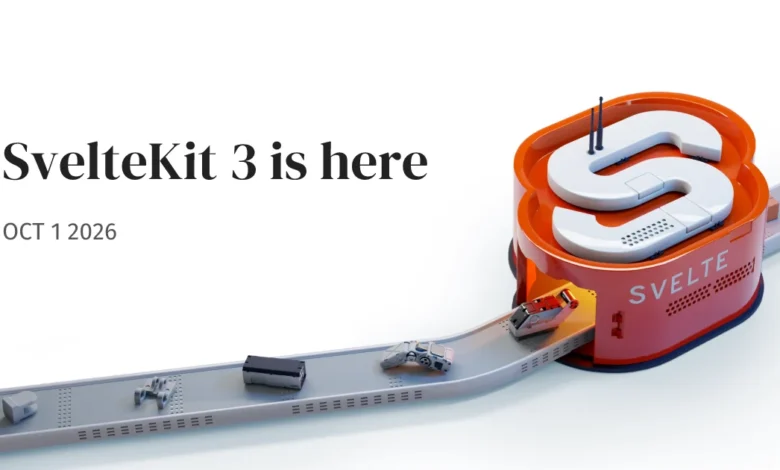
The release of SvelteKit 3.0 arrives at a time when the frontend development landscape is increasingly focused on performance optimization and developer ergonomics. As the official application framework for Svelte, SvelteKit provides the necessary tooling for routing, server-side rendering, and data fetching. Version 3.0 does not attempt to reinvent the framework’s underlying philosophy; rather, it focuses on "polishing" existing workflows. The maintenance team has explicitly prioritized removing legacy overhead, resulting in a leaner codebase that is intended to be more performant and easier to maintain for long-term projects.
Type safety has become a non-negotiable requirement for modern web applications, and this release heavily emphasizes the integration of TypeScript. By tightening the contract between the server and the client, SvelteKit 3.0 minimizes the surface area for runtime errors, a critical improvement for developers working in large-scale, collaborative environments.
The Migration Process: Automation at the Core
One of the most notable aspects of the 3.0 release is the emphasis on a frictionless migration path. The developers have introduced the sv migrate command, a sophisticated utility designed to automate the transition from version 2.x. This approach addresses a common industry pain point: the high cost of upgrading major framework versions.
The command, executed via npx sv migrate sveltekit-3 --tasks all --confirm, serves as an automated auditor for existing projects. It handles the heavy lifting of updating configuration files and refactoring deprecated patterns. For segments of the codebase that require manual intervention, the tool generates a comprehensive TODO list, ensuring that developers are not left guessing about the state of their application post-migration. The team has also noted that these tasks are well-suited for integration with AI-assisted coding tools, effectively bridging the gap between automated refactoring and manual oversight.
Chronology of Development
The path to SvelteKit 3.0 has been marked by a transparent development cycle. Following the initial release of SvelteKit, the community witnessed a rapid maturation of the framework. Key milestones include:
- 2022: The transition from beta to a stable 1.0 release, which solidified the framework’s core routing and loading mechanisms.
- 2023: The introduction of SvelteKit 2.0, which focused on improving the underlying Vite integration and refining the load function patterns.
- Late 2024: The release candidate (RC) phase for 3.0, during which the core team collected feedback from early adopters and enterprise users to identify edge cases in the migration process.
- November 2024: The formal launch of SvelteKit 3.0, coinciding with the lead-up to the 10th anniversary of the Svelte project.
Strategic Roadmap: The Quest for Remote Functions
While 3.0 brings significant polish, the roadmap indicates that some highly anticipated features remain under active development. Specifically, "Remote Functions" have been identified as a top-tier priority. Remote functions represent an evolution in how SvelteKit manages client-server communication. By abstracting the complexity of API endpoints, these functions aim to provide a seamless, type-safe interface for executing server-side logic from the client.
The technical requirement for this feature—Async Svelte—remains in an experimental state. This reflects the cautious, methodical approach the Svelte core team takes when introducing paradigm-shifting changes. By keeping these features behind experimental flags, the team ensures that the core framework remains stable while allowing power users to test and refine the next generation of Svelte’s capabilities.
Broader Industry Implications
The evolution of SvelteKit reflects a broader trend in the web development ecosystem: the consolidation of features into unified meta-frameworks. Similar to how Next.js dominates the React ecosystem and Nuxt serves the Vue community, SvelteKit has become the defining tool for Svelte developers.
The focus on "less junk" and higher type safety in version 3.0 suggests a maturity phase. In the early years of a framework, developers prioritize rapid feature delivery and architectural flexibility. As a framework matures, the priorities shift toward stability, maintainability, and standardizing the way teams write code. SvelteKit 3.0 is a clear indicator that the framework is positioning itself as a reliable choice for long-term business applications, where technical debt and maintenance costs are primary concerns for CTOs and engineering leads.
Community Engagement and the Svelte Summit
Beyond the technical updates, the Svelte ecosystem continues to cultivate a strong community culture. The upcoming Svelte Summit, scheduled for November 19-20 in Ljubljana, Slovenia, serves as a focal point for this engagement. This year’s event is particularly significant as it marks the 10th anniversary of the framework’s inception.
The choice of Ljubljana for the summit highlights the global nature of the Svelte community. While the framework originated in a digital environment, in-person summits have become vital for the exchange of ideas, the announcement of new strategic directions, and the fostering of professional relationships within the open-source community. The event will likely feature sessions on the practical implementation of SvelteKit 3.0, case studies from organizations that have successfully migrated their infrastructure, and deep dives into the future of Async Svelte.
Looking Ahead
For developers currently maintaining SvelteKit 2.x projects, the migration guide provides the definitive resource for navigating breaking changes. While the sv migrate tool automates the majority of the process, a thorough review of the documentation remains necessary to understand the nuances of the new APIs.
The impact of this release extends beyond simple versioning. By lowering the barrier to entry for upgrading, the Svelte team is ensuring that the community remains consolidated on the latest, most secure version of the framework. This fragmentation-reduction strategy is essential for the long-term health of any open-source ecosystem.
As the industry continues to iterate on the "server-component" and "isomorphic-code" models, SvelteKit 3.0 provides a stable, modern platform. With remote functions on the horizon and a commitment to maintaining a lightweight, performant core, Svelte continues to present a compelling alternative to more monolithic frameworks. For the developers attending the summit in Ljubljana, the discussion will undoubtedly shift from the mechanics of version 3.0 to the future possibilities enabled by this refined foundation, setting the stage for the next decade of Svelte development. The release serves as both an end-point for current technical challenges and a starting point for the next era of web performance, ensuring that Svelte remains a top-tier contender in the competitive landscape of modern frontend development.