Radaris domain seizure signals new era of accountability for aggressive data brokers under state privacy laws


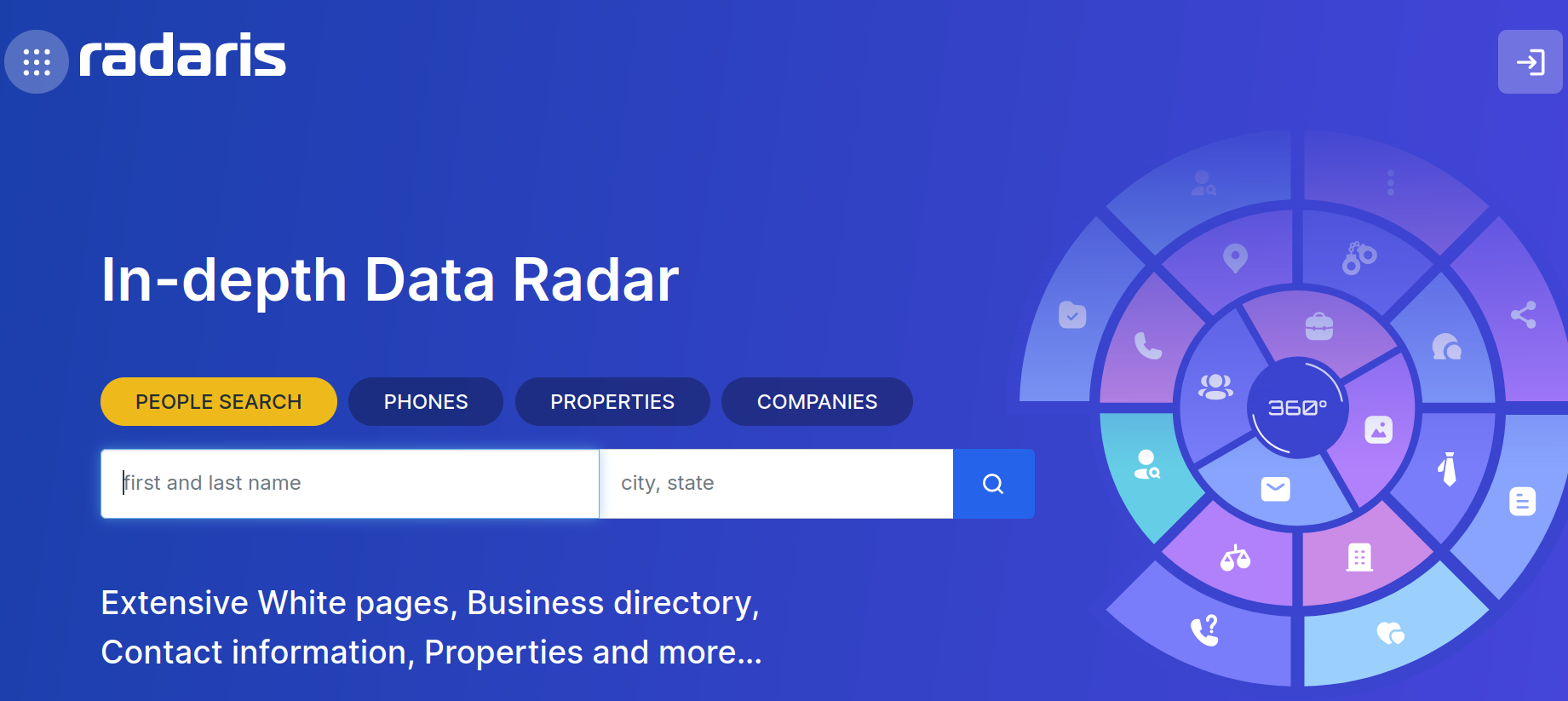
The consumer data broker Radaris.com, an entity long criticized for its systemic refusal to honor personal information removal requests, has suffered a significant legal defeat that could redefine the landscape of the multibillion-dollar people-search industry. A New Jersey judge has ordered the transfer of Radaris.com and more than a dozen associated domains to Atlas Data Privacy Corp, a firm actively litigating on behalf of law enforcement officials and government personnel. This landmark judgment stems from repeated violations of Daniel’s Law, a stringent New Jersey privacy statute designed to shield public servants from the risks associated with the public availability of their personal data.
The legal action represents a culmination of years of cat-and-mouse maneuvers by the operators of Radaris, who have historically utilized complex corporate structures, shell companies, and fictitious leadership to evade legal accountability. The transfer of these domains serves as a stark warning to the data brokerage sector: the era of hiding behind obscure offshore jurisdictions and procedural delay tactics may be drawing to a close.
A Chronology of Evasion and Litigation
The conflict between Atlas Data Privacy Corp and the Radaris network traces back to February 2024, when the initial lawsuit was filed. Daniel’s Law, which serves as the legal foundation for the complaint, specifically grants law enforcement officers, judges, and their immediate families the right to demand the total removal of their personal identifiers from commercial databases. For companies that ignore these requests, the law mandates fines of $1,000 per violation.
Radaris’s response to the litigation followed a well-documented playbook of delay. Attorneys representing the site frequently failed to appear in court or, when forced to respond, challenged the jurisdiction and the naming of the correct legal entity. This behavior was not new; it echoed the company’s 2017 loss in a class-action lawsuit where, after failing to contest the claims, they faced a $7.5 million default judgment.
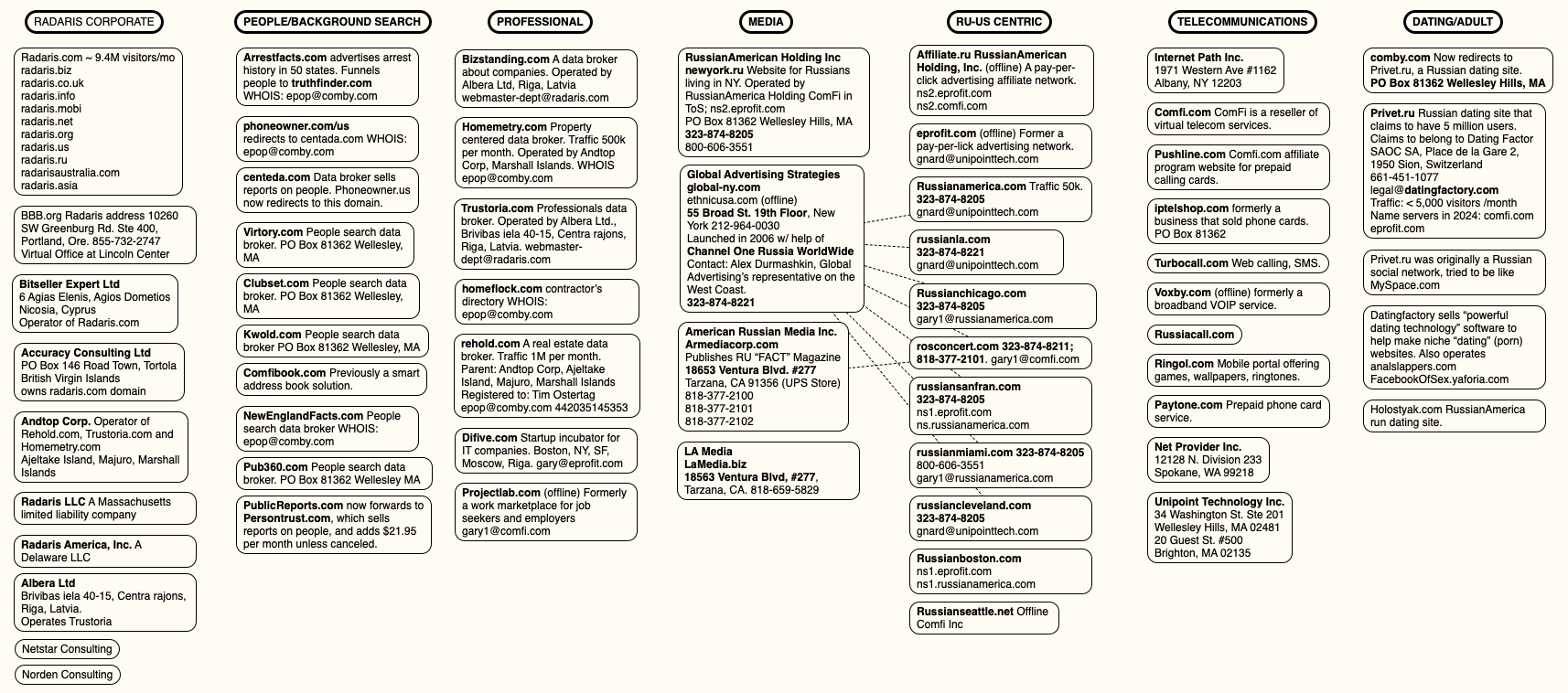
Throughout this period, the operators—identified by investigative reporting as Russian-born brothers Igor and Dmitry Lubarsky—repeatedly shifted their corporate footprints. Their strategy involved what industry analysts call "island-hopping," where the administrative control of their domains was migrated through entities in the Marshall Islands, the Seychelles, and the British Virgin Islands. By the time plaintiffs could identify a specific entity as the "owner" of a domain, the Radaris network would often dissolve that entity or transfer the asset to a new, freshly incorporated shell company, rendering previous court orders moot.
The Anatomy of the Radaris Empire
The investigation into the Lubarsky brothers has unveiled a sophisticated, centralized operation masquerading as a decentralized network of independent sites. Documents obtained during discovery in the recent litigation reveal that despite the array of corporate names—such as Bitseller Expert Limited, Digital Orbit Corp, and Andtop Company—the entire operation is managed from a single administrative hub.
Evidence suggests that over 25 people-search websites, including Radaris and Veripages, share a unified infrastructure. These sites rely on a common set of payment processors, hosting services, and technical administrative domains, such as difive.com and centerex.com. This consolidation allows the operators to maximize revenue streams, which are estimated to be substantial. Financial analysis indicates that Radaris alone generates approximately $42,000 in monthly revenue, while affiliated sites like Veripages bring in an additional $45,000. These figures do not account for secondary revenue streams, such as lucrative partnerships with marketing firms and data-removal services, which ironically monetize both the presence of the data and the fear it generates.
One of the more egregious findings from the litigation was the use of a fictitious CEO, "Gary Norden." Radaris issued multiple press releases and investor solicitations under this fabricated identity to provide a veneer of professional legitimacy to a business model that otherwise thrived in the shadows. The eventual admission by counsel that the identity was invented underscored the company’s commitment to deception.
Industry and Official Responses
The legal defense for Radaris remains defiant. Victor Worms, the current attorney for the entity, has filed motions to vacate the default judgment. His argument rests on the claim that the court improperly ordered the transfer of a domain name that does not possess legal personhood, asserting that the judgment is void. Furthermore, the defense maintains that the transfer violates constitutional protections, suggesting an intent to escalate the matter through the appellate court system.

Conversely, proponents of Daniel’s Law argue that the transfer is a necessary equitable remedy. Raj Parikh, a partner at PEM Law, noted that the legal team’s decision to pursue the seizure was driven by the urgent need to protect those in the public service sector. "They won by attrition for a decade," Parikh observed. "We were acutely aware of the threat this website posed to law enforcement officers… and decided to commit the necessary resources to remove that threat."
Broader Implications for Privacy Law
The Radaris case serves as a microcosm for the larger battle over digital privacy in the United States. While New Jersey’s Daniel’s Law has been at the forefront of this movement, it faces a mounting constitutional challenge. Approximately 150 data brokers, currently under litigation by Atlas, have joined forces to challenge these laws, arguing they are overly broad and infringe upon First Amendment rights regarding the dissemination of public records.
The judicial landscape is currently fragmented. While the U.S. Court of Appeals for the Third Circuit deliberates on the constitutionality of the New Jersey statute, other states have met with mixed results. Notably, a federal district court in West Virginia ruled a similar state law unconstitutional in August 2025, providing the data brokerage industry with a significant win in their fight against state-level regulation.
Privacy expert Justin Sherman, author of the forthcoming book The Middlemen, emphasizes that the current state of privacy in the U.S. is precarious. "The lack of a comprehensive federal privacy law is not for a lack of knowledge," Sherman argues. He points out that the fundamental flaw in existing state-level privacy legislation is the broad exemption for "public" or "government" records. Because these categories include everything from marriage certificates to property filings and professional licenses, people-search companies have a perpetual, legally protected source of raw material.
The incident at IDScan.net, where 153 million drivers’ license records were exposed and sold on the dark web, highlights the danger of this lack of federal oversight. Without a standard federal framework that dictates how data is collected, stored, and shared, companies continue to act as "data vacuums," hoarding sensitive information and creating massive targets for identity theft and cyber-criminal activity.
The Road Ahead
As the legal saga over Radaris.com continues, the impact of the domain transfer remains visible. The site now functions as a notice board for the litigation, effectively neutralizing its ability to profit from the data it once sold. Whether this victory can be replicated across the rest of the industry remains to be seen.
If the appellate courts uphold the constitutionality of Daniel’s Law, it could set a precedent for a more aggressive judicial stance against brokers who ignore privacy rights. However, should the courts lean toward the industry’s First Amendment arguments, the future of data privacy may depend entirely on the ability of Congress to pass a meaningful federal statute—a task that remains stalled by intense lobbying from big tech, social media firms, and emerging artificial intelligence companies.
For now, the Radaris case stands as a significant, albeit narrow, victory for personal privacy. It proves that with sufficient legal resources and investigative persistence, the faceless entities behind the data-brokerage industry can be forced into the light. However, the wider systemic issues regarding the commodification of public and private data remain largely unaddressed, leaving the average citizen vulnerable in an increasingly digital world. As the case heads toward potential review by the U.S. Supreme Court, the outcome will likely determine whether the "right to be forgotten" is a functional reality or an aspirational ideal for the American public.