The Dark Forest of AI: Why World Model Labs Are Playing a High-Stakes Game of Secrecy

The artificial intelligence industry is currently witnessing the emergence of a specialized sub-sector focused on "world models"—systems designed to grant AI a sense of spatial intelligence and physical causality. While these models represent the next frontier in machine learning, they are shrouded in a deliberate, almost defensive silence. During a panel discussion at this year’s All In conference, it became clear that while industry heavyweights like Yann LeCun’s AMI Labs and Fei-Fei Li’s World Labs are attracting significant venture capital, they are doing so with an almost complete lack of transparency regarding their commercial roadmaps. This culture of silence is not merely a byproduct of early-stage development; it is a calculated survival strategy in an increasingly competitive, "dark forest" landscape where revealing one’s hand is equivalent to inviting an existential threat.
Defining the Frontier: What is a World Model?
At their most fundamental level, world models represent a shift from the linguistic focus of Large Language Models (LLMs) to a spatial, physical understanding of the environment. While an LLM predicts the next word in a sequence, a world model attempts to predict the evolution of a physical scene. This capability is the missing link for a variety of high-value applications, ranging from autonomous navigation in robotics to the generation of interactive, high-fidelity 3D environments for entertainment and digital twins.
The potential utility of this technology is vast. Experts suggest that a sufficiently robust world model could serve as the "brain" for humanoid robotics, allowing machines to navigate unstructured human environments without hard-coded instructions. Furthermore, these models are expected to revolutionize the gaming and film industries by automating the creation of explorable, photorealistic CGI, effectively lowering the barrier to entry for complex content creation.
The Chronology of Silence
The development of these labs has been remarkably rapid, characterized by massive funding rounds and a simultaneous tightening of communication.
- Q1 2025: High-profile researchers, including Yann LeCun and Fei-Fei Li, signal a pivot toward "spatial intelligence" as the primary objective for next-generation AI.
- Q2 2025: AMI Labs and World Labs secure significant seed and Series A funding, with valuations often decoupled from traditional revenue metrics.
- Q3 2025: The first public demos emerge—primarily showcasing high-end visual capabilities rather than industrial-grade applications.
- Q4 2025: Industry analysts note an increasing trend of "stealth" development, with companies refusing to disclose specific product timelines or market entry strategies.
- September 2026: The All In conference serves as a focal point for the tension between investors’ demand for growth and the companies’ insistence on maintaining a "research-first" veil.
The Challenge of Commercialization
Despite the technological excitement, the bridge to commercialization remains largely unbuilt. AMI Labs, for instance, has flirted with diverse sectors including manufacturing, biomedical imaging, and AI-assisted healthcare through its Nabia partnership. However, there is little evidence that these pilot programs have translated into a cohesive product suite.
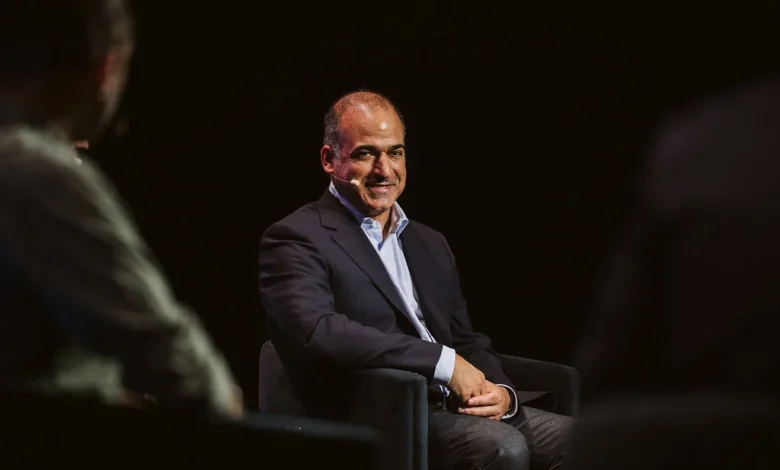
Michael Rabbat, a co-founder of AMI Labs and the company’s VP of World Models, addressed these concerns during the recent conference. When pressed on the company’s specific vertical focus, Rabbat emphasized that the firm remains strictly in a "research and building phase." This sentiment is echoed across the sector. Even World Labs’ "Marble"—arguably the most mature product in the current ecosystem—remains largely a demonstration of capability rather than a production-ready software service.
This lack of clarity is frustrating even for the ecosystem’s participants. Alex de Vigan, CEO of Physicl, a firm that supplies specialized training data to these labs, noted the irony of the situation. "We know our data is being utilized, yet we are left in the dark regarding the final application," de Vigan stated. "If we had a clearer understanding of the specific problems these labs are trying to solve—whether it be warehouse navigation or synthetic video generation—we could engineer much more effective data pipelines."
Economic Drivers and the Dark Forest Hypothesis
The prevailing secrecy is largely driven by the economics of the current AI bubble. Because capital is currently abundant for firms with elite talent, there is little immediate pressure to monetize. Paradoxically, this abundance of capital makes the environment more dangerous. If a company like AMI Labs were to announce a definitive pivot—for instance, a breakthrough in humanoid motor control—it would immediately alert competitors.
In this context, the "Dark Forest" hypothesis, popularized by sci-fi author Cixin Liu, provides a perfect framework for understanding the industry. In a forest where every inhabitant is a potential hunter, the safest strategy is to remain silent and invisible. By keeping their specific research goals under wraps, these companies avoid triggering a "feature war" with well-funded incumbents like OpenAI or Google DeepMind, who could theoretically reallocate vast resources to compete in any niche that shows early signs of profitability.
Implications for the Future of AI
The implications of this strategy are twofold. On one hand, the "stealth" approach allows these startups to innovate without the pressures of quarterly earnings calls or public product launches, which can often lead to "tech debt" and rushed features. On the other hand, the lack of transparency creates a bottleneck in the ecosystem. Suppliers like Physicl cannot optimize their offerings, and potential enterprise customers remain hesitant to integrate technologies that lack a defined long-term support plan.
Furthermore, there is a risk of a "talent and capital drain." If these companies continue to operate as black boxes for too long, they may face a reckoning when investor sentiment shifts from "growth at any cost" to "demonstrable ROI." Without a clear path to market, the high valuations currently enjoyed by these labs could evaporate, leaving them vulnerable to acquisition by larger, more established players.
Conclusion: A Strategic Pivot?
As the industry moves toward 2027, the pressure to demonstrate value will only intensify. While the current secrecy is a rational response to the competitive pressures of the AI landscape, it is likely unsustainable in the long term. The companies that will eventually lead the world model space will be those that can successfully transition from the "dark forest" of research into the "bright market" of industrial application.
For now, however, the industry remains in a state of quiet accumulation. The founders of these labs are playing a game of high-stakes chess, where the first player to reveal their true strategy may be the first to lose their competitive advantage. Until then, the world model sector will continue to exist in a state of perpetual potential, waiting for the moment when the research is finally robust enough to justify stepping out of the shadows.