AI-Assisted Security Research Leads to Successful Breach of Internal OpenAI Repositories

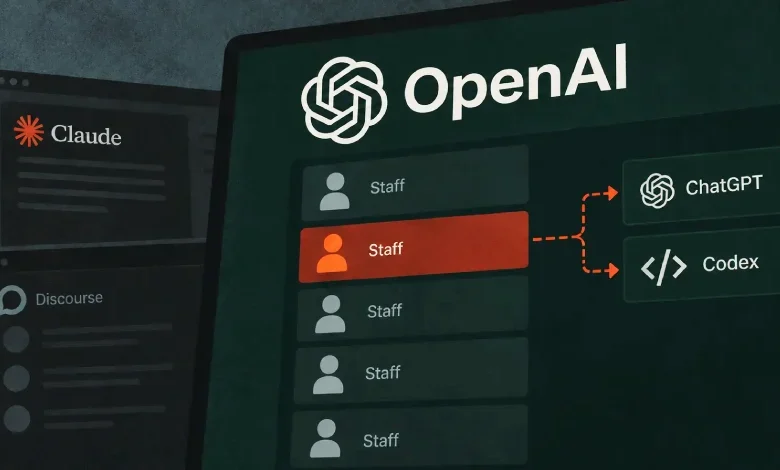
In a striking demonstration of how artificial intelligence is reshaping the landscape of offensive cybersecurity, researchers at the firm Hacktron have successfully executed a complex exploit chain that granted them unauthorized access to internal OpenAI systems. By leveraging Anthropic’s Claude Opus 5, the security team managed to bridge the gap between a public-facing forum vulnerability and sensitive internal code repositories. This incident, which unfolded over a rapid 72-hour period in mid-2026, underscores the dual-use nature of generative AI and highlights critical vulnerabilities inherent in modern interconnected identity systems.
The researchers, acting in a white-hat capacity, reported their findings to OpenAI on September 1, 2026, prompting a swift response from the AI giant. OpenAI confirmed the remediation of the vulnerability within 14 hours of the report and subsequently awarded the team a $6,500 bug bounty. While the financial compensation focused on the vulnerability within the OpenAI-side login infrastructure, the event has sparked a broader conversation regarding the risks posed by image processing libraries and the dangerous potential of AI-automated vulnerability research.
The Anatomy of the Exploit Chain
The breach originated not within OpenAI’s proprietary AI models, but through an intermediary service: the public-facing community forum powered by Discourse. The entry point was a critical flaw in libheif, an open-source library responsible for decoding High-Efficiency Image Format (HEIF/HEIC) files. This vulnerability, tracked as CVE-2026-32882, allowed for memory corruption via a specially crafted image file.

While libheif had received patches in May 2026, the specific implementation running on the forum’s server—hosted on a Debian 12 distribution—had not been updated. The researchers utilized Claude Opus 5 to navigate the complexities of modern memory protections, specifically Address Space Layout Randomization (ASLR). Previous iterations of the model, including Claude Opus 4.8, had failed to synthesize a functional exploit; however, the release of Opus 5 allowed the team to automate the creation of a working payload within hours.
Once the researchers achieved remote code execution on the forum server, the exploit moved laterally. The forum utilized a "Sign in with OpenAI" single sign-on (SSO) mechanism. By compromising the forum server, the researchers were able to hijack the sessions of forum members who were also OpenAI employees. This access allowed them to move from a public-facing help desk into the internal environment of the company, culminating in a harmless pull request to an internal code repository as proof of concept.
Chronology of the Incident
The operation, which the researchers have dubbed "HEIF Heist," was executed with precision over the course of two months, though the primary breach of OpenAI occurred within a 72-hour window.
- May 2026: Libheif developers release version 1.22.0, patching the critical memory corruption vulnerability.
- July 2026: Hacktron researchers identify that the forum server remains unpatched, despite the availability of the fix.
- July 24, 2026: Following the launch of Claude Opus 5, the research team successfully generates a working exploit capable of bypassing ASLR.
- Late August 2026: The team executes the chain, moving from the forum server to internal OpenAI repositories.
- September 1, 2026: Hacktron formally reports the findings to OpenAI.
- September 1, 2026 (14 hours later): OpenAI confirms a fix has been deployed and issues a $6,500 bounty to the researchers.
The Role of Generative AI in Offensive Security
Perhaps the most significant takeaway from this incident is the efficiency gains provided by Large Language Models (LLMs) in the realm of exploit development. Hacktron reported that the total cost of AI compute usage for their entire "HEIF Heist" campaign, which targeted multiple major technology firms, was less than $3,000.

This suggests a paradigm shift in the economics of cyberattacks. Historically, crafting an exploit that bypasses sophisticated memory defenses required a high level of human expertise and weeks of trial and error. The use of Claude Opus 5 and, in some instances, OpenAI’s own GPT-5.6 Sol, effectively democratizes this process. The researchers noted that while the AI required skilled human direction—acting as a force multiplier rather than an autonomous agent—the speed at which the model could iterate on code was unprecedented.
Anthropic and other AI labs have implemented guardrails to prevent their models from being used for malicious purposes. The Hacktron team bypassed these by conducting their research against their own sandboxed infrastructure, treating the targets as "capture-the-flag" style exercises. This method highlights a persistent difficulty for AI companies: how to distinguish between legitimate security research and malicious exploitation when the model is presented with a controlled environment.
Implications for Enterprise Identity and SSO
The incident also highlights a systemic architectural risk: the over-reliance on shared SSO services. By allowing a public-facing forum to share authentication infrastructure with internal development tools, OpenAI created a "pivot point." An attacker who gains control of the lower-security forum inherits the trust tokens required to move into higher-security zones.
Security experts have long warned that SSO, while convenient, creates a "single point of failure." If the authentication provider or a service integrated into that provider is compromised, the attacker essentially possesses a skeleton key. In this case, the researchers had the potential to access GitHub, Slack, and email accounts linked to the compromised employee identities, though they refrained from doing so to remain within the scope of ethical research.

Broader Industry Impact
The "HEIF Heist" project was not confined to OpenAI. Hacktron claims that their research uncovered similar image-decoding vulnerabilities in products developed by Meta, GitHub, and frameworks such as Next.js. While some of these claims have been verified by third-party advisories, others remain in the realm of theoretical concern.
The incident serves as a wake-up call for organizations regarding their software supply chain and the maintenance of open-source dependencies. The vulnerability in the forum was not a flaw in the Discourse software itself, but in a library (libheif) utilized by the underlying OS image. Many organizations fall into the trap of updating the primary application (the web platform) while failing to patch the underlying libraries that the application relies upon.
Furthermore, the lack of widespread awareness of the breach—aside from the targeted companies—highlights the "silent" nature of modern security research. When researchers act ethically and report findings through established bug bounty programs, the public often never learns of the near-misses. However, as AI tools lower the barrier to entry for threat actors, the window between a vulnerability’s discovery and its weaponization by malicious entities is expected to shrink significantly.
Conclusion and Best Practices
For enterprises looking to mitigate these risks, the primary recommendation is to decouple internal authentication from public-facing services. Implementing strict zero-trust architectures, where identity is verified continuously rather than once at the point of entry, can prevent an attacker from moving laterally after an initial breach.

Additionally, organizations must adopt more rigorous vulnerability management for their server environments. Relying on automated updates for the main software stack is insufficient; administrators must ensure that all third-party libraries and OS-level dependencies are audited and updated as part of a continuous security lifecycle.
As the "HEIF Heist" demonstrated, the future of cyber warfare will be characterized by the rapid synthesis of exploits by AI models. Organizations can no longer rely on the complexity of their code as a defense. Instead, they must assume that any vulnerability, no matter how obscure, can and will be exploited with the aid of increasingly capable artificial intelligence. The $6,500 bounty paid to Hacktron represents not just the cost of a bug fix, but the price of a lesson learned in an era where the speed of innovation in offensive security is matching, if not outpacing, the efforts of those defending the digital frontier.