Amazon Web Services Expands Elastic Block Store Capabilities with Cross-Account Volume Clones and Advanced Encryption Controls

Amazon Web Services (AWS), a subsidiary of Amazon.com Inc., has officially announced a significant enhancement to its cloud infrastructure storage portfolio by introducing cross-account copy functionality for Amazon Elastic Block Store (Amazon EBS) Volume Clones. This new feature allows organizations to securely generate, transfer, and re-encrypt point-in-time copies of EBS volumes across distinct AWS accounts, addressing long-standing enterprise requirements for streamlined environment provisioning, robust data isolation, and agile software development life cycles.
The update builds upon the initial release of Amazon EBS Volume Clones, which debuted last year to provide instant, zero-wait volume duplication within a single Availability Zone. By extending this architecture to support multi-account environments, AWS aims to solve complex operational challenges faced by DevOps teams, security administrators, and database managers who routinely require production-grade datasets in isolated sandbox, staging, or testing environments.
Main Facts and Technical Implementation
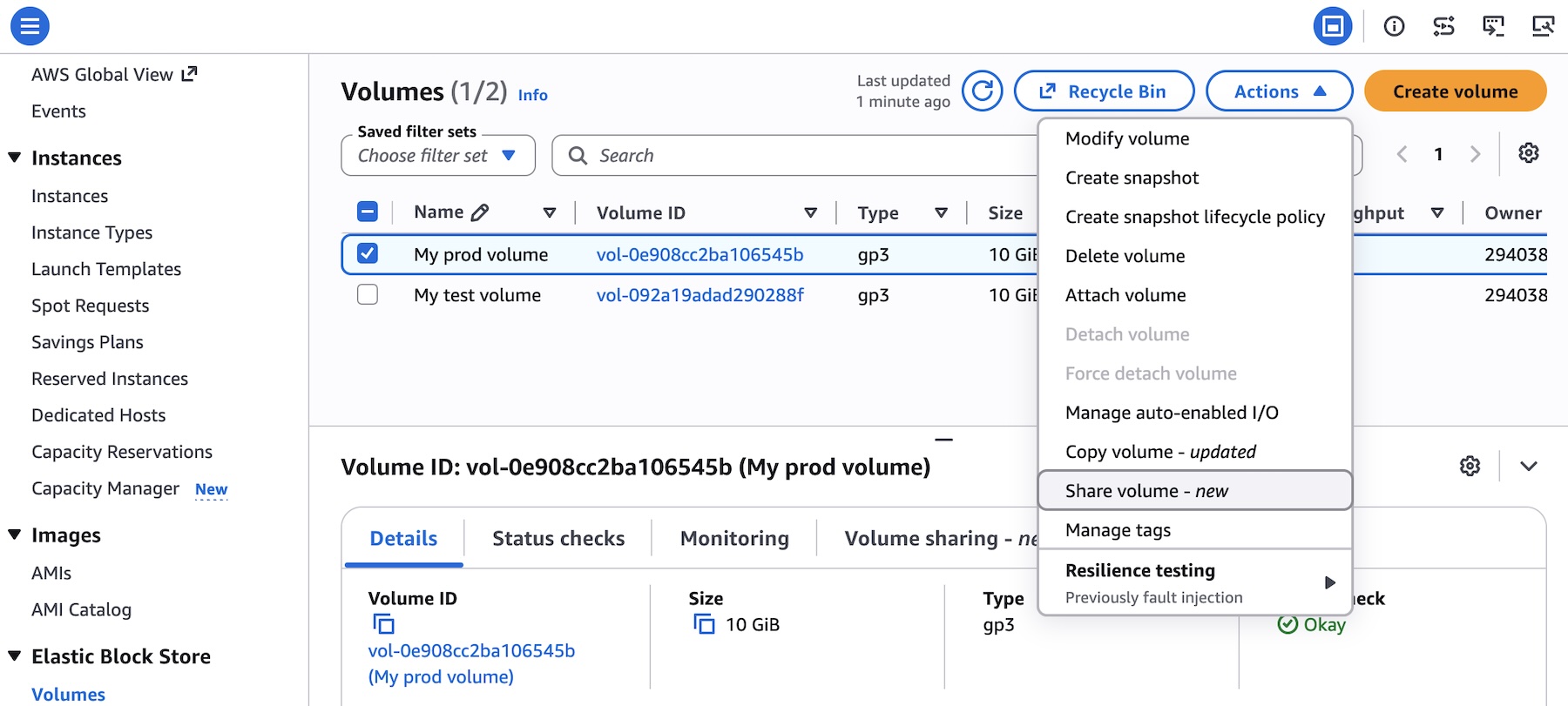
The newly released capability enables enterprise customers to utilize live application data for development, testing, and experimental initiatives residing in secondary AWS accounts, all while maintaining rigorous perimeter security around production environments. To initiate a cross-account volume copy, the process begins within the source account via the Amazon EBS and AWS Resource Access Manager (RAM) consoles.
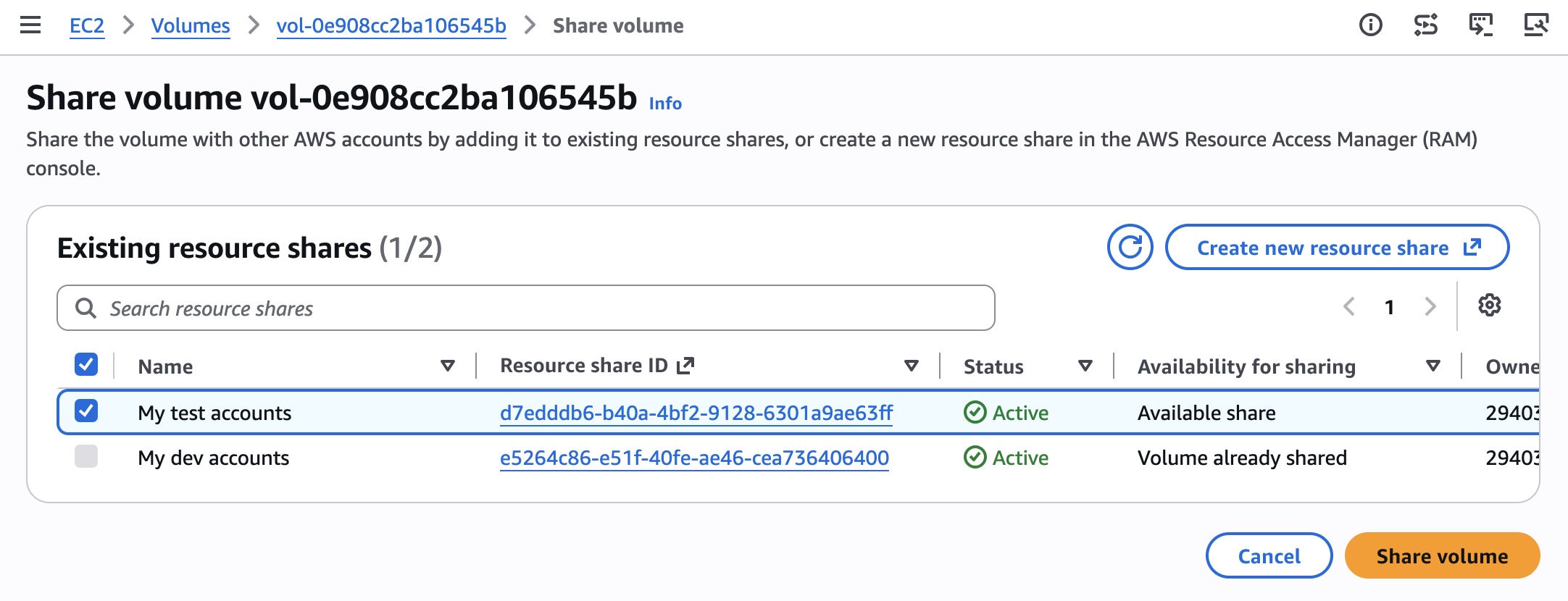
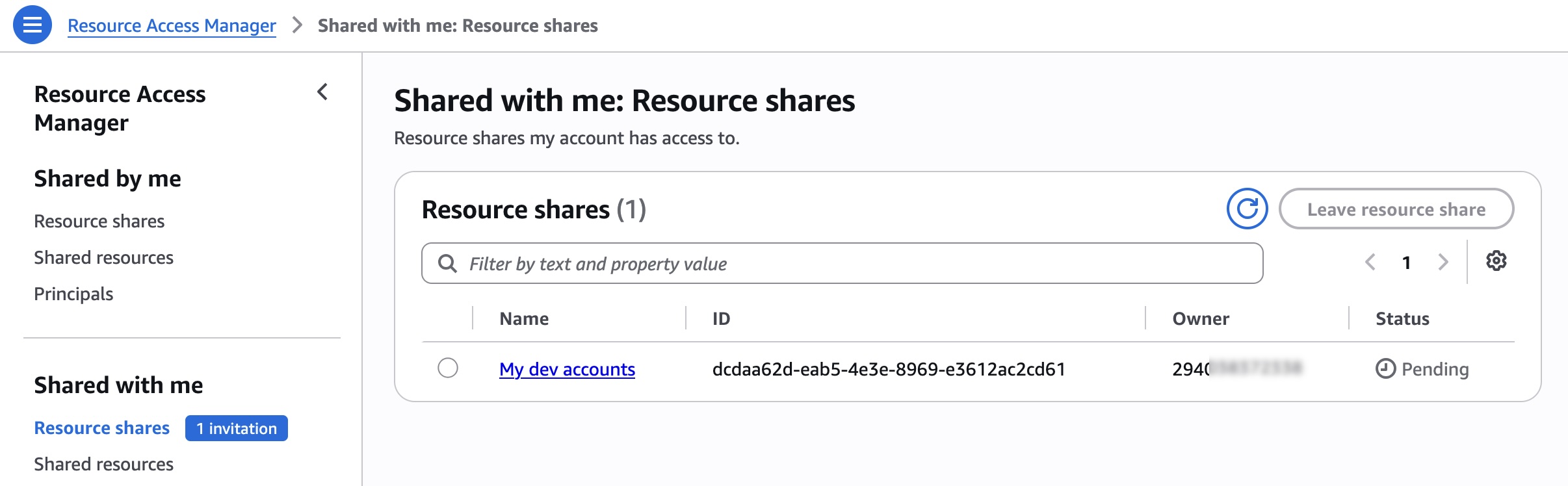
Volume owners must first designate the target account by establishing a resource share within AWS RAM, a service designed for secure, governed resource sharing across AWS accounts and within centralized AWS Organizations. Once the volume is shared and the target account accepts the resource share via its respective RAM console, the designated volume becomes visible within the target account’s Amazon EBS dashboard.
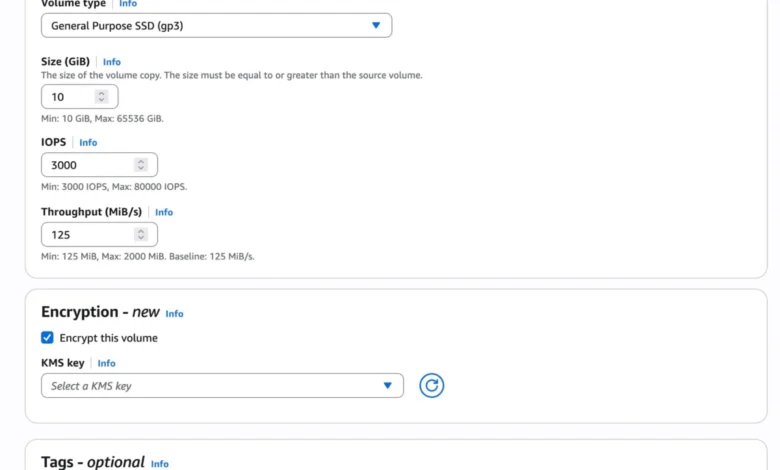
At this stage, administrators in the target account can execute a direct volume copy operation. A critical security feature of this implementation is the ability to optionally re-encrypt the newly copied volume utilizing a target-specific AWS Key Management Service (AWS KMS) key. This ensures that data compliance, governance boundaries, and cryptographic controls remain strictly enforced according to the security policies of the recipient account, preventing unauthorized data exposure during transit and rest.
Furthermore, AWS has integrated support for this feature into its broader developer tooling ecosystem. Organizations seeking to automate or orchestrate these workflows programmatically can leverage the AWS MCP Server and associated plugins alongside modern AI coding tools and application programming interfaces (APIs).

Background Context and Evolution of Amazon EBS
To fully comprehend the significance of cross-account volume clones, one must examine the operational evolution of Amazon EBS since its inception. Launched in 2008, Amazon EBS was designed to provide persistent block storage volumes for use with Amazon Elastic Compute Cloud (EC2) instances. Over the past decade and a half, EBS has grown into a cornerstone of enterprise cloud architecture, supporting mission-critical databases, enterprise resource planning (ERP) systems, and high-performance file systems.
Historically, duplicating large volumes of data for testing or backup purposes involved creating traditional Amazon EBS snapshots. While snapshots remain an essential mechanism for long-term data durability and point-in-time backups, they operate via incremental storage models. Restoring a snapshot or creating multiple independent volumes from a large snapshot can introduce latency and requires significant underlying data transfer and provisioning overhead.
Recognizing the need for instantaneous data duplication, AWS introduced EBS Volume Clones last year. These clones leveraged underlying storage virtualization layers to create immediate, metadata-driven copies of block storage volumes without requiring a full data block copy at the moment of creation. However, the initial iteration was restricted to single-account boundaries within the same Availability Zone. Enterprise architectures, which frequently rely on multi-account strategies governed by AWS Control Tower and AWS Organizations for security isolation, required a mechanism to bridge these boundaries securely. The introduction of cross-account volume clones directly addresses this enterprise architectural gap.
Chronology of Key Storage Enhancements
The rollout of cross-account EBS volume cloning represents the latest milestone in a sustained corporate strategy by AWS to modernize cloud storage management. A review of recent developments highlights this trajectory:
- 2008: Amazon EBS is officially launched, introducing block-level storage volumes for Amazon EC2.
- Subsequent Years: AWS introduces incremental snapshots, encryption at rest using AWS KMS, and multi-attach capabilities for clustered applications.
- Previous Year: AWS introduces Amazon EBS Volume Clones, enabling instant, point-in-time block storage duplication within the same Availability Zone and AWS account.
- Current Announcement: AWS expands Volume Clones to support cross-account sharing via AWS RAM, combined with target-account re-encryption capabilities through AWS KMS.
Supporting Data and Enterprise Use Cases
In modern enterprise cloud governance, multi-account architectures are considered a best practice for security, billing accountability, and resource isolation. Organizations typically maintain separate AWS accounts for production, staging, quality assurance (QA), and development.
According to industry surveys on cloud operations and DevOps efficiency, data staleness in non-production environments is a primary bottleneck for software delivery speed. Developers frequently rely on outdated synthetic datasets or incomplete database dumps because refreshing test environments with live production data is historically cumbersome, expensive, and fraught with compliance risks.
By utilizing cross-account EBS volume clones, enterprises can achieve near-instantaneous environment refreshes. For instance, a financial institution running a high-throughput transactional database can securely clone its production database volume, transmit it to an isolated auditing account, and re-encrypt it under a distinct compliance key within minutes. This workflow eliminates the need to export, transfer, and re-import massive database files manually, drastically reducing both operational toil and the window of exposure for sensitive data.
Official Responses and Industry Implications
While explicit public statements from external third-party enterprises are often gathered gradually following major AWS feature releases, reactions from the cloud engineering community and architectural analysts underscore the profound utility of this update.

Cloud architects have long emphasized that data governance and developer velocity are often opposing forces. Strict security postures mandate strict data isolation, which can inadvertently slow down engineering teams waiting for sanitized datasets. Industry analysts point out that by integrating AWS RAM and AWS KMS directly into the EBS cloning workflow, AWS has provided a secure conduit that satisfies compliance officers while empowering developers.
"The ability to propagate production-grade data structures across isolated accounts securely and instantaneously is a game-changer for enterprise CI/CD pipelines," noted an enterprise cloud strategist specializing in AWS infrastructure governance. "It bridges the gap between stringent security compliance and the agile demands of modern software engineering."
Broader Impact and Technical Implications
The introduction of cross-account volume clones carries several broad implications for the cloud computing landscape:
- Enhanced Compliance and Auditing: Because the feature relies on AWS RAM for explicit sharing permissions and AWS KMS for target-side encryption, security teams maintain complete visibility and control over how production data leaves its originating perimeter. Every share, acceptance, and copy action can be logged and audited via AWS CloudTrail.
- Cost Optimization: Traditional methods of duplicating large volumes often involved multiple data transfer steps or maintaining persistent, duplicate storage tiers. Instant cloning minimizes storage duplication overhead by utilizing underlying block-level pointer architectures, reducing the financial friction associated with frequent environment refreshes.
- Acceleration of AI and Machine Learning Workflows: Data scientists and machine learning engineers frequently require massive production datasets to train, validate, and test models in isolated sandboxes. Cross-account cloning streamlines the ingestion of large-scale data volumes into dedicated analytical accounts without disrupting primary operational systems.
Availability and Getting Started
AWS has confirmed that cross-account volume clones for Amazon EBS are generally available starting today in all AWS Regions that currently support standard Amazon EBS Volume Clones. Organizations wishing to review regional availability specific to their deployments can consult the official AWS Capabilities by Region documentation.
To begin utilizing the feature, administrators can access the Amazon EC2 and Amazon EBS consoles to initiate volume sharing through AWS RAM. Detailed technical guidance, API references, and programmatic tutorials are available in the updated Amazon EBS User Guide, with community discussions and troubleshooting resources hosted on AWS re:Post for Amazon EBS.