Mastering Modern Digital Asset Management: A Comprehensive Overview of End-to-End Media Pipeline Solutions

The management, transformation, and delivery of digital assets have long presented substantial architectural challenges for software engineering teams. In an era where user-generated content arrives in an unpredictable array of formats, resolutions, and file sizes, applications must dynamically process media without introducing latency or compromising user experience. Historically, developers faced a stark choice: build custom, resource-intensive ingestion and processing pipelines from scratch, or stitch together disparate third-party cloud services. Today, comprehensive utility platforms such as Filestack have emerged to streamline this workflow, offering integrated solutions designed to handle the entire lifecycle of digital media from ingestion to final delivery.
The Evolution of Digital Asset Management in Web Development
To understand the current state of media management, one must examine the evolution of web applications over the past two decades. In the early days of the internet, file uploads were typically restricted to basic form submissions handled directly by local web servers. As broadband adoption accelerated and digital cameras became ubiquitous, the volume of uploaded images, videos, and documents surged exponentially.
Engineering teams soon realized that managing file storage locally was unsustainable. Servers quickly ran out of disk space, processing high-resolution images consumed vital CPU cycles, and serving large media files directly degraded application performance. This necessitated a shift toward cloud-based object storage, such as Amazon S3, paired with custom microservices for image resizing and thumbnail generation. However, maintaining these custom infrastructure stacks introduced significant overhead, requiring continuous monitoring, security patching, and scaling adjustments.
Ingestion and the Developer Experience
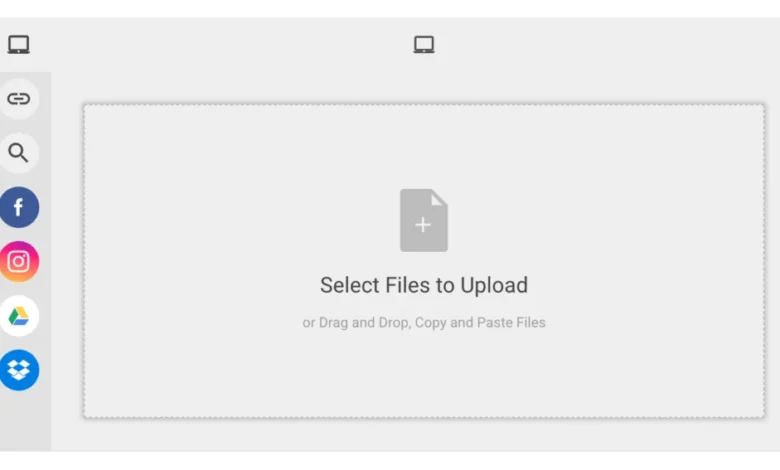
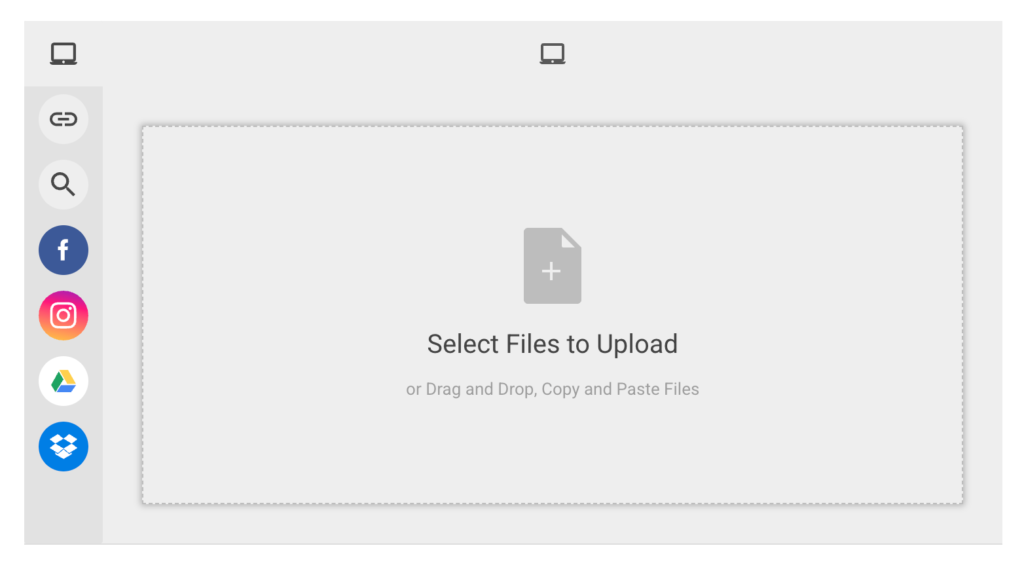
The primary bottleneck in any media-driven application occurs at the point of ingestion. Users expect the ability to upload files of any size, from any device, and through any preferred cloud or social media provider. Building an intuitive user interface that supports drag-and-drop functionality while simultaneously interfacing with external repositories—such as Google Drive, Dropbox, GitHub, Facebook, and Instagram—requires thousands of lines of front-end and back-end code.
Modern utility platforms address this complexity by providing out-of-the-box UI components and robust software development kits (SDKs). For front-end integration, developers can initialize a fully featured picker component with minimal JavaScript:
const client = filestack.init("apikey");
const picker = client.picker();
picker.open();
This simple initialization generates a responsive, highly functional file uploading interface equipped with built-in integrations for over twenty popular cloud and social services. By abstracting away the complex authentication flows and API integrations required to connect with third-party storage providers, platforms significantly reduce the time required to deploy production-ready upload features.
For server-side operations, back-end engineers often require programmatic control over file ingestion. Python and other popular backend languages are supported through dedicated libraries that allow files to be streamed directly to cloud storage buckets with custom metadata and security parameters:
from filestack import Client

client = Client(APIKEY)

store_params =
    'location': 's3',
    'path': 'folder/subfolder/',
    'upload_tags':
          "foo":"bar"


filelink = client.upload(filepath='path/to/filename.jpg', store_params=store_params)
This dual approach—catering to both client-side user experience and server-side automation—reflects a broader industry trend toward developer-first infrastructure, where complex operational tasks are reduced to declarative API calls.
Real-Time File Transformation and Dynamic Processing
Once a file is successfully uploaded, the next phase of the pipeline involves transformation. Users rarely submit media in the exact dimensions, formats, or color profiles required by a target application layout. Consequently, platforms must possess the capability to manipulate images, videos, and documents dynamically.
Traditional architectures often relied on pre-processing images upon upload, generating multiple static variations (e.g., thumbnail, medium, large) and storing all of them indefinitely. This approach, while reducing runtime CPU usage, inflated storage costs and lacked flexibility if design requirements changed later.
Modern media platforms leverage on-the-fly, URL-based transformation engines. By appending specific parameters directly to a Content Delivery Network (CDN) URL, developers can resize images, apply color filters, rotate orientations, or add stylistic borders dynamically:
// Resize an image to have a width of 300px
https://cdn.filestackcontent.com/resize=width:300/pdn7PhZdT02GoYZCVYeF

// Add a color filter, rotate the image, and add a "polaroid" border to the image
https://cdn.filestackcontent.com/resize=width:300/sepia=tone:80/polaroid/pdn7PhZdT02GoYZCVYeF
This paradigm shift decouples storage from presentation. Rather than storing dozens of derivative assets, applications store a single master file and generate transformations deterministically on demand. Furthermore, advanced platforms offer interactive transformation user interfaces, empowering end-users to crop, filter, and adjust their own media before final submission, thereby reducing friction in content creation workflows.
Content Delivery Networks and Performance Optimization
The final mile of the digital media pipeline is delivery. Regardless of how efficiently a file is ingested and transformed, poor delivery performance can severely impact user retention and business conversion rates. Industry studies consistently demonstrate a direct correlation between page load times and bounce rates; even a one-second delay in rendering media assets can result in measurable losses in user engagement and e-commerce revenue.
To mitigate these risks, modern asset pipelines rely heavily on globally distributed Content Delivery Networks (CDNs). When a transformed media asset is requested for the first time, the CDN caches the generated file at edge locations geographically closer to the end consumer. Subsequent requests are served instantly from the cache, bypassing origin servers entirely.
Advanced caching strategies typically maintain these derived assets for designated periods—often up to thirty days—before re-evaluating or purging the cache upon subsequent requests. This caching architecture ensures optimal throughput, minimizes bandwidth consumption, and maintains high availability even during traffic spikes.
Economic and Operational Implications for Engineering Teams
The adoption of comprehensive media utility platforms has significant economic implications for software engineering organizations. Maintaining internal media processing infrastructure requires specialized talent, ongoing server maintenance, and continuous security auditing. Vulnerabilities in image processing libraries, such as buffer overflows in traditional C-based graphics libraries, have historically posed severe security risks to web applications.
By outsourcing ingestion, transformation, and delivery to specialized third-party providers, companies can reallocate engineering resources toward core product development and business logic. The subscription-based or usage-based pricing models typical of these services align infrastructure costs directly with application growth, replacing large capital expenditures in hardware with predictable operational expenses.
Industry Outlook and Future Trends
Looking forward, the landscape of digital asset management is poised for further automation driven by advancements in artificial intelligence and machine learning. Emerging capabilities within media pipelines include automated alt-text generation for accessibility compliance, intelligent content-aware cropping that identifies focal points within images, and real-time video transcoding optimized for adaptive bitrate streaming.
As web applications continue to prioritize rich media experiences across an increasingly fragmented device ecosystem, the demand for robust, scalable, and developer-friendly infrastructure will only intensify. Platforms that seamlessly integrate ingestion, transformation, and delivery will remain foundational components of the modern web development stack, enabling organizations to deliver fast, secure, and visually compelling digital experiences at scale.