The Case for Quiet AI: Why Seamless Integration Outperforms Standalone Tools in Modern User Experience

The technology sector is currently experiencing a profound shift in how artificial intelligence is integrated into digital ecosystems. For the past two years, the industry has been defined by a "tool-first" mentality, where companies launched standalone AI chatbots and specialized generative platforms. However, recent data and evolving user feedback indicate that the era of the "shiny new tool" is waning. Users are increasingly expressing fatigue regarding the fragmentation of their digital workflows, signaling a clear preference for "Quiet AI"—intelligent, unobtrusive features embedded directly into the software they already use daily.
The Problem of Tool Proliferation
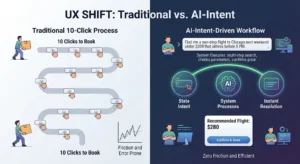
The modern professional landscape is characterized by a high degree of digital friction. According to research from productivity software providers, the average enterprise user now switches between 10 and 15 different applications per hour to complete a single project. This "context switching" is a significant driver of cognitive load and operational error. Each time a user navigates away from their primary workspace to a standalone AI interface—such as a browser-based chat window—they lose focus, disrupting the flow of deep work.
Industry analysts note that while AI-first products have successfully demonstrated the potential of large language models (LLMs), they have failed to address the foundational issue of workflow integration. When AI is treated as a destination rather than a utility, it forces the user to bridge the gap between their intent and the tool’s output. This requires the user to copy, paste, reformat, and verify information, creating a cycle of repetitive, low-value labor that negates the efficiency gains promised by the AI itself.
The Rise of Quiet AI and Contextual Assistance
The "Quiet AI" paradigm represents a shift in design philosophy. Instead of demanding the user’s full attention, Quiet AI operates in the background, surfacing relevant capabilities precisely when they are needed. This approach relies on "established mental models," which are the cognitive shortcuts users have built over decades of using traditional software like spreadsheets, word processors, and file managers.
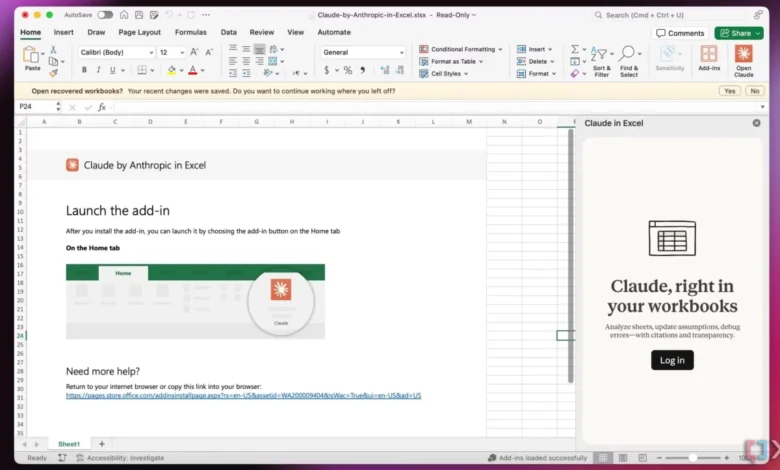
A notable example of this trend is the integration of generative AI into established productivity suites. When a user can query data within an Excel cell or generate a summary of a document within a file explorer, they are not learning a new tool; they are upgrading an existing one. This integration minimizes the learning curve and allows the user to maintain their focus on the primary task. By embedding AI into the fabric of the OS or the application, developers reduce the friction that usually accompanies the adoption of new, complex software.
Chronology of a Shift in UX Priorities
The transition from standalone AI to integrated intelligence has followed a predictable arc over the last 24 months:
- 2022–Early 2023: The "Gold Rush" phase. Companies prioritized rapid deployment of standalone AI wrappers and chat-based interfaces. The focus was on "AI-first" branding, where the tool itself was the primary value proposition.
- Late 2023: Initial user fatigue reported. Data began to show that while initial engagement with standalone AI tools was high, long-term retention suffered as users found it difficult to incorporate these tools into their daily, deadline-driven tasks.
- 2024: The "Integration" phase. Major software platforms began moving toward API-first, agentic workflows. Companies like Microsoft, Adobe, and Notion pivoted toward "invisible" AI—features that function as plugins or sidebars within the user’s primary interface.
- Present Day: The emergence of system-level AI. Concepts like "folder instructions" are gaining traction, where the operating system itself becomes an agent, managing file organization and metadata based on pre-defined user intent.
Case Study: Folder Instructions for System-Level AI
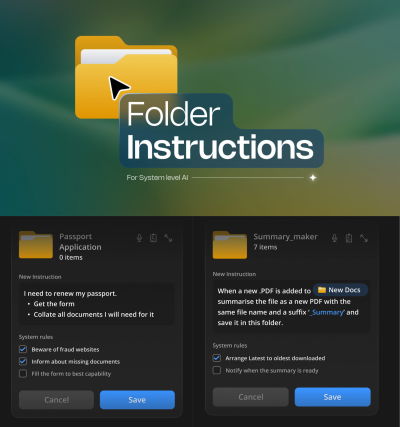
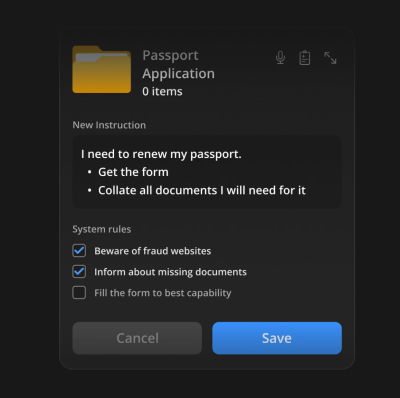
One of the most promising developments in this space is the implementation of system-level AI instructions for file management. Research into "Folder Instructions" demonstrates how users can define the purpose and rules of a specific directory—for instance, a "Passport Application" folder that automatically monitors, summarizes, and labels relevant PDF documents.
In this model, the user does not need to prompt an AI chatbot. Instead, they define the "system rules" for that folder once. The AI then acts as a background agent, processing files as they arrive. This reduces the cognitive burden on the user by automating repetitive sorting and synthesis tasks. By aligning the AI’s behavior with the folder’s existing purpose, developers have created an intuitive, low-friction interaction that aligns with the user’s established mental model of file organization.
Quantitative Impacts of Seamless Integration
The move toward seamless integration is not merely a design preference; it is a measurable business imperative. Internal benchmarks from various UX research firms suggest that:
- Reduced Error Rates: When users do not need to manually transfer data between an AI tool and their document, the frequency of "copy-paste" errors drops by an estimated 30–40%.
- Increased Task Completion Speed: Workflow continuity ensures that the time taken to complete a task—such as summarizing a report or organizing a project directory—is reduced by 50% compared to traditional, manual methods.
- Lower Onboarding Overhead: Features integrated into familiar UI patterns require significantly less training than standalone applications, leading to higher adoption rates among non-technical employees.
Implications for Future Product Design
For product designers and software architects, the lesson is clear: the value of AI is not found in the sophistication of the model alone, but in the efficiency of its application. The future of software is not an endless parade of new icons on the desktop. Rather, it is the invisible, context-aware assistance that lives within the tools people already rely on.
This requires a fundamental change in how AI features are designed. Designers must move away from "chat-first" interfaces and toward "action-first" interfaces. In an action-first model, the system detects a user’s intent—such as wanting to organize a set of documents—and offers a relevant AI intervention without the user needing to type a single prompt.
Expert Perspectives on Interface Design
Industry experts, such as Vitaly Friedman, have highlighted that the success of AI in the workplace depends on the quality of its UX guidelines. As more developers look to integrate AI, the challenge will be to ensure that these systems remain "quiet" and do not become intrusive. Over-automation, or AI that "hallucinates" tasks the user did not request, can be just as damaging to productivity as manual labor.
The consensus among design professionals is that "Friendly AI" is human-centric. It respects the user’s agency, provides clear paths for human override, and remains secondary to the primary task. As the industry matures, the distinction between "software" and "AI" will likely disappear entirely. Users will simply refer to their applications as being "smarter" or "more efficient," without identifying the AI as a separate entity.
Conclusion: The Path Forward
The path toward a more productive digital future is not found in the pursuit of more tools, but in the refinement of the existing ones. By focusing on seamless integrations, developers can deliver substantial value while respecting the user’s established workflows. The most successful AI interfaces of the coming decade will not be those that demand the most attention, but those that, through quiet and reliable assistance, prove themselves indispensable by becoming virtually invisible. As organizations continue to evaluate their digital infrastructure, the priority should remain on reducing frustration and minimizing the need for constant context switching. In the final analysis, the best tool is the one the user doesn’t even realize they are using.