Versioning and Tracking Scikit-LLM Experiments with MLflow for Robust Machine Learning Lifecycle Management

In the rapidly evolving landscape of artificial intelligence, the integration of Large Language Models (LLMs) into standard machine learning workflows has shifted from an experimental curiosity to an enterprise necessity. As data science teams move beyond simple prompt engineering toward complex, production-grade pipelines, the challenge of maintaining model reproducibility, version control, and performance auditing has become paramount. Developers are increasingly turning to the combination of Scikit-LLM and MLflow to bridge the gap between traditional scikit-learn architectures and the stochastic, resource-intensive nature of LLMs. By leveraging these tools, organizations can transform unstructured LLM development into a governed, lifecycle-managed engineering process.
The rise of LLM-integrated pipelines necessitates a departure from legacy tracking methods. Traditional machine learning models, such as random forests or support vector machines, are often serialized into compact files. LLMs, however, introduce variables such as backend providers, quantization parameters, and specific model weights, all of which require meticulous tracking to ensure that a pipeline’s performance can be audited and replicated months after its initial deployment.
Establishing the Framework for Model Governance
The foundational requirement for any robust MLOps strategy is a reliable tracking environment. MLflow, an open-source platform originally developed by Databricks, has become the industry standard for managing the machine learning lifecycle. When paired with Scikit-LLM—a library designed to integrate LLM capabilities into the familiar scikit-learn API—it allows developers to treat an LLM call as a predictable step in a standard data processing pipeline.
The initial phase of this integration involves configuring the environment to support local execution. By utilizing the gpt4all backend, developers can run LLM inference locally, circumventing the data privacy concerns and latency issues often associated with cloud-based API calls. This configuration requires the SKLLMConfig to be initialized with local credentials, creating a sandbox that allows for rigorous testing without incurring external costs or risking sensitive data exposure.
The Chronology of an LLM Pipeline Evolution
A typical development lifecycle begins with the establishment of a baseline model. In a real-world scenario, this might involve a lightweight model, such as Orca Mini, chosen for its speed and low memory footprint. The process of logging this baseline into MLflow is critical. It is not sufficient to simply save the model weights; developers must log the environment parameters—specifically the llm_backend and the precise llm_model_file.
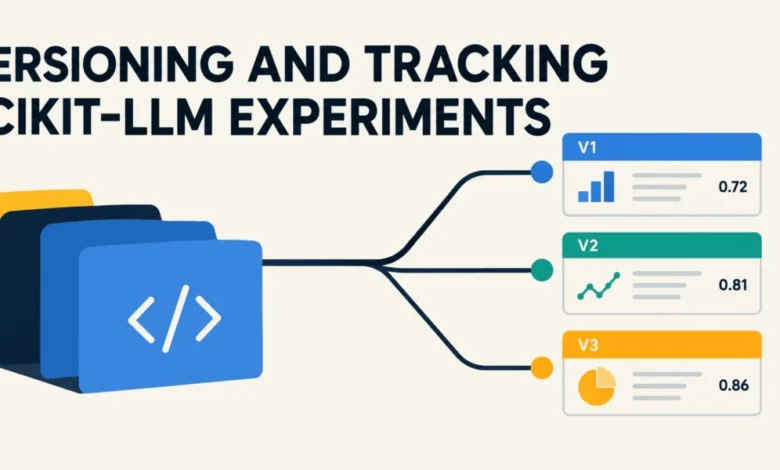
In the documented workflow, the first milestone is reached when the pipeline is trained on a labeled dataset for a zero-shot classification task. Using the mlflow.start_run context manager, the specific parameters of this run are captured within the MLflow tracking server. This creates an immutable record of the model’s configuration at the point of training. If, for instance, a subsequent update to the LLM backend results in a degradation of performance, the team can reference the "Baseline_Orca_Mini" run ID to revert the pipeline to a known-good state.
As the project progresses, the necessity for model upgrades often arises. Transitioning to a more sophisticated model, such as the Falcon architecture, represents a significant upgrade in reasoning capability. This "Upgraded_Falcon" run is treated as a distinct iteration. By isolating this process, engineers can perform side-by-side comparisons using the MLflow search API. This data-driven approach removes the guesswork from model selection, allowing teams to evaluate performance metrics—such as accuracy, precision, and recall—against the baseline version, thereby making informed decisions about whether the increase in computational overhead is justified by the gain in model performance.
Data-Driven Auditing and Quality Assurance
The strength of this integrated approach lies in its ability to generate an audit trail. Modern machine learning regulations and internal compliance standards often require teams to explain why a specific model was deployed. The MLflow tracking dashboard acts as a centralized repository for this documentation.
When searching for the optimal model, researchers can query the database to filter by metrics, ordering results by accuracy in descending order. This process ensures that the "champion" model is identified based on empirical evidence rather than anecdotal preference. The output of such a query provides a granular view of the entire experiment history, including the status of each run. It is common to encounter failed runs—perhaps due to memory exhaustion or connectivity issues during the training phase—and having these documented alongside successful runs provides valuable insights into the stability of the development environment.
The Transition from Development to Production
Once a candidate model has been identified as the top performer, it must be promoted to the production registry. This step is the culmination of the development process. Registering a model in MLflow essentially stamps it as "production-ready," providing it with a version number and a stable URI. This prevents the "clutter" that often plagues model repositories where multiple versions are stored without context.
By implementing a formal registration process, organizations can manage model deployment through CI/CD (Continuous Integration and Continuous Deployment) pipelines. When a model is registered as "Version 1" or "Version 2," downstream systems can programmatically fetch the specific artifact, ensuring that the production inference service is always aligned with the version validated during the training phase.
Broader Implications for MLOps
The implications of adopting such a rigorous framework extend beyond mere convenience. As LLMs become integrated into critical business infrastructure—such as customer support automation, automated content moderation, and real-time data classification—the potential for "model drift" and silent failures increases.
In a traditional software environment, version control for code is handled via Git, but versioning for the "knowledge" stored within an LLM has historically been fragmented. By treating the entire pipeline—from data preprocessing to the final LLM classification—as a single, versioned entity, organizations can achieve a level of consistency that was previously unattainable. This ensures that if a model is updated, the entire pipeline is updated in unison, reducing the risk of incompatibility between the input data format and the LLM’s requirements.
Furthermore, this methodology supports the principles of "Reproducible Science." In the context of LLMs, where the underlying model weights are often updated or replaced, having a snapshot of the exact model file string used during training is the only way to guarantee that a result can be replicated. This is vital for debugging, as it allows engineers to re-run the exact same training logic on the same data to determine if a performance anomaly was caused by the data, the model architecture, or the hyperparameters.
Conclusion
The integration of Scikit-LLM and MLflow represents a sophisticated response to the challenges of modern AI development. By establishing a clear, multi-stage workflow—covering configuration, baseline logging, iterative improvement, and final registration—teams can maintain order in an inherently volatile field. The ability to systematically compare, audit, and promote models not only streamlines the development process but also creates the governance structures necessary for high-stakes enterprise applications. As the field continues to mature, such disciplined approaches to model versioning will undoubtedly become the hallmark of successful and sustainable AI operations. The goal is no longer just to build models that work, but to build models that can be trusted, verified, and evolved with confidence.