The most effective brand identities are not born from sudden bursts of creative inspiration inside design software; they are the result of rigorous, structured investigation that precedes the first pixel. While the design industry often fixates on the "reveal" of a logo or a color palette, data suggests that the highest rates of project failure occur during the strategy-to-design handoff. When teams bypass the "pre-concept" phase—a critical period of translation between abstract business goals and concrete visual execution—they leave room for subjective interpretation, leading to costly iterations and misaligned project outcomes.
The anatomy of a failed branding project usually reveals a common flaw: an over-reliance on vague, high-level adjectives. When stakeholders define a brand as "modern," "trustworthy," or "disruptive," they are often speaking in different languages. A 2023 industry survey of digital product designers indicated that nearly 65% of branding projects face significant timeline delays due to "misaligned vision" during the initial concept review stage. This disconnect occurs because words are inherently elastic. For one stakeholder, "premium" might denote minimalist, high-end editorial aesthetics; for another, it may imply heavy ornamentation and gold-tone palettes. Without a bridge to translate these definitions into visual constraints, the designer is essentially guessing.
The Anatomy of the Pre-Concept Phase
The pre-concept phase occupies the space immediately following the project kickoff and research gathering, but strictly before the drafting of the first visual concepts. Its primary purpose is to move the team from a state of broad, qualitative aspiration to a state of tactical, visual understanding. This phase serves as a safeguard against the "guesswork" approach, where designers present multiple, disparate directions hoping that one will resonate with the client’s internal, often unspoken, mental model.

A key case study in this methodology involves a prominent health tech startup that recently underwent a comprehensive rebrand. The internal team requested a brand identity that was "disruptive." In a vacuum, this might have triggered a design direction utilizing aggressive neon colors, bold experimental typography, and rebellious layout structures. However, during the pre-concept workshops, it became evident that their target audience consisted of conservative, large-scale government medical institutions. For this specific audience, "disruption" did not mean rebellion; it meant efficiency, clinical precision, and rock-solid credibility. By identifying this nuance early, the design team avoided a direction that would have been visually alienating to the end-user, ultimately pivoting toward a "progressive-traditional" aesthetic that balanced innovation with institutional safety.
Chronology of Discovery: From Workshop to Visual Foundation
Effective branding requires a chronological progression that ensures every participant is aligned before the creative labor begins. The standard sequence typically follows three distinct stages:

- The Discovery Workshop: This is the foundational meeting where the business model, competitive landscape, and audience pain points are established. Using tools like the "Brand Workshop Toolkit," designers lead stakeholders through exercises designed to expose the difference between their personal preferences and the brand’s actual needs.
- Perception Mapping: In this stage, the team maps competitors across two axes—such as "Traditional vs. Progressive" or "Corporate vs. Human." This visual exercise forces stakeholders to externalize their assumptions. If two stakeholders disagree on where a competitor sits on the map, the conversation immediately highlights a fundamental difference in how they perceive the market.
- Visual Brand Driver Exercise: This is the most effective tool for mitigating subjective bias. By asking stakeholders to select images that represent the brand across disparate categories (e.g., "If our brand were a mode of transport, what would it be?"), the designer uncovers the metaphors that define the brand’s soul. This separates the "what we like" from the "what is true about our identity."
Data and The Cost of Ambiguity
The economic implications of skipping these steps are measurable. In large-scale enterprise branding, a single week of "design drift"—where the creative team pursues a direction that is later rejected for being "not what we had in mind"—can cost upwards of $10,000 to $25,000 in billable hours and lost momentum.
By contrast, companies that employ a robust pre-concept phase see a 40% reduction in the number of design rounds required to reach a final, approved concept. This is because the "rules of the game" are established early. When a designer presents a concept, the team is no longer asking, "Do I like this?" but rather, "Does this visual solution accurately represent the brand traits we agreed upon during the pre-concept mapping?" This transition from personal opinion to objective evaluation is the hallmark of a mature, professional design process.

Structuring the Visual Foundation
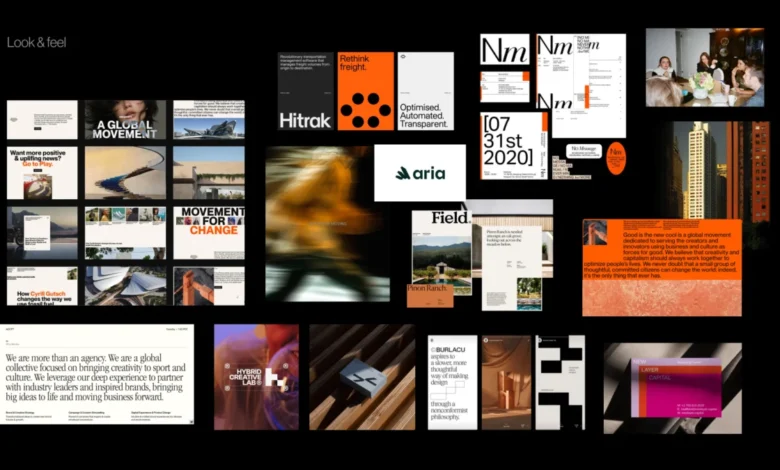
Once the research is synthesized, the transition to design should be managed through three layers: the "Look and Feel" board, the "Design Code," and the "Asset Direction."
The Look and Feel board is not a mood board of pretty images; it is a reference collection for perception. It illustrates how the brand might feel in practice—calm, institutional, or perhaps energetic—without yet committing to a specific logo or typeface. The Design Code follows, translating abstract ideas into tangible principles. If the brand is to be "personalized," the code might mandate the use of organic, hand-drawn lines; if it is to be "data-backed," it might require rigid, grid-based layouts and infographic-style data visualization.

Finally, the Asset Direction introduces the building blocks: typography, color, and photography style. By the time this layer is reached, the client has already seen the evolution of the brand’s personality. The risk of a "shock" during the final presentation is effectively eliminated.
Implications for the Future of Brand Strategy
As digital products become increasingly central to corporate identity, the role of the designer has shifted from a mere "visual producer" to a "strategic facilitator." The ability to moderate, document, and synthesize stakeholder feedback is becoming as important as technical proficiency in software like Figma or Adobe Illustrator.

The industry is seeing a shift toward "evidence-based branding," where every design decision can be traced back to a specific piece of strategy or a clarified stakeholder assumption. This approach does not stifle creativity; rather, it provides a frame for it. By removing the uncertainty of the "guess," designers are empowered to take bolder, more calculated risks, knowing that their work is supported by a solid foundation of consensus.
In conclusion, the most successful brands of the next decade will be those that prioritize the "invisible" work. The pre-concept phase is not merely an administrative hurdle; it is the most critical creative act in the entire branding lifecycle. When the team stops treating the logo as the starting point and starts treating the brand strategy as the destination, the design process becomes more efficient, the outcomes more durable, and the final identity a true reflection of the organization’s core purpose. As the market grows more crowded, the ability to clearly define and then visually execute that definition will remain the ultimate competitive advantage for any company, whether it is a small health tech startup or a multinational corporation.