Evaluating Large Language Models for Real-World Secret Scanning: Lessons from Production Deployments

The transition of Large Language Models (LLMs) from theoretical prototypes to robust, production-grade enterprise systems has exposed a persistent vulnerability in modern software engineering: models that excel on pristine, curated benchmarks frequently fail when confronted with the chaotic reality of live environments. While public leaderboards and standardized datasets offer an indispensable foundation during initial system architecture, they rarely simulate the ambiguity, truncated context, and noisy inputs characteristic of production workloads.
This architectural disconnect recently came to light during the evaluation of an LLM-powered system designed to optimize GitHub secret scanning—a crucial security workflow tasked with identifying accidentally committed credentials, keys, and tokens. Authored by Mariko Wakabayashi, Principal Applied Scientist at Microsoft, and Zixiao Chen, Senior Applied Scientist at Microsoft, technical insights shared from their deployment underscore the rigorous methodologies required to bridge the gap between experimental promise and operational reality. Their findings provide an essential blueprint not just for cybersecurity tools, but for any engineering team deploying AI systems into code analysis, data processing, and complex developer environments.

The Production Dilemma: Benchmarks Versus Reality
In the early stages of product development, engineering teams routinely rely on clean benchmarks to validate core technical hypotheses. These datasets allow developers to compare competing foundational models, test initial prompt structures, and gauge feasibility. However, as systems approach deployment, the evaluation paradigm undergoes a fundamental shift.
Real-world data is inherently messy. Inputs are often ambiguous, contextual metadata may be missing or truncated, and historical user labels can be inconsistent. Furthermore, edge cases that statistically register as zero on static benchmarks frequently manifest as recurring production failures. Consequently, improvements in offline evaluation metrics—such as token-accuracy or isolated precision scores—frequently fail to translate into predictable behavior once deployed at scale.
For the Microsoft engineering team, the core objective was not merely to determine whether an LLM could accurately classify isolated strings. Rather, the challenge was determining whether an AI agent could meaningfully reduce the volume of noisy, false-positive alerts generated during secret scanning while strictly preserving the high recall necessary to maintain a secure software development lifecycle. In security workflows, a false negative—failing to flag a genuine, exposed credential—carries catastrophic organizational risks that far outweigh the friction of manual code reviews.
Chronology and Lifecycle of the Evaluation Framework
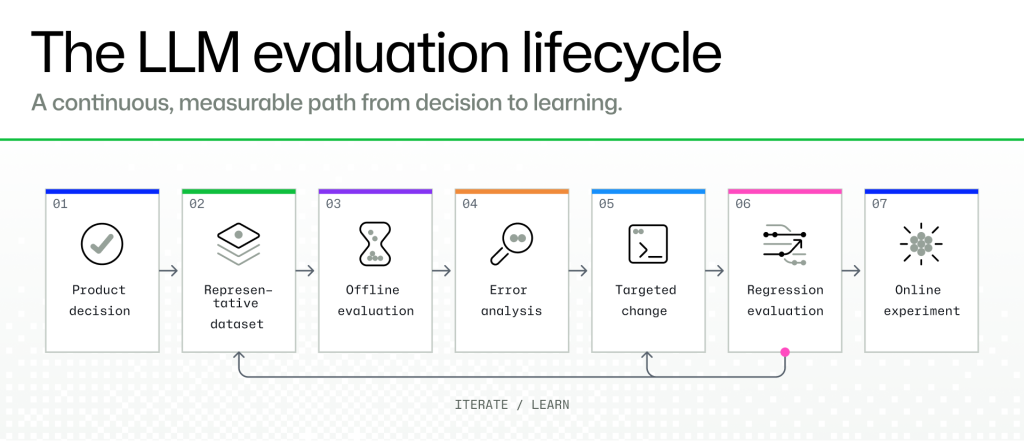
To systematically address these risks, the engineering team mapped out a structured, iterative evaluation lifecycle. Rather than treating validation as a static milestone, the team established an eight-stage continuous pipeline comprising product decision formulation, representative dataset creation, offline evaluation, error analysis, targeted system changes, regression evaluation, online experimentation, and ongoing feedback loops.
The chronology of this development underscored a vital engineering principle: technical adjustments should never precede clear product definitions. When early iterations underperformed, the team resisted the instinct to immediately rewrite prompts or swap underlying architectures. Instead, they codified a comprehensive evaluation framework anchored by three distinct tiers of criteria:
- Primary Outcomes: Measuring direct user value—specifically, the reduction of false-positive alerts that burden developers with unnecessary investigations.
- Safety Constraints: Establishing rigid thresholds for recall. Any experimental configuration that compromised the detection of actual credentials was immediately disqualified, regardless of improvements in precision.
- Operational Guardrails: Evaluating infrastructure realities, including end-to-end latency, computational costs, and pipeline integration complexity.
Through this disciplined framework, the team systematically tracked modifications using rigorous version control for prompts, models, and evaluation datasets. By isolating variables—such as evaluating a prompt modification independently from a foundational model upgrade—the team ensured that performance shifts could be accurately diagnosed and replicated against established baselines.
Quantitative Insights and Methodological Best Practices
The deployment of the secret-scanning optimization model yielded significant quantitative improvements. Through iterative offline evaluation and granular error analysis, the system achieved a remarkable 95% reduction in false positives on the evaluated offline dataset, while maintaining recall safely within predefined security guardrails.
Achieving these results required moving beyond conventional testing methodologies. The team outlined several foundational practices for engineering organizations:
- Simulating Production Ambiguity: Offline evaluation pipelines were explicitly designed to mirror the distractions of real-world codebases. Rather than testing isolated strings, models were forced to evaluate candidate tokens embedded alongside comments, documentation placeholders, and irrelevant variable declarations, preventing the model from seizing on misleading contextual cues.
- Treating Production Labels as Signals: Historical telemetry—such as a developer dismissing a secret-scanning alert—was recognized as a workflow outcome rather than absolute ground truth. Dismissals often reflected test code, internal-only environments, or false alarms, necessitating rigorous manual audits for ambiguous subsets.
- Leveraging Synthetic Data Strategically: To cover rare edge cases absent from limited initial production logs, the team generated targeted synthetic datasets representing unusual formatting, missing context, and complex credential-like strings.
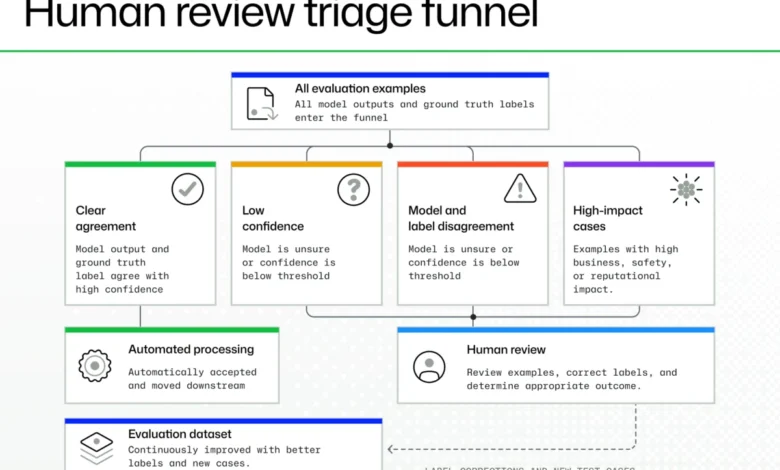
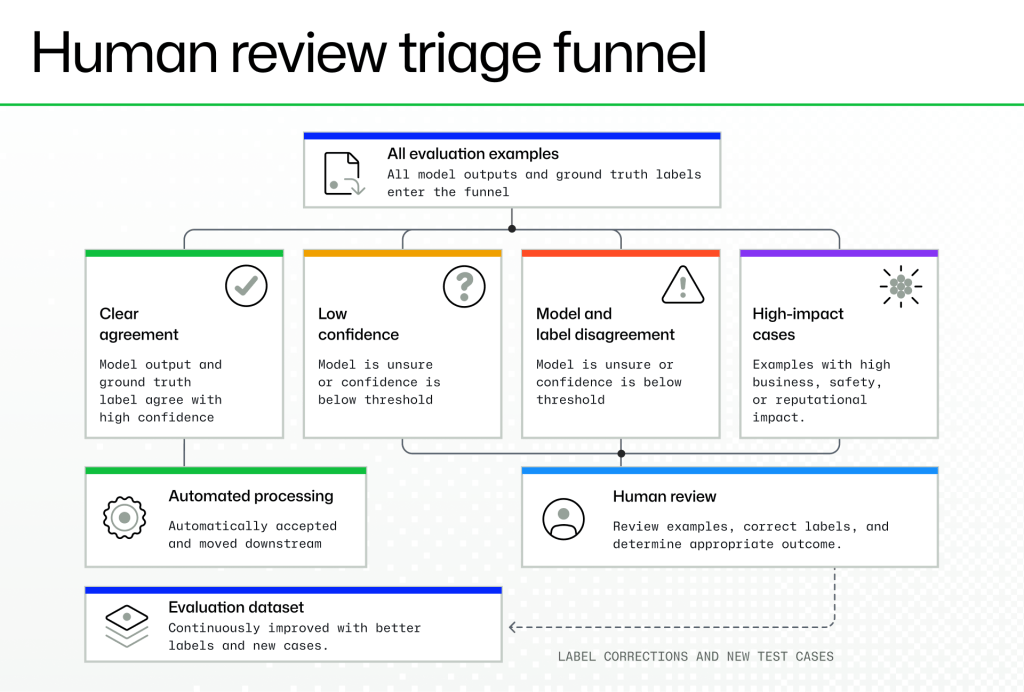
- Implementing LLM-as-Judge Triage: To scale human review efficiently, the team deployed secondary LLM judges to categorize evaluation outputs. By triaging clear agreements, flagging low-confidence predictions, and isolating high-impact discrepancies, human experts were able to focus their attention exclusively on cases where review would materially alter system performance.
Industry Implications and Broader Impact
The lessons codified by Wakabayashi and Chen arrive at a critical juncture for enterprise software development. As organizations increasingly rush to integrate generative AI and agentic workflows into mission-critical pipelines, the lack of standardized evaluation frameworks remains a primary vector for operational failure and security vulnerabilities.

Security analysts note that while tools like GitHub secret scanning protect thousands of organizations from supply chain compromises and credential leaks, alert fatigue remains a persistent productivity drain for software engineers. By demonstrating that LLMs can safely and dramatically reduce false positives without sacrificing threat detection, this research signals a maturing approach to applied artificial intelligence—one where probabilistic models are subjected to deterministic, engineering-grade quality assurance.
Ultimately, the deployment underscores that production uncertainty cannot be entirely eliminated, but it can be rendered visible, measurable, and manageable. For the broader developer ecosystem, the message is clear: robust evaluation is not merely a pre-release formality, but a continuous engineering discipline essential for building reliable, trustworthy AI systems at scale.